
Agenta vs qtrl.ai
Side-by-side comparison to help you choose the right product.

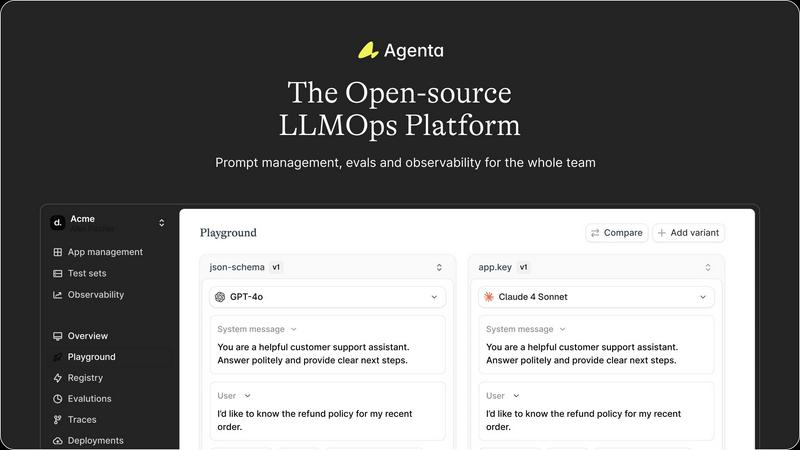
Agenta is an open-source LLMOps platform that centralizes prompt management and evaluation for reliable AI development.
Last updated: March 1, 2026

qtrl.ai
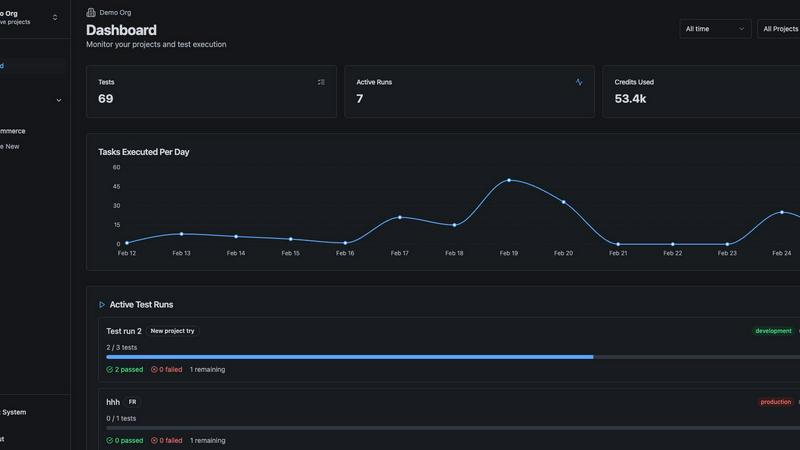
qtrl.ai empowers QA teams to scale testing with AI agents while maintaining control and governance throughout the.
Last updated: March 4, 2026
Visual Comparison
Agenta
qtrl.ai
Feature Comparison
Agenta
Centralized Prompt Management
Agenta's centralized prompt management feature allows teams to keep all prompts, evaluations, and traces in one unified platform, eliminating the chaos of scattered tools. This ensures that everyone involved has access to the latest versions of prompts and can collaborate effectively without losing critical information.
Automated Evaluation Processes
With Agenta, teams can create systematic evaluation processes that automate the testing and validation of every change made to prompts and models. This feature minimizes guesswork and allows for more reliable assessments of model performance through integrated evaluators that can be customized as needed.
Comprehensive Observability Tools
Agenta provides robust observability tools that allow teams to trace every request and pinpoint exact failure points in their AI systems. This feature facilitates effective debugging and helps gather vital user feedback, which can be annotated and transformed into actionable test cases with a single click.
Unified Collaboration Interface
The platform includes a user-friendly interface that empowers domain experts, product managers, and developers to work together within a single workflow. This feature simplifies the process of experimenting, comparing, versioning, and debugging prompts, making it easier for all team members to contribute without needing deep technical expertise.
About qtrl.ai
Autonomous QA Agents
qtrl.ai's autonomous QA agents can execute instructions on demand or continuously, allowing for scalable test execution across various environments. These agents operate under user-defined rules, ensuring compliance while performing real browser executions rather than relying on simulations.
Enterprise-Grade Test Management
The platform offers centralized management of test cases, plans, and runs, providing full traceability and audit trails. This feature supports both manual and automated workflows, making it an ideal choice for organizations that prioritize compliance and auditability in their testing processes.
Progressive Automation
With qtrl.ai, teams can start with human-written test instructions and progressively transition to AI-generated tests as they become more comfortable. The platform actively suggests new tests based on coverage gaps, allowing teams to review, approve, and refine tests at every stage of development.
Adaptive Memory
qtrl.ai features an adaptive memory system that builds a living knowledge base of the application. This intelligent system learns from exploration, test execution, and encountered issues, enabling smarter, context-aware test generation that improves efficacy over time.
Use Cases
Agenta
Collaborative Development of LLM Applications
Agenta is ideal for teams looking to collaboratively develop LLM applications. By providing a centralized platform, it allows developers and subject matter experts to work together on prompt engineering and model evaluation, fostering innovation and efficiency.
Streamlined Debugging and Performance Monitoring
AI teams can leverage Agenta to streamline their debugging processes. The observability tools allow them to identify and address issues quickly, while the automated evaluation processes ensure continuous performance monitoring, helping to maintain high-quality standards in production.
Agile Iteration and Experimentation
Agenta supports agile methodologies by enabling rapid iteration of prompts and models. Teams can experiment with various approaches, track their results, and validate changes effectively, ensuring that their LLM applications remain competitive and responsive to user needs.
Integration with Existing Workflows
Agenta's ability to integrate seamlessly with popular frameworks and models like LangChain, LlamaIndex, and OpenAI makes it a versatile choice for teams. This feature enables organizations to leverage their existing technology stack while adopting best practices in LLMOps.
qtrl.ai
Product-Led Engineering Teams
Product-led engineering teams can leverage qtrl.ai to streamline their testing processes, ensuring that quality assurance is embedded within their development cycles. With the ability to manage tests and automate execution, these teams can focus on delivering high-quality products faster.
QA Teams Scaling Beyond Manual Testing
As QA teams evolve from traditional manual testing, qtrl.ai provides the necessary tools to enhance their capabilities. By incorporating automation and intelligent agents, these teams can improve efficiency and effectiveness while maintaining control over their testing processes.
Companies Modernizing Legacy QA Workflows
Organizations looking to modernize outdated QA workflows can utilize qtrl.ai to bridge the gap between manual and automated testing. The platform offers a structured approach to integrating modern testing practices while ensuring governance and compliance.
Enterprises Requiring Governance and Traceability
Enterprises that must adhere to strict compliance regulations can benefit greatly from qtrl.ai's robust test management features. The platform's emphasis on traceability and auditability ensures that testing processes are transparent, manageable, and compliant with industry standards.
Overview
About Agenta
Agenta is an innovative open-source LLMOps platform that revolutionizes the way large language model (LLM) applications are developed and deployed. Designed to create a collaborative environment, Agenta enables developers and subject matter experts to work together seamlessly, experimenting with prompts, evaluating model performance, and debugging production issues efficiently. The platform addresses critical challenges faced by AI teams, such as unpredictable LLM behavior, fragmented prompt management, siloed communication, and an absence of structured validation processes. By centralizing the LLM development workflow, Agenta enhances team collaboration, improves workflow efficiency, and accelerates rapid iterations, ultimately leading to the creation of high-quality LLM applications. It serves as a single source of truth, ensuring that all team members—from product managers to developers and domain experts—can engage in a coherent and transparent process.
About qtrl.ai
qtrl.ai is an innovative quality assurance (QA) platform specifically designed to enhance the quality assurance processes of software development teams. By combining enterprise-grade test management with advanced AI automation, qtrl.ai serves as a centralized hub that allows teams to organize test cases, plan test runs, and trace requirements to coverage. This platform enables the tracking of quality metrics through real-time dashboards, offering clear visibility into testing progress, pass rates, and potential risks. Ideal for product-led engineering teams, QA groups transitioning from manual testing, and enterprises requiring strict compliance, qtrl.ai provides a trusted pathway to accelerate quality assurance without sacrificing control or governance. Its unique proposition lies in its gradual adoption of intelligent automation, allowing teams to begin with manual processes and seamlessly transition to AI-driven solutions as their readiness grows.
Frequently Asked Questions
Agenta FAQ
What is LLMOps, and how does Agenta fit into it?
LLMOps refers to the set of practices and tools designed to improve the development and deployment of large language models. Agenta fits into this framework by providing a centralized platform that streamlines collaboration, prompt management, evaluation, and observability.
Can Agenta integrate with existing tools and frameworks?
Yes, Agenta is designed to integrate seamlessly with a variety of existing tools and frameworks, including LangChain, LlamaIndex, OpenAI, and others. This flexibility allows teams to incorporate Agenta into their current workflows without significant disruption.
How does Agenta enhance team collaboration?
Agenta enhances team collaboration by providing a unified interface where product managers, developers, and domain experts can work together on prompt engineering and model evaluation. This reduces silos and improves communication across the team.
Is Agenta suitable for organizations of all sizes?
Absolutely. Agenta is designed to be scalable and adaptable, making it suitable for organizations of all sizes, from startups to large enterprises. Its open-source nature allows teams to customize the platform to fit their specific needs and workflows.
qtrl.ai FAQ
What types of teams can benefit from qtrl.ai?
qtrl.ai is designed for a variety of teams, including product-led engineering groups, QA teams transitioning from manual testing, companies modernizing legacy workflows, and enterprises that require governance and traceability in their testing processes.
How does qtrl.ai ensure compliance and auditability?
By providing centralized test management, full traceability, and audit trails, qtrl.ai ensures that all testing activities are documented and comply with necessary regulations, making it suitable for enterprises with strict compliance requirements.
Can teams start with manual testing on qtrl.ai?
Yes, qtrl.ai allows teams to begin their quality assurance journey with manual test management. As teams gain confidence, they can gradually adopt automation and AI-driven testing solutions tailored to their needs.
What is unique about qtrl.ai's approach to AI in testing?
qtrl.ai employs a progressive approach to AI automation, allowing teams to incrementally integrate intelligent automation into their workflows. This reduces risks associated with black-box AI solutions and maintains user control over testing processes.
Alternatives
Agenta Alternatives
Agenta is an open-source LLMOps platform that centralizes prompt management, evaluation, and debugging for large language model applications. It is designed to enhance collaboration among developers and subject matter experts by providing a unified environment for experimentation and model performance evaluation. Users commonly seek alternatives to Agenta due to a variety of factors, including pricing, specific feature sets, or unique platform requirements that may not be fully addressed by Agenta. When considering alternatives, it is essential to evaluate the platform's ability to streamline workflows, enhance collaboration, and provide robust evaluation tools, ensuring that it meets the specific needs of your team and project. --- [{"question": "What is Agenta?", "answer": "Agenta is an open-source LLMOps platform that centralizes prompt management, evaluation, and debugging for large language model applications."},{"question": "Who is Agenta for?", "answer": "Agenta is designed for developers and subject matter experts working on large language model applications who need a collaborative environment for prompt experimentation and evaluation."},{"question": "Is Agenta free?", "answer": "Yes, Agenta is an open-source platform, which means it is available for free to users."},{"question": "What are the main features of Agenta?", "answer": "Agenta features centralized prompt management, a unified playground for experimentation, and an automated evaluation system to enhance the reliability of model modifications."}]
qtrl.ai Alternatives
qtrl.ai is a cutting-edge quality assurance platform tailored for software teams aiming to enhance their testing processes through automation while retaining oversight and governance. By marrying enterprise-level test management with sophisticated AI-driven automation, qtrl.ai serves as a comprehensive hub for organizing testing efforts, planning test runs, and tracking quality metrics in real time. This approach is particularly beneficial for teams looking to transition from manual testing to a more efficient, AI-augmented framework. Users often seek alternatives to qtrl.ai for various reasons, including pricing structures, feature sets, and specific platform requirements. As organizations grow and their needs evolve, they may find that certain solutions better align with their operational workflows or budget constraints. When considering alternatives, it is essential to assess factors such as ease of use, integration capabilities, scalability, and the ability to maintain control over the testing process while benefiting from automation.