
Deeploy vs RocketShare
Side-by-side comparison to help you choose the right product.

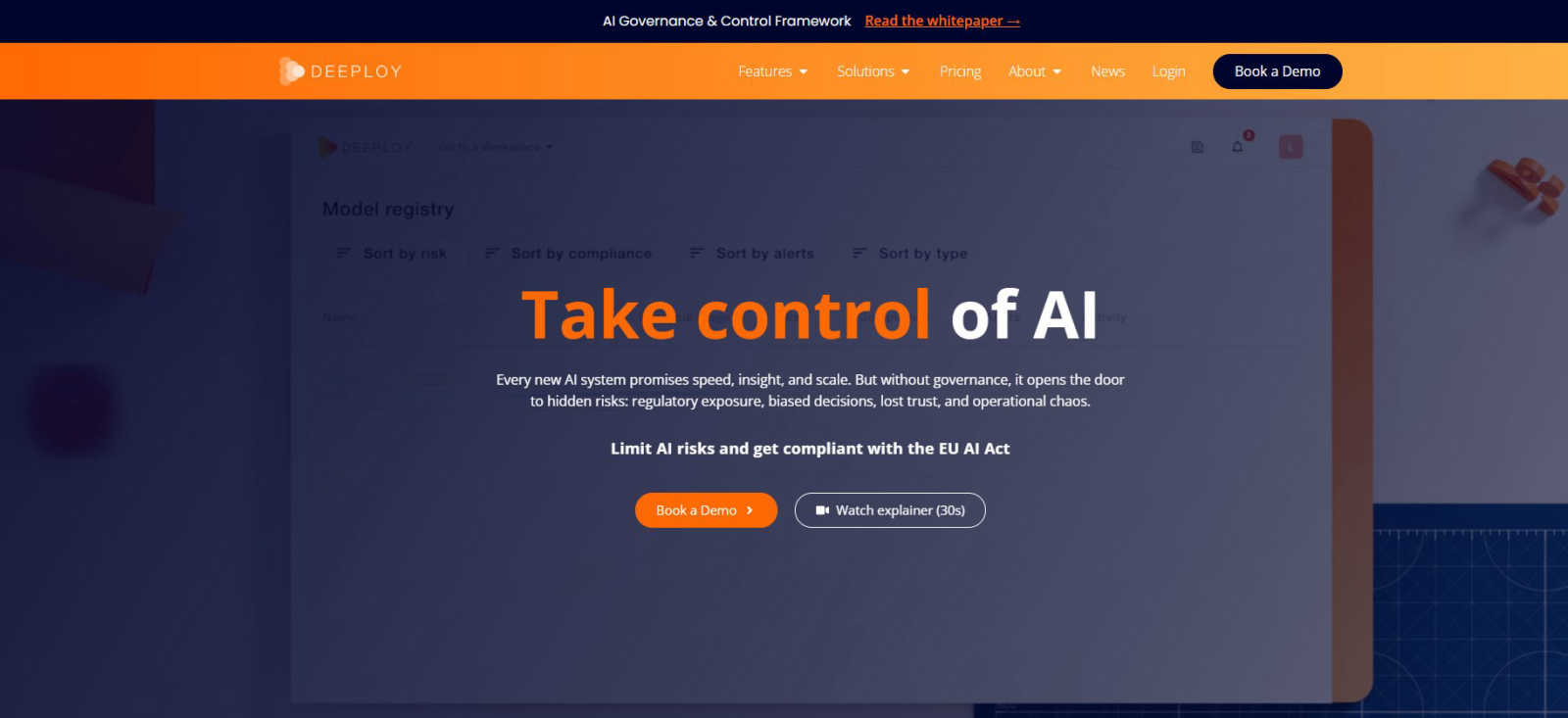
Deeploy provides comprehensive AI governance for compliance, risk management, and real-time oversight.
Last updated: March 1, 2026

RocketShare
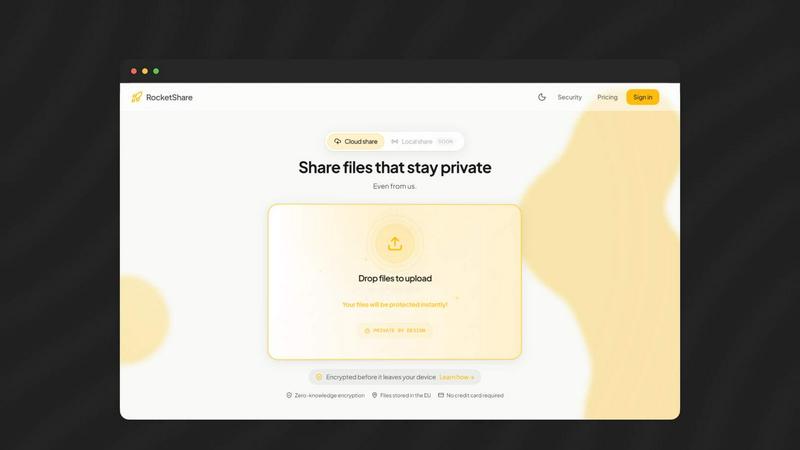
RocketShare provides secure, private file sharing with client-side encryption that even its operators cannot access.
Last updated: March 4, 2026
Visual Comparison
Deeploy
RocketShare
Feature Comparison
Deeploy
AI Discovery and Onboarding
This feature provides complete visibility across an organization's entire AI ecosystem. It allows teams to discover, document, and onboard every AI system—whether built in-house, sourced from vendors, or embedded in other software—into a centralized registry. By connecting to existing MLOps and GenAI platforms, it eliminates blind spots without requiring costly migrations. This creates a single source of truth for all AI assets, which is the foundational step for effective governance, risk assessment, and compliance reporting.
Control Frameworks
Deeploy simplifies regulatory navigation with pre-built and customizable control frameworks. Organizations can adopt industry-standard frameworks like ISO 42001 or the NIST AI RMF, or build their own tailored policies. The platform guides users through risk classification processes, establishing clear accountability with defined approval workflows. This structured approach demystifies complex regulations, turning abstract requirements into manageable, step-by-step processes that ensure consistent application of governance rules across all AI initiatives.
Control Implementation
This feature translates governance policies into actionable, engineer-friendly requirements. Instead of presenting vague guidelines, Deeploy provides clear technical and procedural controls for each AI system based on its risk profile. It dramatically accelerates compliance—by up to 90% according to the provider—through the use of templates and automated evidence collection. It even employs AI-powered assessments to handle repetitive compliance tasks, ensuring that governance is practically implemented and followed by engineering teams.
Real-Time Monitoring and Explainability
Deeploy offers continuous, production-level monitoring to proactively prevent AI incidents. It tracks model performance, data drift, and output anomalies, sending instant alerts when issues are detected. Crucially, it includes built-in explainability features that help users understand why a model made a specific prediction. For LLMs, it adds tracing and guardrails to protect outputs. This continuous oversight allows teams to identify and rectify errors before they impact end-users or create compliance breaches.
About RocketShare
Zero-Knowledge End-to-End Encryption
This is the cornerstone feature of RocketShare. File encryption occurs locally on the user's device before upload, using a unique key that is never transmitted to or stored on RocketShare's servers. The platform has zero knowledge of the file contents or the password protecting the transfer. This architecture guarantees that only the intended recipient, who possesses the correct key (typically within the share link), can decrypt and access the files, providing absolute confidentiality against external threats and internal access.
Dual Sharing Modes: Cloud and Local (P2P)
RocketShare offers flexible transfer methods to suit different security and speed requirements. The Cloud Share option uploads encrypted files to secure EU-based servers for asynchronous sharing, ideal for sending large files without requiring the recipient to be online simultaneously. The Local Share (peer-to-peer) mode establishes a direct, encrypted connection between devices for transfer, with files never touching any intermediary server. This provides maximum speed and reduces the data's digital footprint, perfect for highly sensitive transfers on a local network.
Privacy-First Data Handling and Storage
All data processed through RocketShare's cloud service is stored exclusively on servers located within the European Union, ensuring compliance with robust data protection regulations like the GDPR. The platform's design ensures that even stored data remains in its encrypted state, inaccessible to the hosting provider. This commitment extends to operational practices, including a transparent privacy policy and a clear data handling framework that prioritizes user sovereignty over their information.
Simple, Self-Serve User Interface
Despite its powerful security underpinnings, RocketShare presents a minimalist and intuitive user experience. The core functionality revolves around a straightforward drag-and-drop or click-to-browse upload interface. The complexity of encryption is handled seamlessly in the background, allowing users to send files securely without needing technical expertise. This design philosophy makes enterprise-level security accessible to freelancers, small teams, and large organizations alike.
Use Cases
Deeploy
Regulatory Compliance and Audit Readiness
Organizations subject to regulations like the EU AI Act use Deeploy to systematically achieve and demonstrate compliance. The platform automates evidence collection, maintains detailed audit trails, and provides documentation for every AI system. This use case is critical for enterprises in heavily regulated industries such as finance, healthcare, and public services, enabling them to scale AI with confidence while having all necessary proof for regulatory audits readily available.
Centralized AI Inventory and Risk Management
Companies with scattered AI deployments across multiple teams and vendors utilize Deeploy to create a unified inventory. This central registry allows leadership and risk officers to gain a holistic view of their AI exposure, classify systems by risk level, and apply appropriate governance controls consistently. It transforms AI from an unmanaged collection of tools into a strategically overseen portfolio, enabling informed decision-making and proactive risk mitigation.
Accelerating Safe Model Deployment
Data science and MLOps teams employ Deeploy to streamline the path from development to production. By integrating governance checks and monitoring capabilities directly into the deployment pipeline, the platform reduces deployment time from weeks to hours while ensuring new models meet all organizational standards. The built-in explainability features also facilitate smoother handovers and provide transparency for both technical and non-technical stakeholders.
Ensuring Ethical AI and Human Oversight
In sensitive applications like mental healthcare or customer-facing services, Deeploy facilitates responsible AI implementation. It enforces ethical guidelines through customizable control frameworks and enables essential human-in-the-loop processes. The real-time explainability and feedback mechanisms allow human experts to review, understand, and correct AI decisions, building trust and ensuring systems operate within defined ethical boundaries.
RocketShare
Legal Document and Case File Exchange
Law firms and legal professionals routinely handle highly confidential case files, client communications, and evidentiary materials. RocketShare ensures these documents are protected by unbreakable encryption from the moment they leave the sender's computer. The zero-knowledge model guarantees attorney-client privilege is technically upheld, as not even the file-sharing provider can access the content, making it an ideal tool for secure collaboration between legal teams, clients, and external counsel.
Healthcare Data and Patient Record Sharing
Healthcare providers, clinics, and researchers need to share sensitive patient records, lab results, and medical imaging while strictly complying with regulations like HIPAA. RocketShare's end-to-end encryption and EU data storage provide a secure conduit for such information. By ensuring data is encrypted before transit and remains encrypted at rest, it significantly mitigates the risk of data breaches and unauthorized access during digital transfer.
Creative Asset Delivery for Photographers and Videographers
Photographers and videographers can deliver high-resolution client galleries, raw footage, and final edits without fear of intellectual property theft or unauthorized distribution. RocketShare allows them to send files of any size securely, with the confidence that their creative work is protected throughout the transfer process. The platform's simplicity also enhances the client experience, providing a secure, professional delivery method compared to unencrypted email attachments or public cloud links.
Confidential Corporate Project Collaboration
Marketing agencies, game studios, and internal teams working on confidential projects—such as merger documents, unreleased product designs, or proprietary source code—require a secure collaboration channel. RocketShare facilitates the safe exchange of large project files between team members and external partners. The local P2P sharing option is particularly valuable for transferring massive files like 4K video projects or game builds within an office network at high speed, without exposing data to the wider internet.
Overview
About Deeploy
Deeploy is a comprehensive AI governance and operational platform designed to provide organizations with the critical infrastructure needed to manage, monitor, and scale artificial intelligence systems responsibly. In an era of rapid AI proliferation, organizations often struggle with fragmented AI tools, models, and vendors, leading to significant operational, compliance, and reputational risks. Deeploy directly addresses this challenge by centralizing oversight of an entire AI landscape into a single, unified system. Its core value proposition is enabling businesses to harness the transformative power of AI while maintaining complete control, ensuring accountability, and adhering to evolving regulatory standards like the EU AI Act. The platform is built for enterprises running AI at scale, including data science teams, ML engineers, compliance officers, and risk management executives. By integrating governance directly into the AI lifecycle, Deeploy transforms governance from a bureaucratic hurdle into an enabling framework that accelerates safe deployment, provides real-time explainability, and builds essential trust in AI operations across all teams and use cases.
About RocketShare
RocketShare is a secure file-sharing platform architected from the ground up with an uncompromising commitment to user privacy. It operates on a foundational principle of zero-knowledge encryption, ensuring that files are encrypted on the sender's device before any data is transmitted. This means the encryption keys are never shared with RocketShare's servers; they remain solely with the user, often embedded directly within the shareable link. Consequently, the platform's infrastructure only ever handles cryptographically sealed, unreadable data, making it technically impossible for the service provider or any third party to access the file contents. This model delivers enterprise-grade security through a simple, self-serve interface, eliminating the complexity typically associated with high-level data protection. RocketShare caters to individuals, professionals, and businesses across various sectors who handle sensitive information, including legal documents, healthcare records, creative intellectual property, and confidential corporate data. Its core value proposition is providing top-tier, auditable security without sacrificing usability, offering both cloud-based transfers and local peer-to-peer sharing options. All cloud-stored data is housed within European Union data centers, adhering to strict regional data protection standards, making it a trusted solution for privacy-conscious users globally.
Frequently Asked Questions
Deeploy FAQ
What is AI governance and why is it important?
AI governance refers to the framework of policies, processes, and tools used to ensure AI systems are developed and deployed responsibly, ethically, and in compliance with regulations. It is critically important because ungoverned AI can lead to significant risks including biased outcomes, security vulnerabilities, regulatory fines, and loss of public trust. Deeploy provides the infrastructure to operationalize governance, turning high-level principles into enforceable, day-to-day practices that mitigate risk while enabling innovation.
How does Deeploy handle different types of AI models?
Deeploy is designed as a platform-agnostic solution capable of governing diverse AI systems. It can connect to and manage traditional machine learning models from MLOps platforms, generative AI models from various vendors, and AI embedded within third-party software. The system applies relevant controls and monitoring based on each model's specific risk classification and use case, providing a consistent governance layer across an organization's entire heterogeneous AI landscape.
Can Deeploy help with compliance with the EU AI Act?
Yes, Deeploy is explicitly built to help organizations comply with the EU AI Act and other global regulations. It provides workflows to classify AI systems according to the Act's risk categories (unacceptable, high, limited, minimal), implements corresponding required controls for high-risk systems, and automates the documentation and evidence collection needed to demonstrate compliance. The control frameworks can be tailored to map directly to the Act's specific requirements.
How does the real-time monitoring feature work?
Deeploy's real-time monitoring continuously tracks key performance indicators of deployed AI models. It monitors for concept drift, data drift, performance degradation, and output anomalies. When a metric deviates beyond a predefined threshold, the system triggers instant alerts to relevant teams. For generative AI, it includes tracing to log the chain of reasoning and can apply guardrails to filter or flag inappropriate outputs, allowing issues to be addressed proactively before affecting users.
RocketShare FAQ
How does RocketShare's "zero-knowledge" encryption work?
Zero-knowledge encryption means RocketShare has no knowledge of or access to your files or their encryption keys. When you upload a file, it is first encrypted on your own device using a strong, unique key. This encrypted data is then sent to RocketShare's servers. The decryption key is not sent with the data; it is typically included in the shareable link you send to the recipient. Since the servers only ever receive and store the encrypted (scrambled) data, and RocketShare does not possess the key, it is technically impossible for anyone at the company to view your files.
Where are my files stored with RocketShare?
For files shared via the Cloud Share option, the encrypted data is stored on secure servers located within the European Union. This ensures that data residency complies with the EU's stringent General Data Protection Regulation (GDPR) framework. It is critical to understand that the files stored are in their encrypted state only. For files shared via the Local Share (peer-to-peer) mode, the data never touches any external server; it is transferred directly between the devices involved in the transfer.
Is there a file size limit for transfers?
Based on the provided context, RocketShare is designed to allow users to send "files of any size." This indicates that the platform does not impose restrictive file size limits commonly found in email or other basic file-sharing services. This makes it exceptionally suitable for transferring very large files, such as high-resolution video projects, extensive datasets, or comprehensive design packages, without requiring compression or splitting into multiple parts.
Do I need to create an account or provide payment details to use RocketShare?
No, you can use RocketShare's core file-sharing functionality without creating an account or providing a credit card. The platform emphasizes a self-serve, privacy-first model where you can start sharing files immediately. This approach lowers the barrier to entry and aligns with the privacy ethos by minimizing the collection of personal data. Account creation may be optional for accessing additional features or management tools, but it is not a prerequisite for sending secure files.
Alternatives
Deeploy Alternatives
Deeploy is a specialized AI governance platform within the business intelligence and enterprise software category. It provides organizations with the tools to oversee, monitor, and ensure compliance for their AI systems, addressing critical needs around risk management and regulatory adherence like the EU AI Act. Users may explore alternatives to Deeploy for various reasons. Common considerations include specific budgetary constraints, the need for different feature integrations, or a requirement for a platform that aligns with a particular technical stack or existing workflow. The search often stems from a need to find the optimal balance between comprehensive governance capabilities and operational fit. When evaluating alternatives, key factors to assess include the depth of AI model lifecycle coverage, the flexibility of compliance frameworks offered, the strength of audit and explainability features, and the overall ease of integration with an organization's current MLOps and data science ecosystems. The goal is to identify a solution that provides robust oversight without creating unnecessary complexity.
RocketShare Alternatives
RocketShare is a secure file-sharing platform in the Productivity & Management category, distinguished by its zero-knowledge encryption model. This ensures that files are encrypted on the user's device before upload, making the content inaccessible to anyone, including the service provider itself. Users may seek alternatives to RocketShare for various reasons, such as differing budget constraints, the need for specific collaboration features like real-time editing or team workspaces, or a preference for different storage locations and data residency laws. Platform compatibility, such as the need for a dedicated mobile app or integration with existing software ecosystems, is another common driver for exploring other options. When evaluating an alternative, key considerations should include the provider's security model and privacy policy, especially regarding encryption and data access. It is also crucial to assess file size limits, transfer speeds, storage duration policies, and the overall user experience. The ideal service balances robust security with the practical features required for your specific use case, whether for individual, business, or collaborative needs.