
Changeflow vs DevHub
Side-by-side comparison to help you choose the right product.

Changeflow
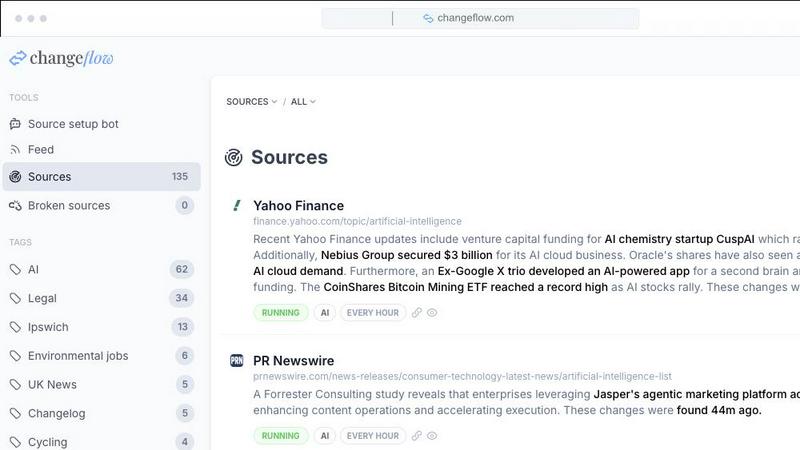
Changeflow provides AI-driven insights on critical market changes, ensuring you stay informed without manual tracking.
Last updated: March 4, 2026

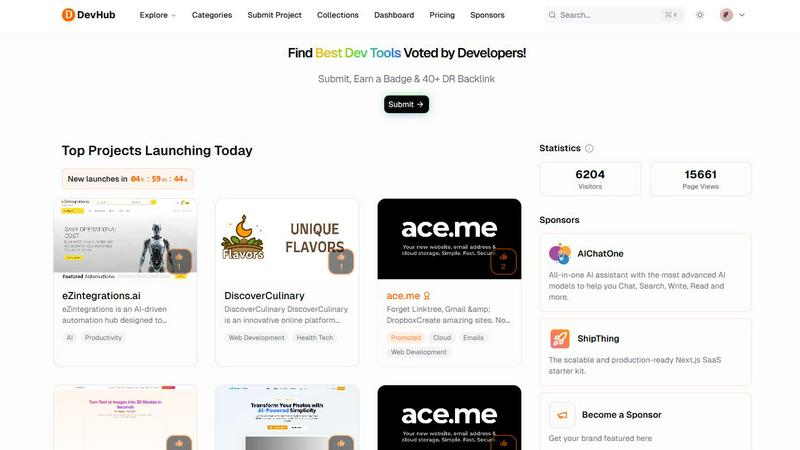
DevHub is a collaborative platform where developers discover and vote on the best new tech tools and projects.
Last updated: February 28, 2026
Visual Comparison
Changeflow
DevHub
Feature Comparison
Changeflow
AI-Powered Intelligence
Changeflow's AI-driven technology intelligently filters web changes to provide users with only the most relevant updates. It eliminates false positives and noise, ensuring that users receive concise notifications that matter, thereby saving valuable time and resources.
Natural Language Setup
Users can effortlessly describe what they want to track using plain English. This user-friendly approach eliminates the need for complex configurations or technical setups, making it accessible to anyone without a technical background.
Customized Summaries
Changeflow generates tailored summaries of web page changes, allowing users to quickly grasp what has changed and why it is significant to their business. This feature streamlines the monitoring process and enhances decision-making by providing clear, actionable insights.
Advanced Anti-Blocking Technology
With sophisticated anti-blocking capabilities, Changeflow effectively navigates challenging websites that may restrict access to other monitoring tools. This ensures reliable and consistent tracking of web pages, even when competitors face obstacles in their monitoring efforts.
About DevHub
Community-Driven Discovery & Voting
At the heart of DevHub is its democratic voting system, which allows registered users to upvote tools and projects they find valuable. This creates a dynamic, constantly refined directory where quality and utility are determined by peer validation. The ranking algorithm ensures that highly-voted resources gain prominent visibility on category pages and leaderboards, effectively surfacing the best-in-class solutions as endorsed by the developer community itself, saving individuals countless hours of independent research and trial-and-error.
Curated Categories & Thematic Collections
DevHub organizes the expansive universe of developer tools into clearly defined categories such as AI, SaaS, Mobile Development, and Business Analytics, enabling targeted exploration. Beyond standard categories, the platform offers "Collections"—curated lists of tools centered around specific themes, workflows, or tech stacks. This structured taxonomy allows developers to drill down into niche areas or discover complementary tools for a particular project phase, making the platform both a broad directory and a focused discovery engine.
Project Submission & Developer Badges
The platform actively encourages community contribution through its project submission portal. Developers, founders, and creators can submit their own tools, libraries, or services for listing. To incentivize quality submissions and community participation, DevHub rewards submitters with exclusive profile badges and provides tangible benefits like high-domain-authority backlinks (noted as 40+ DR backlinks), which aid in SEO and project credibility. This feature transforms users from passive consumers into active contributors shaping the platform's content.
Real-Time Launch Tracking ("Top Projects Launching Today")
DevHub features a dedicated section for tracking new product launches in real-time, complete with a countdown timer for imminent releases. This "Launching Today" module is crucial for early adopters, investors, and tech trend watchers who want to be among the first to explore and evaluate brand-new tools. It provides a pulse on innovation, allowing the community to engage with nascent projects from day one, offer initial feedback, and witness the evolution of new technologies as they enter the market.
Use Cases
Changeflow
Competitor Pricing Monitoring
Business teams can utilize Changeflow to keep a close eye on competitor pricing strategies. By tracking changes in competitors' pricing structures, companies can adjust their own strategies to remain competitive in the market.
Regulatory Compliance Tracking
Legal professionals and compliance teams use Changeflow to monitor important regulatory changes. This ensures that they remain informed about shifts in legislation, compliance requirements, and legal precedents that could affect their operations.
News Mentions and Market Movements
Changeflow enables businesses to follow news mentions and market movements. By tracking relevant news articles and updates, organizations can stay ahead of trends and make informed strategic decisions.
Court Docket Monitoring
Legal librarians at prestigious law firms leverage Changeflow to monitor court dockets and legal citations. This allows them to stay updated on case developments and relevant legal changes that impact their practice areas.
DevHub
Tech Stack Research for New Projects
When initiating a new software project, developers and technical leads can use DevHub to research and compare potential tools for their stack. Instead of relying on fragmented blog posts or vendor marketing, they can browse community-voted rankings within relevant categories, read authentic discussions, and evaluate tools based on collective peer approval. This leads to more informed, efficient, and reliable technology selection, reducing risk and accelerating project kick-off.
Staying Current with Industry Trends
For developers committed to continuous learning and career growth, DevHub serves as a vital news feed for the tech ecosystem. By regularly exploring the "Top Projects" sections, new launches, and trending upvotes, professionals can identify emerging frameworks, popular new APIs, and shifting industry preferences. This proactive awareness helps them stay relevant, anticipate skill demands, and make strategic decisions about which new technologies to learn or adopt.
Marketing and Visibility for Tool Creators
Indie developers, startups, and established companies launching a new developer tool can use DevHub's submission system as a powerful launchpad. Listing a product exposes it to a highly targeted audience of potential users and early adopters. The associated community feedback and voting provide immediate, valuable market validation. Furthermore, earning a featured spot through upvotes can drive significant traffic, user acquisition, and valuable backlinks, all critical for a new product's growth.
Community Engagement and Peer Discussion
Beyond a simple directory, DevHub functions as a social platform for tech enthusiasts. Developers can engage in conversations about specific tools, share implementation experiences, ask questions, and offer advice. This transforms tool discovery from a solitary activity into a collaborative process. Users can learn from the successes and pitfalls of others, fostering a sense of community and shared problem-solving that is invaluable for both novice and expert developers.
Overview
About Changeflow
Changeflow is an innovative web monitoring tool designed to keep businesses informed about critical changes on web pages that matter to them. By leveraging advanced artificial intelligence, Changeflow goes beyond simple notifications of updates; it tracks specific changes, interprets their context, and summarizes their significance, thus delivering only the most relevant information to users. This makes it an invaluable resource for various professionals, including business analysts, legal teams, compliance officers, and marketing specialists, who require timely insights into competitors, regulatory updates, and market trends. With a simple setup process that allows users to describe what they want to track in plain English, Changeflow efficiently handles complex tasks like bypassing login walls and JavaScript barriers, ensuring a 99.9% success rate in monitoring web pages. By consolidating vast amounts of web data, Changeflow empowers users to focus on actionable insights rather than sifting through irrelevant information.
About DevHub
DevHub is a comprehensive, community-driven platform designed as the definitive central hub for developers, engineers, and technology enthusiasts to discover, evaluate, and discuss the latest software tools, libraries, frameworks, and services. It addresses the modern developer's challenge of information overload by curating a vast, constantly updated repository of resources, from essential APIs and development kits to innovative SaaS products and open-source projects. The platform's core value proposition lies in its meritocratic, user-powered ranking system, where community upvotes determine visibility, ensuring that the most valuable and effective tools rise to the top. Tailored for both seasoned professionals seeking to optimize their stack and newcomers navigating the complex tech landscape, DevHub fosters a collaborative ecosystem built on shared knowledge. By participating, users not only stay ahead of emerging trends but also contribute to a collective intelligence that benefits the entire community, making it an indispensable resource for informed decision-making and professional growth in software development.
Frequently Asked Questions
Changeflow FAQ
How does Changeflow ensure accuracy in tracking changes?
Changeflow employs advanced AI algorithms to analyze web pages for updates. It evaluates the relevance of changes based on user-defined criteria, ensuring that only significant updates are reported, which enhances accuracy.
Can I track multiple web pages simultaneously?
Yes, Changeflow allows users to monitor multiple web pages at once. Users simply provide a list of URLs and specify what changes they want to track, making it easy to manage numerous sources.
Is Changeflow suitable for small businesses?
Absolutely. Changeflow is designed for businesses of all sizes, including small businesses. Its intuitive setup and powerful features can benefit organizations looking to streamline their web monitoring processes.
What kind of support does Changeflow offer to its users?
Changeflow provides robust support to its users, including email and chat support, onboarding assistance, and fast troubleshooting. This ensures that users can maximize the effectiveness of the tool and resolve any issues promptly.
DevHub FAQ
How does the voting system work on DevHub?
The voting system is straightforward: registered users can upvote any listed tool or project they find useful or impressive. Each upvote contributes to the project's overall score, which influences its ranking within its category and on the site's various leaderboards (like "Top Projects"). There is no downvote option; the platform focuses on positive reinforcement to surface quality. This democratic process ensures the community collectively curates the content, prioritizing tools with proven value and user satisfaction.
Is it free to submit my project to DevHub?
Yes, submitting a project for listing on DevHub is free. The platform encourages developers and companies to share their tools to enrich the community directory. As an incentive for submission, creators often receive benefits such as a contributor badge on their profile and SEO-friendly backlinks from the DevHub site to their product page, which can help with search engine ranking and domain authority. There is no indication of a mandatory paid fee for basic inclusion.
What kind of tools and projects are listed on DevHub?
DevHub hosts a wide spectrum of resources relevant to software development and technology. This includes, but is not limited to, APIs, SDKs, programming frameworks, libraries, SaaS platforms, desktop and mobile applications, developer utilities, open-source projects, and services related to areas like AI, analytics, security, and productivity. The common thread is that all listed items are tools designed to aid developers, engineers, and tech teams in building, deploying, or managing software.
How can I trust the quality of tools ranked highly on DevHub?
The quality assurance on DevHub is primarily driven by its community of practicing developers. A high ranking signifies that a significant number of real users have found the tool valuable enough to upvote. This peer-based validation is often more reliable than promotional content. Additionally, users are encouraged to engage in discussions on tool listings, providing context, reviews, and practical insights that others can read to assess suitability for their specific needs before trying a tool themselves.
Alternatives
Changeflow Alternatives
Changeflow is an AI-driven tool that provides market and competitor insights by monitoring web pages for changes that matter. This product falls under the category of productivity and management, catering to business teams, legal librarians, and compliance professionals who require timely and relevant information from various sources. Users often seek alternatives to Changeflow for reasons such as pricing, specific feature sets, or compatibility with their existing workflows and platforms. When considering alternatives, it's essential to evaluate the features that align with your specific needs, including ease of use, integration capabilities, and the ability to handle complex web pages. Look for solutions that offer comprehensive monitoring, effective summarization of changes, and a user-friendly interface to ensure a smooth transition and continued productivity.
DevHub Alternatives
DevHub is a community-driven platform in the technology discovery and curation category. It allows developers to submit, upvote, and discuss new tools, libraries, and services, creating a meritocratic ecosystem for tech innovation. Users may seek alternatives for various reasons, including different pricing models, a need for more specialized or broader feature sets, platform-specific focuses, or a preference for a different type of community or user interface. The search for the right platform is often driven by specific workflow integration needs or the desire for a different content discovery mechanism. When evaluating alternatives, key considerations include the depth and quality of the community, the effectiveness of the curation or ranking system, the breadth and organization of categories, and the frequency of updates. The ideal platform should align with your primary goal, whether it's staying on the cutting edge of launches, finding vetted solutions for specific problems, or engaging in deep technical discussions.