
Dubvid vs Vidgo API
Side-by-side comparison to help you choose the right product.

Dubvid
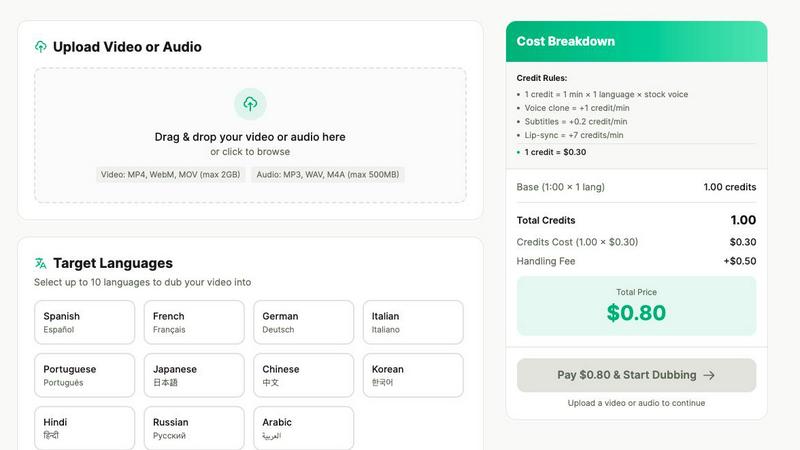
Dubvid dubs audio and video into multiple languages with natural voices and optional lip-sync.
Last updated: February 27, 2026

Vidgo API
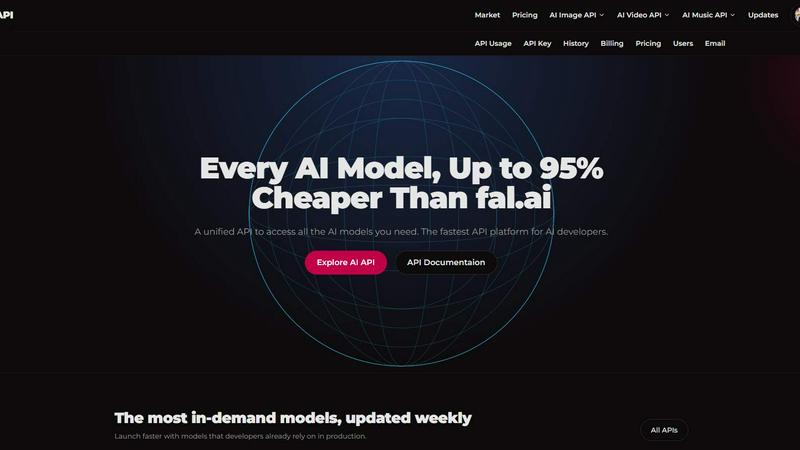
Vidgo API is a unified platform offering diverse AI models at up to 95% lower cost than competitors.
Last updated: February 28, 2026
Visual Comparison
Dubvid
Vidgo API
Feature Comparison
Dubvid
Multi-Language AI Dubbing
Dubvid's core functionality allows users to upload a video or audio file and select from a wide array of target languages for automatic dubbing. The AI engine handles the entire pipeline: transcription, translation, and voice synthesis. It generates a new audio track using stock AI voices that sound remarkably natural, maintaining the speaker's intended emotion and rhythm. This feature supports over ten languages, enabling rapid content localization for diverse geographic markets and demographic groups with just a few clicks.
Voice Cloning Technology
Beyond standard AI voices, Dubvid offers a personalized dubbing experience through its voice cloning capability. Users can submit a sample of their own voice, and the platform will create a unique, synthetic replica. This cloned voice can then be used to dub content into other languages, ensuring brand consistency and a familiar, authentic presence for audiences worldwide. This is particularly valuable for influencers, corporate spokespeople, and educators who wish to maintain their vocal identity across all localized versions of their content.
Advanced Lip-Sync (Premium)
For the highest level of realism in dubbed videos, especially crucial for direct-to-camera content, Dubvid provides an optional lip-synchronization feature. This premium add-on uses AI to analyze the speaker's mouth movements in the original video and precisely time the new, translated audio track to match. The result is a seamless viewing experience where the dubbed speech appears naturally aligned with the on-screen speaker, significantly reducing the cognitive dissonance often associated with traditional dubbing and increasing viewer engagement.
Integrated Subtitles & Global Reach Calculator
The platform includes tools for comprehensive localization. Users can easily add translated subtitles to their dubbed videos for increased accessibility. Furthermore, Dubvid features an interactive "Global Reach" calculator. This tool lets creators select their source language and desired target languages, instantly displaying the potential audience size—often in the billions—that speaking those languages represents. This powerful feature aids in strategic planning and demonstrates the tangible impact of localization efforts.
About Vidgo API
Unified AI Model Marketplace
Vidgo API provides a centralized dashboard and API endpoint to access a curated selection of the world's most advanced AI models for video, image, and music generation. This includes premier models like OpenAI's Sora 2, Google's Nano Banana Pro, ByteDance's Seedream 4.5, and Suno v5, among others. The marketplace is continuously updated weekly with new and trending models, ensuring developers always have access to state-of-the-art technology without the hassle of sourcing and integrating each model individually from different providers.
Significant Cost Efficiency
A defining feature of Vidgo API is its aggressive pricing structure, which offers access to top-tier AI models at costs up to 95% cheaper than direct competitors. This is achieved through optimized infrastructure and aggregated access. Each model listing clearly displays the per-request cost and the percentage of savings compared to market alternatives, providing transparent and predictable pricing. This allows businesses and developers to scale their AI-generated content production without incurring prohibitive expenses, making high-quality media generation accessible for a wider range of applications.
Production-Ready Reliability & Performance
Built for enterprise and production environments, Vidgo API guarantees 99.9% uptime and boasts an average response time of 120ms, ensuring consistent and reliable service for critical applications. The platform offers stable throughput, smart routing, and dedicated support for performance and cost tuning. This focus on reliability means developers can integrate Vidgo's APIs with confidence, knowing the infrastructure is designed to handle scale and maintain consistent operation for user-facing applications and automated content pipelines.
Simplified Developer Integration
The platform is designed with a developer-first approach, featuring clear, comprehensive documentation, consistent REST API endpoints across all model types, and a simple authentication flow using a single API key. The integration process is streamlined into a simple, step-by-step workflow: sign up for an API key, browse the marketplace, and start building. This unified approach reduces development time and complexity, allowing teams to connect to api.vidgo.ai and ship AI features to production in minutes rather than weeks.
Use Cases
Dubvid
Social Media & Short-Form Content Expansion
Creators on platforms like YouTube Shorts, Instagram Reels, and TikTok can use Dubvid to quickly dub their viral content into multiple languages. This strategy multiplies reach and engagement without creating entirely new videos from scratch. By localizing humor, commentary, and tutorials, creators can tap into new audiences and algorithmic trends in different regions, driving significant growth in their follower base and overall viewership metrics across global markets.
Educational Course & Tutorial Localization
Online educators, course creators, and tutorial producers can leverage Dubvid to translate their video lessons and webinars. This allows them to cater to international students and professionals, breaking down educational barriers and scaling their business. A single course can be efficiently localized for non-English speaking markets, enabling creators to sell the same high-quality content worldwide and establish themselves as authorities in their field on a global scale.
Corporate Training & Customer Support
Businesses can localize internal training materials, product demos, onboarding flows, and customer support videos for regional teams and clients. This ensures consistent messaging, improves comprehension, and reduces support tickets by providing clear, native-language instructions. Dubvid enables marketing and HR teams to rapidly deploy localized video content at scale, supporting global operations and enhancing the customer experience in every market they serve.
Podcast & Interview Dubbing
Podcasters and media companies can repurpose their audio and video podcast episodes for international listeners. By dubbing interviews and discussions, they can release content in new languages without the logistical and financial burden of re-recording with different hosts or translators. This opens up new revenue streams through advertising and subscriptions in foreign markets and builds a more diverse, international community around the podcast brand.
Vidgo API
Automated Marketing Content Creation
Marketing teams and agencies can leverage Vidgo API to automate the production of high-volume, tailored content. This includes generating promotional videos for social media campaigns, creating custom product images for e-commerce catalogs, and producing background music for advertisements. The API's cost-effectiveness and speed enable the creation of A/B testable content variants at scale, allowing for data-driven optimization of marketing assets while significantly reducing production timelines and costs associated with traditional media production.
Enhanced SaaS and Application Features
Software developers can integrate Vidgo's AI capabilities directly into their applications to offer powerful new features to their users. For example, a design tool could use the image API for instant mockup generation, a presentation software could offer video background creation, or a social platform could allow users to generate custom music for their profiles. This use case empowers SaaS companies to rapidly innovate and differentiate their product offerings by embedding professional-grade media generation tools without building the underlying AI infrastructure.
Prototyping and Creative Ideation
Creative professionals, including filmmakers, game developers, and advertising creatives, can use Vidgo API as a powerful ideation and prototyping tool. Teams can quickly generate visual concepts, storyboard sequences, or audio mood boards based on textual prompts. This accelerates the early creative process, allowing for rapid iteration and visualization of ideas before committing resources to full-scale production. The access to diverse, high-fidelity models enables exploration of various artistic styles and narratives efficiently.
Scalable Media for Entertainment and Education
Production houses and e-learning platforms can utilize the API to generate scalable media assets. This includes creating explanatory video animations for online courses, generating dynamic visual effects or scene extensions for film and game projects, and producing custom soundtracks. The unified API allows these organizations to manage all their AI-generated media needs—video, image, and audio—from a single platform, streamlining workflows and ensuring consistent quality and cost management across different types of media projects.
Overview
About Dubvid
Dubvid is a sophisticated, AI-powered localization platform engineered to translate and dub video and audio content into multiple languages with unprecedented speed and quality. It serves as a comprehensive solution for content creators, educators, marketing teams, and businesses aiming to eliminate language barriers and scale their reach to a global audience. The core value proposition lies in its ability to automate the traditionally complex, time-consuming, and expensive dubbing process. By leveraging advanced artificial intelligence, Dubvid not only translates spoken dialogue but also regenerates it using natural-sounding AI voices that preserve the original's emotional tone, pacing, and intonation. The platform further distinguishes itself with optional, premium lip-synchronization technology that adjusts the dubbed audio to match on-screen mouth movements, enhancing realism for talking-head videos. With a user-centric, credit-based pricing model and support for over ten languages, Dubvid democratizes high-quality video localization, enabling users to transform and distribute their content internationally in minutes rather than weeks, without the need for studios, voice actors, or intricate editing software.
About Vidgo API
Vidgo API is a comprehensive, unified platform designed to provide developers and creative teams with streamlined access to a vast marketplace of cutting-edge AI models for multimedia generation. It functions as a single, developer-first REST API that consolidates capabilities for generating video, images, and music, eliminating the need to manage multiple vendor integrations, authentication keys, and disparate billing systems. The platform's core value proposition is delivering production-grade AI capabilities at a radically reduced cost, boasting savings of up to 95% compared to competitors like fal.ai, without compromising on quality or reliability. It is engineered for technical users, including developers at startups and enterprises, marketers, and content creation teams who require fast, stable, and cost-predictable AI integration into their applications and workflows. With over 12 video models, 9 image models, and multiple music endpoints—all accessible through consistent interfaces and backed by 99.9% uptime—Vidgo API empowers users to launch and scale AI-powered features rapidly. Its comprehensive documentation, straightforward integration process, and regular updates with the most in-demand models make it an essential tool for anyone looking to harness the power of generative AI for media production efficiently.
Frequently Asked Questions
Dubvid FAQ
How does Dubvid's pricing work?
Dubvid operates on a transparent, usage-based credit system, not a subscription. You only pay for the minutes you localize. One credit equals dubbing one minute of source audio into one language using a stock AI voice. Additional features incur extra credits: voice cloning adds +1 credit per minute, subtitles +0.2, and premium lip-sync +7 credits per minute. Each credit costs $0.30, and a fixed $0.50 handling fee is applied per job. A pricing calculator on the site helps you estimate costs easily.
What file formats and sizes does Dubvid support?
The platform supports a wide range of common media formats for maximum flexibility. For video, you can upload files in MP4, MOV, and WebM formats. For audio-only projects, it supports MP3 and WAV files. The current maximum file size for upload is 500MB, which accommodates most short to medium-length videos and podcasts suitable for online distribution and social media.
Is there a free trial available?
Yes, Dubvid offers a free trial that requires no credit card. New users receive 2 free credits, which can be used to dub up to 60 seconds of content (e.g., 30 seconds into 2 languages). This allows you to fully test the platform's quality, from upload to final download, and assess the naturalness of the AI voices and the overall workflow before committing any funds.
What is the difference between stock voice and voice clone?
Stock voices are Dubvid's library of pre-built, high-quality AI voices in various languages and accents. They are ready to use immediately. A voice clone is a custom AI voice created from a sample of your own (or a chosen speaker's) voice. It requires an initial sample to train the model and then can be used to dub content, preserving your unique vocal characteristics and brand identity across all translated versions.
Vidgo API FAQ
What types of AI models are available on Vidgo API?
Vidgo API provides access to a broad and growing marketplace of state-of-the-art generative AI models. This includes over 12 specialized models for video generation (e.g., Sora 2, Kling 2.6 for motion control, Hailuo 02), 9 models for high-resolution image creation and editing (e.g., Nano Banana Pro, Seedream 4.5), and multiple endpoints for AI music generation, such as the advanced Suno v5 model for studio-quality audio. The platform is regularly updated with new and in-demand models weekly.
How does the pricing and billing work?
Vidgo API operates on a transparent, pay-per-request pricing model. You are charged based on the specific AI model you use for each generation task, with costs clearly listed per request (e.g., $0.04 for Kling 2.6, $0.15 for Sora 2). The platform aggregates these costs, and you manage everything through a single billing account. A key advantage is the significant cost savings, often up to 95% cheaper than going directly to other AI model providers, with the savings percentage displayed for each model.
Is Vidgo API suitable for production applications?
Absolutely. Vidgo API is engineered specifically for production use cases. It guarantees 99.9% service uptime and offers low average response times (120ms), ensuring reliability for user-facing applications. The platform provides consistent API endpoints, predictable pricing, and features like callback URLs for asynchronous job handling. Additionally, it offers support for performance tuning and scaling, making it a robust choice for businesses and developers who need stable and dependable AI integration at scale.
How do I get started and integrate the API?
Getting started is a straightforward three-step process. First, sign up for an account on the Vidgo AI website to instantly generate your unique API key—no waitlist is required. Second, explore the API documentation and marketplace to select the best models for your video, image, or music generation needs. Third, integrate using the unified REST API endpoints, following the comprehensive documentation. You can typically make your first API call within minutes using the provided code samples and your API key for authentication.
Alternatives
Dubvid Alternatives
Dubvid is an AI-powered content creation tool specializing in video and audio dubbing. It automates the process of translating and revoicing media into multiple languages, offering features like natural-sounding voices and optional lip-sync technology to help creators and businesses reach international audiences efficiently. Users may explore alternatives to Dubvid for various reasons. Common considerations include budget constraints, as pricing models and subscription tiers can differ significantly. Others might seek specific technical capabilities, such as support for a wider range of languages, different voice styles, or integration with particular editing platforms and workflows that better suit their production needs. When evaluating other solutions in this category, key factors to examine are the quality and naturalness of the AI-generated voices, the accuracy of the translation and synchronization, the number of supported languages and dialects, and the overall ease of use. The ideal platform balances professional output with a streamlined process that fits your specific project scale and technical requirements.
Vidgo API Alternatives
Vidgo API is a unified AI media generation platform within the development and AI services category. It provides developers and creative teams with a single REST API to access a diverse suite of models for generating video, image, and music content, with a core emphasis on significant cost efficiency. Users may explore alternatives for various reasons. These include seeking different pricing structures or billing models, requiring specific AI models or generation capabilities not offered, or needing to comply with particular platform integration or data residency requirements. The search often stems from a need to find the optimal balance of features, performance, and cost for a unique project or organizational workflow. When evaluating alternatives, key considerations should include the breadth and quality of available AI models for video, image, and audio tasks, the clarity and reliability of the API and its documentation, the overall total cost of operation and pricing transparency, and the platform's scalability and security measures. The goal is to identify a service that aligns with both technical requirements and strategic budgetary constraints.