
FLUX.1 Kontext Image Generator vs Storydoc
Side-by-side comparison to help you choose the right product.

FLUX.1 Kontext Image Generator
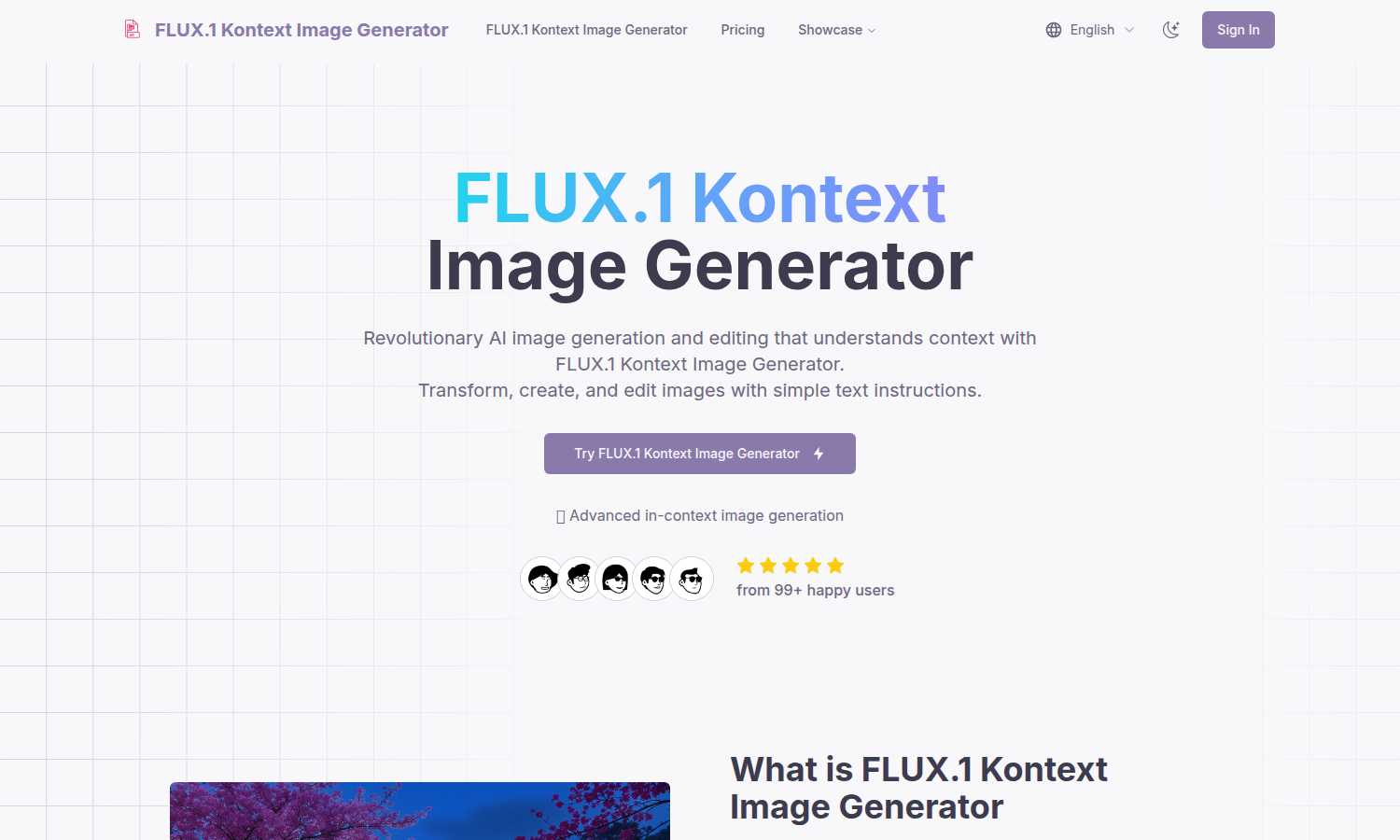
FLUX.1 Kontext generates and edits context-aware images with character consistency from text and image inputs.
Last updated: March 1, 2026

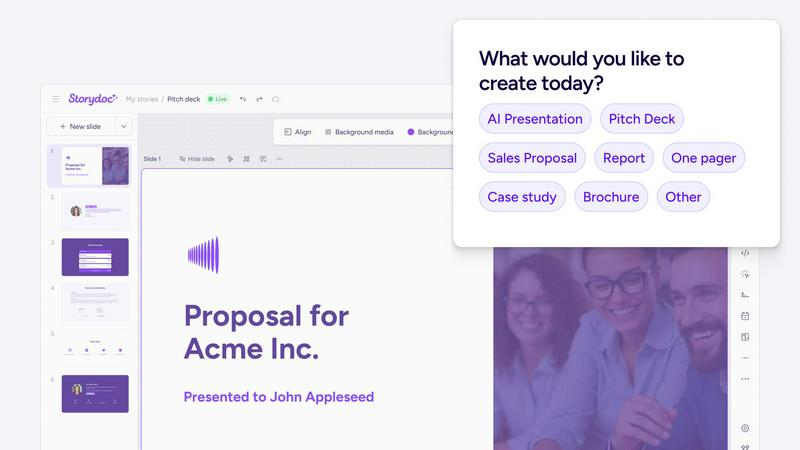
Storydoc empowers professionals to effortlessly create and manage interactive AI-driven presentations and business documents that drive results.
Last updated: March 26, 2026
Visual Comparison
FLUX.1 Kontext Image Generator
Storydoc
Feature Comparison
FLUX.1 Kontext Image Generator
In-Context Image Generation
This is the cornerstone feature of FLUX.1 Kontext. Unlike standard text-to-image models, it accepts a combination of text prompts and reference images as input. The AI analyzes the visual context, relationships, and elements within the provided images alongside the textual instructions to generate entirely new, coherent renderings. This allows for complex scene construction where the output logically integrates specified characters, objects, and styles from the references, ensuring the final image is contextually aware and relevant to the user's creative intent.
Character and Object Consistency
A critical feature for serialized content creation, FLUX.1 Kontext excels at preserving the unique visual identity of characters, objects, or specific design elements across a series of generated images. Whether placing the same character in different environments, poses, or outfits, the tool maintains core attributes like facial features, clothing details, and style. This eliminates the common "drift" seen in other AI tools, making it essential for comic book creation, storyboarding, advertising campaigns, and any project requiring a stable visual narrative.
Precise Local Editing
FLUX.1 Kontext allows for targeted, surgical modifications to specific areas of an image without necessitating a complete regeneration or affecting the untouched portions of the composition. Users can instruct the AI to change an item of clothing, modify the background, alter an object's color, or add/remove elements with simple text commands. This feature provides granular creative control, enabling refinements and iterations that preserve the overall integrity and quality of the original image, streamlining the revision process.
Style Reference and Transfer
This feature enables users to guide the aesthetic output of image generation by providing a reference image that defines a desired artistic style, color palette, or texture. FLUX.1 Kontext can then generate novel scenes or subjects that adhere to the visual language of the reference, all while following a separate text prompt for content. This allows for the creation of cohesive visual branding, the emulation of specific artistic techniques, or the consistent application of a unique visual theme across multiple generated assets.
About Storydoc
AI Creation
The AI creation feature allows users to generate beautifully structured documents in mere seconds, eliminating the need for advanced design or writing skills. This empowers professionals to focus on content rather than aesthetics, ensuring that even those without a design background can produce high-quality presentations effortlessly.
Interactive & Dynamic Elements
Storydoc enhances user engagement through the integration of interactive and dynamic elements directly within documents. Users can embed various media types, including videos, calendars, and forms, making presentations more engaging and informative. This interactivity transforms static content into a lively experience that captivates audiences and drives action.
Personalization & Automation
With Storydoc's personalization and automation capabilities, users can create and share documents at scale, delivering tailored content that resonates with specific audiences. By utilizing dynamic fields and integrating live CRM data, teams can ensure that every document is customized to meet the unique needs of their clients, enhancing relevance and engagement.
Deep Analytics
The platform provides deep analytics that enable users to track engagement metrics such as opens, clicks, and scroll depth. This data-driven approach allows businesses to understand what content resonates with their audiences and what elements may need adjustment. By analyzing these insights, teams can refine their strategies and improve their overall effectiveness.
Use Cases
FLUX.1 Kontext Image Generator
Serialized Content and Storytelling
Ideal for authors, comic artists, and game developers, FLUX.1 Kontext can generate consistent character illustrations across multiple scenes, chapters, or promotional materials. A writer can establish a protagonist's visual design and then generate that same character in various action poses, emotional states, and settings as the story progresses, ensuring visual continuity that enhances narrative immersion and brand recognition for the project.
Marketing and Advertising Campaigns
Marketing teams can leverage the tool to create a suite of cohesive visual assets for a campaign. By generating product images or brand mascots in diverse scenarios—from a busy city street to a serene natural landscape—all while maintaining perfect consistency, brands can produce high-volume, tailored content for different platforms and audiences without the cost and time of traditional photoshoots or inconsistent AI outputs.
Conceptual Design and Rapid Prototyping
Designers and concept artists can use FLUX.1 Kontext to rapidly visualize ideas. By providing rough sketches or mood boards as image input alongside descriptive text, they can generate multiple high-fidelity variations of a product, character, or environment. The local editing feature allows for quick iteration on specific design elements, such as changing materials or adjusting proportions, accelerating the creative exploration and client presentation phases.
Personalized Content and Entertainment
Content creators, social media influencers, and educators can use the tool to produce engaging, personalized visual content. For example, an educator could maintain a consistent animated tutor character across different lesson videos. A creator could insert a familiar avatar into various humorous or topical scenarios relevant to their audience. This builds a stronger visual identity and connection with viewers through reliable and adaptable character presence.
Storydoc
Sales Presentations
Sales teams can leverage Storydoc to create compelling, interactive presentations that showcase their products and services. By embedding videos and interactive elements, they can engage potential clients more effectively, leading to increased interest and higher conversion rates.
Marketing Proposals
Marketing professionals can use Storydoc to craft personalized proposals that stand out from traditional static documents. By incorporating dynamic content and real-time data, they can create proposals that address specific client needs, enhancing their chances of winning contracts.
Corporate Reports
Storydoc is ideal for generating corporate reports that require a modern touch. By utilizing multimedia elements and interactive storytelling, organizations can present complex data in a more digestible format, making it easier for stakeholders to grasp critical insights.
Training Materials
Educational institutions and corporate trainers can utilize Storydoc to develop engaging training materials. By employing interactive features and personalized content, they can create a more effective learning environment that fosters better retention and understanding among participants.
Overview
About FLUX.1 Kontext Image Generator
FLUX.1 Kontext Image Generator represents a paradigm shift in the field of artificial intelligence-driven visual creation. It is a sophisticated tool built upon a suite of advanced generative flow matching models, collectively known as FLUX.1 Kontext. This foundational technology enables a novel approach to image generation and editing by utilizing both textual descriptions and visual inputs simultaneously. The primary innovation lies in its capacity for "in-context" generation, where the AI synthesizes new images by understanding and preserving the contextual relationships and elements present in the provided prompts and reference images. This makes it an indispensable asset for a wide range of professionals, including digital artists, graphic designers, marketing agencies, content creators, and storytellers. Its core value proposition is the unprecedented ability to maintain character and object consistency across multiple scenes and iterative edits, a task that has traditionally been challenging for AI image generators. By streamlining complex creative workflows into an intuitive process of text and image prompting, FLUX.1 Kontext empowers users to produce high-quality, coherent, and contextually relevant imagery that aligns precisely with their artistic vision and project requirements.
About Storydoc
Storydoc is a cutting-edge AI platform designed to revolutionize the way business professionals create, manage, and distribute presentations and documents. It automates the creation of various business materials, including proposals, pitch decks, and reports, allowing users to transition from static to dynamic, interactive storytelling. This tool caters to a wide range of users, from solo entrepreneurs to large marketing teams, providing them with the ability to produce on-brand content quickly and efficiently. The main value proposition of Storydoc lies in its capacity to centralize the creation and personalization of business collateral while incorporating engaging elements like videos and interactive forms. By streamlining workflows and tracking engagement metrics, Storydoc empowers teams to convert passive reading experiences into actionable insights, ultimately driving better decision-making and faster deal closures.
Frequently Asked Questions
FLUX.1 Kontext Image Generator FAQ
How does FLUX.1 Kontext differ from other AI image generators like DALL-E or Midjourney?
While tools like DALL-E and Midjourney are primarily powerful text-to-image models, FLUX.1 Kontext is fundamentally architected for multi-modal, in-context generation. Its key differentiator is the ability to use both images and text as concurrent inputs. This allows it to understand and preserve specific visual context from reference images, leading to superior performance in tasks requiring consistency, such as maintaining a character's appearance across scenes or editing specific parts of an image, which are more challenging for purely text-prompted systems.
What is meant by "generative flow matching models"?
Generative flow matching is an advanced class of machine learning models used for creating new data, such as images. It represents a significant evolution from earlier diffusion models. In simple terms, it provides a more efficient and direct path for transforming random noise into a coherent final image based on the input conditions (text and images). This technological foundation is what enables FLUX.1 Kontext's reported benefits in speed, prompt understanding, and the generation of high-quality, detailed outputs with complex conditional inputs.
Can I use FLUX.1 Kontext for commercial projects?
Yes, FLUX.1 Kontext Image Generator is designed as a professional tool suitable for commercial use. Its features, particularly character consistency and high-quality output, are tailored for creators and businesses needing reliable assets for marketing, publishing, product design, and other commercial applications. Users should review the specific terms of service for their chosen subscription plan to understand any usage rights, attribution requirements, or limitations associated with the generated images.
Is technical expertise required to use FLUX.1 Kontext?
No, FLUX.1 Kontext is built with an intuitive interface designed to streamline the creative process for users of all skill levels. The core interaction involves providing text prompts and uploading reference images, which is a straightforward process. The complexity lies in the AI's advanced capabilities, not in the user interface. Beginners can achieve impressive results quickly, while professionals can leverage the nuanced features for sophisticated, controlled outputs, making it accessible yet powerful.
Storydoc FAQ
What types of documents can I create with Storydoc?
Storydoc allows users to create a wide variety of documents, including presentations, proposals, pitch decks, reports, and one-pagers, all designed to be interactive and engaging.
How does Storydoc ensure data security?
Storydoc prioritizes data security by adhering to ISO 27001 compliance, GDPR regulations, and implementing secure SSO authentication, ensuring that user data is protected at all times.
Can I integrate Storydoc with other tools?
Yes, Storydoc offers integration capabilities via connectors such as Zapier and Make, allowing teams to pull in live data and personalize their documents at scale seamlessly.
Is there a trial period available for Storydoc?
Yes, Storydoc offers a 14-day free trial for new users, allowing them to explore the platform's features without requiring a credit card upfront.
Alternatives
FLUX.1 Kontext Image Generator Alternatives
FLUX.1 Kontext Image Generator is a sophisticated AI tool within the generative art and design software category. It specializes in creating and editing context-aware images, with a particular strength in maintaining character consistency across different scenes, making it valuable for storytelling and professional content creation. Users often seek alternatives for various practical reasons. These include budget constraints, as pricing models and subscription tiers vary widely. Others may require specific features not offered, such as different artistic styles, higher resolution outputs, or integration with other platforms. Some creators simply prefer a different user interface or workflow that better aligns with their personal process. When evaluating an alternative, key considerations should include the core capability for in-context generation and editing, the robustness of character consistency features, and the overall quality and control over the final image. It is also prudent to assess the cost structure, output licensing terms, and the tool's performance speed to ensure it meets both creative and operational needs.
Storydoc Alternatives
Storydoc is an innovative AI platform designed to automate the creation of business presentations and documents, such as proposals and pitch decks. It belongs to the marketing category, specifically targeting sales and marketing teams looking to enhance their document engagement through interactive storytelling. Users often seek alternatives to Storydoc for various reasons, including pricing, specific feature sets, or compatibility with existing platform needs. When considering alternatives, it is essential to evaluate factors such as ease of use, customization options, integration capabilities, and the ability to enhance user engagement. In the search for a suitable alternative, users should prioritize platforms that offer robust features for document personalization, data security measures, and seamless collaboration tools. Additionally, understanding the level of customer support and the scalability of the solution can greatly influence the effectiveness of the alternative chosen. By focusing on these key aspects, users can find a solution that meets their unique business requirements and enhances their overall document management processes.