
Crawlkit vs fnel
Side-by-side comparison to help you choose the right product.

Crawlkit
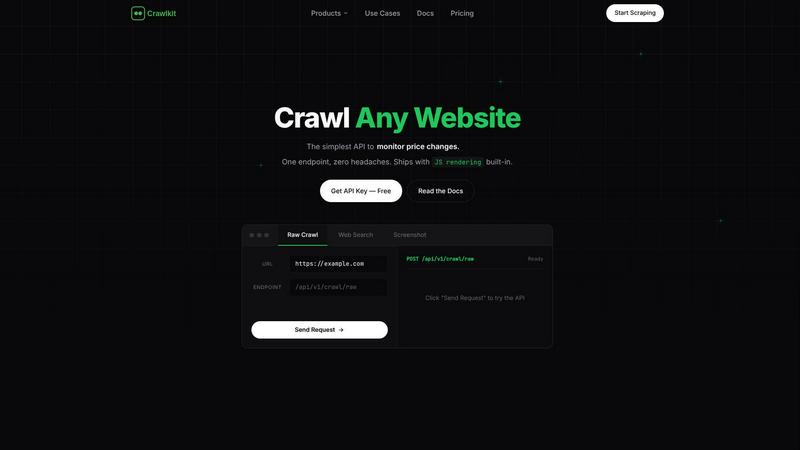
CrawlKit is an API-first platform that turns any website into structured data with a single request.
Last updated: February 28, 2026

fnel
Fnel empowers solo founders with real-time funnel analytics to pinpoint drop-offs and enhance conversion rates.
Last updated: March 1, 2026
Visual Comparison
Crawlkit
fnel
Feature Comparison
Crawlkit
Unified Multi-Platform API
Crawlkit provides a single, cohesive API endpoint to extract structured data from a vast array of disparate web sources. Instead of building and maintaining separate scrapers for LinkedIn, Instagram, search engines, and app stores, developers can interact with one consistent interface. This unification drastically reduces development time, simplifies code maintenance, and ensures a standardized data output format across all platforms, making data integration and processing significantly more efficient.
Built-In Infrastructure Management
The platform completely handles the underlying infrastructure required for robust web scraping. This includes automated management of rotating residential and datacenter proxies to avoid IP bans, dynamic rendering of JavaScript-heavy pages using headless browser technology, and intelligent logic to bypass anti-bot systems like CAPTCHAs and fingerprinting. By internalizing these complexities, Crawlkit guarantees higher success rates and reliable data delivery without requiring any engineering effort from the user.
Transparent, Credit-Based Pricing
Crawlkit operates on a clear, pay-as-you-go credit system where each API call consumes a predetermined number of credits. This model offers full cost predictability with no monthly subscriptions, hidden fees, or surprise overage charges. Notably, credits are refunded if a request fails, and they never expire, providing exceptional flexibility. The pricing is transparently displayed per endpoint, and volume discounts are available for high-volume users, aligning cost directly with usage.
Guaranteed Data Completeness and Structure
Unlike basic HTTP clients that may return incomplete HTML, Crawlkit is engineered to ensure data completeness. It waits for full page loads, including all dynamic content rendered by JavaScript, and validates responses before delivery. The platform then parses the raw HTML into clean, structured JSON data, extracting the relevant fields (like follower counts, job titles, or review ratings) so users receive analysis-ready information instead of unstructured markup.
fnel
Real-Time Funnel Analytics
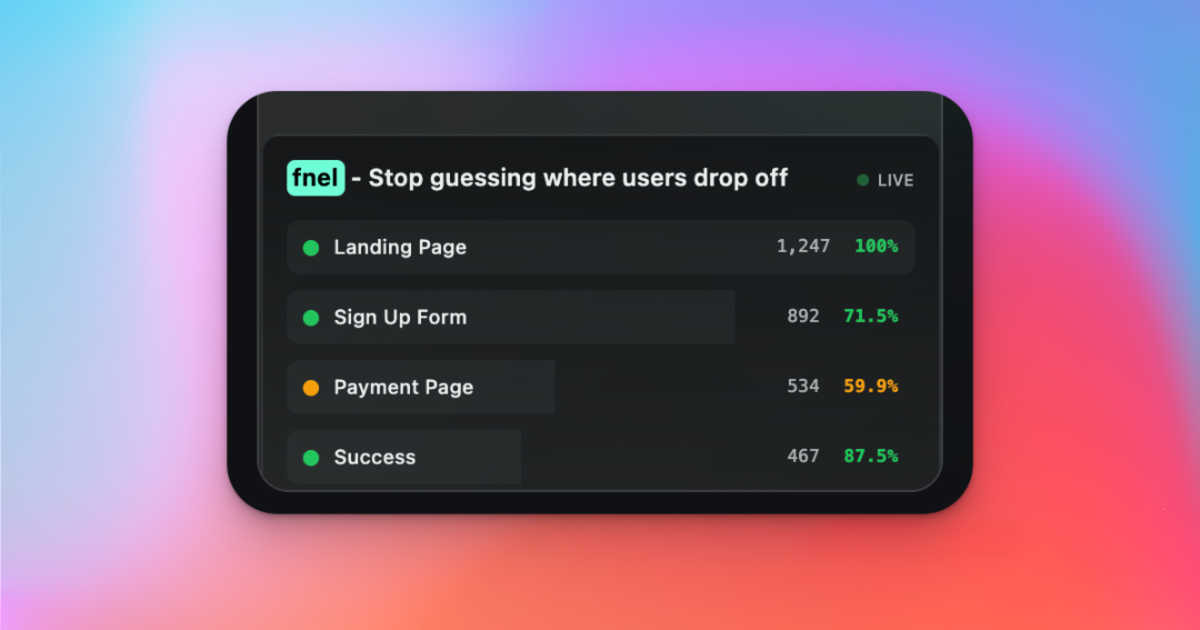
fnel provides real-time analytics that visualize user flow through different stages of the funnel. Founders can instantly see where users are dropping off, allowing for immediate action to fix conversion leaks and optimize the sales process.
Smart Drop-off Alerts
This feature automatically detects sudden changes in user behavior at specific funnel steps. By notifying users of high drop-off rates, founders can quickly identify and address issues that may hinder conversion rates.
A/B Testing Capabilities
fnel enables users to run A/B tests with ease, comparing different funnel variants to determine which performs better. This data-driven approach allows founders to optimize their funnels based on actual user behavior rather than assumptions.
One-Line Setup
With just a single snippet of code, users can integrate fnel into their applications within minutes. This eliminates the complexities often associated with traditional analytics setups, allowing founders to start tracking their funnels almost immediately.
Use Cases
Crawlkit
CRM and Lead Enrichment
Sales and marketing teams can automate the enrichment of contact records in their Customer Relationship Management (CRM) systems. By programmatically feeding LinkedIn profile URLs into Crawlkit's API, they can pull structured data such as current job titles, company affiliations, professional summaries, and skills. This automates the manual research process, ensures data accuracy, and provides sales representatives with richer context for personalized outreach and lead scoring.
Competitive Intelligence and Market Research
Businesses can systematically monitor competitors by extracting public data from various sources. This includes tracking a competitor's Instagram growth metrics (follower count, engagement rates), analyzing reviews and ratings of their apps on the Play Store and App Store, or scraping their company details and job postings from LinkedIn. This aggregated, structured data fuels competitive analysis, informs strategic decisions, and identifies market trends.
Social Media Performance Tracking
Marketing agencies and brand managers can build automated dashboards to track the performance of social media campaigns. By regularly calling Crawlkit's Instagram API endpoints, they can gather historical data on profile growth, post engagement, and content performance for their own accounts or benchmark against industry influencers. This data is crucial for reporting, optimizing content strategy, and demonstrating ROI to clients.
App Store Optimization (ASO) Analysis
Mobile app developers and publishers can leverage Crawlkit to gather critical data for App Store Optimization. The API can extract detailed app metadata, user reviews, and ratings from both the Google Play Store and Apple App Store. Analyzing this structured data helps developers understand user sentiment, identify common complaints or requested features, monitor keyword performance, and benchmark against competing apps to improve their own app's visibility and conversion rates.
fnel
SaaS Signup Flow Tracking
Founders of SaaS products can utilize fnel to monitor their entire signup flow. By tracking each step from landing page to onboarding, they can identify where potential users drop off and make necessary adjustments to improve conversions.
E-Commerce Checkout Optimization
E-commerce businesses can leverage fnel to visualize the checkout process. By analyzing each step from cart to order placement, they can pinpoint where customers abandon their carts and implement strategies to reduce drop-offs.
Agency Lead Funnel Validation
Digital agencies can use fnel to track their lead generation funnels. By monitoring steps from form submission to booking a call, they can determine which marketing campaigns are most effective and adjust their strategies accordingly.
A/B Test Analysis for Marketing Campaigns
Marketing teams can employ fnel to run A/B tests on different landing page variants. By analyzing conversion rates at each funnel step, they can make informed decisions on which campaign elements resonate best with their audience.
Overview
About Crawlkit
Crawlkit is a sophisticated, developer-centric web data extraction platform engineered to transform the complex, often frustrating process of web scraping into a simple, reliable, and scalable API service. Its core value proposition is to "Turn the Web into an API," providing developers and data teams with structured data from virtually any website or online platform through a single, unified interface. The platform is meticulously designed to abstract away the immense technical overhead traditionally associated with data collection, including the management of rotating proxy networks, execution of headless browsers, circumvention of sophisticated anti-bot protections, and adherence to platform-specific rate limits. This allows users to shift their focus entirely from the mechanics of data gathering to the strategic analysis and utilization of the data itself. Catering to a broad spectrum of users, from agile startups to large-scale enterprises, Crawlkit supports extraction from diverse sources like LinkedIn for professional networking data, Instagram for social media metrics, Google and DuckDuckGo for search results, and major app stores for application details and reviews. With a transparent, credit-based pricing model, no monthly commitments, and a promise that credits never expire, Crawlkit positions itself as a flexible, cost-effective, and powerful foundation for building data-driven applications and workflows.
About fnel
fnel is a specialized funnel analytics tool crafted for solo founders, indie hackers, and early-stage startups. Unlike traditional analytics platforms that often require complex integrations and provide overwhelming dashboards, fnel streamlines the process of understanding user behavior by focusing solely on funnel analysis. This unique approach allows users to easily track where potential customers drop off in their sales funnels, thus enabling them to make data-driven decisions quickly. Users can start tracking events with just a single line of code and gain access to real-time funnel visualizations without the burdens of extensive setup or a steep learning curve. This simplicity empowers founders to concentrate on optimizing signups, onboarding, and overall conversion rates. Whether you are testing a new idea, managing a side project, or scaling your first SaaS product, fnel delivers the clarity needed for informed decision-making. Its developer-friendly design ensures that users spend less time configuring analytics tools and more time focused on building and improving their products.
Frequently Asked Questions
Crawlkit FAQ
What happens if an API request fails?
Crawlkit operates on a refund policy for failed requests. If an API call does not successfully return the requested structured data due to issues on Crawlkit's side (such as a parsing error or infrastructure problem), the credits spent on that request are automatically refunded to your account. This policy ensures you only pay for successful, usable data delivery.
Do I need to manage proxies or browsers?
No, absolutely not. One of Crawlkit's primary value propositions is the complete abstraction of infrastructure management. The platform automatically handles all aspects of proxy rotation, browser emulation, and session management to navigate anti-bot measures. As a user, you simply send an API request with your target URL and receive structured data, with no need to configure or maintain any underlying scraping infrastructure.
How does the credit system work?
Crawlkit uses a credit-based pricing model. You purchase a bundle of credits upfront. Different API endpoints cost a different, transparent number of credits per call (e.g., a LinkedIn profile may cost 2 credits). Credits are deducted from your balance only for successful requests. They have no expiration date, and you can purchase more at any time, with volume discounts applied for larger bundles. There are no recurring monthly fees.
Can I request a new data source or API endpoint?
Yes, Crawlkit actively encourages user feedback for new integrations. The platform states, "Need an API we don't have yet? Talk to us, we'll build it." Users can contact the Crawlkit team to request support for additional websites, social platforms, or specific data extraction needs. This collaborative approach ensures the platform evolves to meet the real-world requirements of its developer community.
fnel FAQ
How is fnel different from GA or Mixpanel?
fnel is specifically designed for funnel analytics, focusing on speed and simplicity. Unlike GA or Mixpanel, fnel requires just one snippet for setup and provides immediate insights into user drop-offs, eliminating the clutter of unnecessary data.
Is there a Free plan?
Yes, fnel offers a Free Starter plan that includes up to 5,000 events per month and allows for tracking three funnels. This plan requires no credit card, providing an opportunity for users to validate their funnels risk-free.
What are the Pro and Lifetime details?
The Pro plan costs $12 per month (or $9.99 when billed annually) and includes up to 100,000 events, unlimited funnel tracking, and advanced drop-off analysis. The Lifetime plan is a one-time payment of $429 that includes all Pro features with no recurring fees ever.
How can I quickly set up fnel for my project?
Setting up fnel is straightforward; simply install the fnel package, add your API key to the configuration, and start tracking events. Users can begin visualizing funnels in just minutes with zero configuration needed.
Alternatives
Crawlkit Alternatives
Crawlkit is a prominent API-first web scraping platform within the analytics and data category, designed to streamline the extraction of web data for developers and data teams. It abstracts the complexities of managing proxies, headless browsers, and anti-bot measures, allowing users to focus on data utilization rather than infrastructure. Users often explore alternatives to Crawlkit for various reasons, including budget constraints, specific feature requirements not covered by the platform, or the need for a different deployment model such as on-premise solutions. The search can also be driven by project scale, desired integration capabilities, or particular data source specializations. When evaluating an alternative, key considerations include the platform's success rate in data extraction, its ability to handle JavaScript-rendered content, the sophistication of its anti-blocking technology, and the clarity of its pricing structure. Scalability, data delivery speed, and the quality of developer documentation and support are also critical factors that determine long-term viability for data-intensive projects.
fnel Alternatives
fnel is an innovative funnel analytics tool tailored for solo founders, indie hackers, and early-stage startups. It simplifies the process of understanding user behavior through intuitive funnel visualizations, allowing users to identify drop-offs and optimize conversions with ease. However, users often seek alternatives due to various reasons such as pricing constraints, feature limitations, or specific platform requirements that may not be fully addressed by fnel. When searching for alternatives to fnel, it is essential to evaluate factors like user interface simplicity, real-time analytics capabilities, and the level of support for A/B testing. Additionally, consider the integration options with your existing tech stack and whether the alternative can meet your specific business needs effectively.