
fnel vs Stable Commerce
Side-by-side comparison to help you choose the right product.

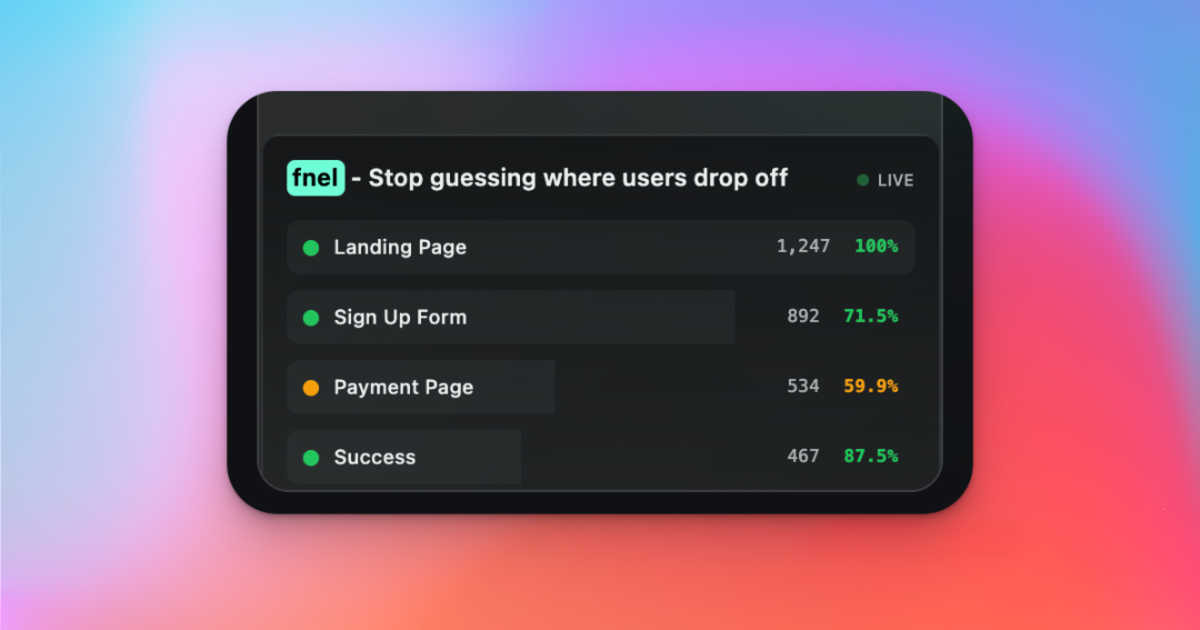
Fnel empowers solo founders with real-time funnel analytics to pinpoint drop-offs and enhance conversion rates.
Last updated: March 1, 2026

Stable Commerce
Stable Commerce is an AI-first e-commerce engine that autonomously builds and optimizes fully operational online stores.
Last updated: March 4, 2026
Visual Comparison
fnel
Stable Commerce
Feature Comparison
fnel
Real-Time Funnel Analytics
fnel provides real-time analytics that visualize user flow through different stages of the funnel. Founders can instantly see where users are dropping off, allowing for immediate action to fix conversion leaks and optimize the sales process.
Smart Drop-off Alerts
This feature automatically detects sudden changes in user behavior at specific funnel steps. By notifying users of high drop-off rates, founders can quickly identify and address issues that may hinder conversion rates.
A/B Testing Capabilities
fnel enables users to run A/B tests with ease, comparing different funnel variants to determine which performs better. This data-driven approach allows founders to optimize their funnels based on actual user behavior rather than assumptions.
One-Line Setup
With just a single snippet of code, users can integrate fnel into their applications within minutes. This eliminates the complexities often associated with traditional analytics setups, allowing founders to start tracking their funnels almost immediately.
About Stable Commerce
Prompt-to-Store Generator
This foundational feature allows users to generate a complete, live online store by simply describing their business idea in a natural language prompt. The AI agent interprets the prompt, automatically designs the storefront, configures the necessary backend systems, and applies basic branding and structure, delivering a functional store in under two minutes. This eliminates the traditional hurdles of theme selection, plugin installation, and manual page building, making store launch an instantaneous process rather than a multi-day technical project.
Autonomous Commerce Agent
Acting as the central intelligence of the platform, the Autonomous Agent continuously manages and orchestrates the entire e-commerce operation. It performs the roles of multiple specialists by automatically connecting storefronts, marketplaces, customer relationship management systems, analytics dashboards, and fulfillment logistics into a cohesive workflow. The agent also analyzes real-time data to track sales and customer behavior, and proactively optimizes store performance for better conversion rates and efficiency, all without requiring manual intervention or supervision.
Integrated E-Commerce Stack
Stable Commerce provides a fully integrated, all-in-one platform that consolidates every critical component needed to run an online business. This includes robust inventory management across unlimited locations, seamless order processing, integrated fulfillment APIs, and customer service tools. The platform also comes with enterprise-grade security protocols, SSL certification, and fraud protection built-in, ensuring that data safety and technical reliability are foundational, not add-ons.
Multi-Source Product Import
The platform simplifies product catalog population by offering direct import capabilities from a wide array of sources. Users can effortlessly import products from spreadsheets (Excel, CSV) or directly from major online marketplaces such as eBay, Etsy, and Amazon. This feature streamlines the initial setup and ongoing inventory expansion, allowing merchants to quickly list items without manual data entry, which is especially valuable for dropshipping or multi-channel retailers.
Use Cases
fnel
SaaS Signup Flow Tracking
Founders of SaaS products can utilize fnel to monitor their entire signup flow. By tracking each step from landing page to onboarding, they can identify where potential users drop off and make necessary adjustments to improve conversions.
E-Commerce Checkout Optimization
E-commerce businesses can leverage fnel to visualize the checkout process. By analyzing each step from cart to order placement, they can pinpoint where customers abandon their carts and implement strategies to reduce drop-offs.
Agency Lead Funnel Validation
Digital agencies can use fnel to track their lead generation funnels. By monitoring steps from form submission to booking a call, they can determine which marketing campaigns are most effective and adjust their strategies accordingly.
A/B Test Analysis for Marketing Campaigns
Marketing teams can employ fnel to run A/B tests on different landing page variants. By analyzing conversion rates at each funnel step, they can make informed decisions on which campaign elements resonate best with their audience.
Stable Commerce
First-Time Entrepreneur Launch
An individual with a product idea but no technical expertise or capital to hire developers can use Stable Commerce to enter the market rapidly. By inputting a simple prompt about their niche—for example, "an online store selling eco-friendly yoga mats and accessories"—they receive a fully-built, secure, and mobile-ready store. This allows them to bypass the learning curve associated with traditional platforms like Shopify or WooCommerce, where managing plugins and themes is often a barrier to launch.
Scaling an Existing E-commerce Business
Established store owners burdened by high operational costs from multiple plugin subscriptions, developer fees, and a team managing disparate tools can migrate to Stable Commerce for consolidation. The autonomous agent unifies their tech stack, automates optimization tasks, and provides managed analytics, enabling the business to scale its operations without linearly increasing its overhead or technical complexity, potentially saving significant annual costs.
Agencies Managing Multiple Client Stores
Marketing or e-commerce agencies can leverage the Stable Commerce platform, particularly the Pro or Agency tiers, to deploy and manage stores for their clients with unprecedented efficiency. The prompt-based generation and centralized agent management allow for rapid prototyping and consistent, hands-off operation of multiple stores, turning service delivery into a scalable, repeatable process rather than a custom development project for each client.
Merchants Expanding to New Sales Channels
A retailer looking to expand beyond their primary website into additional marketplaces or sales channels can use Stable Commerce's orchestration capabilities. The platform can help manage a unified inventory and order flow across these new storefronts, with the autonomous agent handling the integrations and synchronization, thus reducing the manual effort and risk of error associated with multi-channel management.
Overview
About fnel
fnel is a specialized funnel analytics tool crafted for solo founders, indie hackers, and early-stage startups. Unlike traditional analytics platforms that often require complex integrations and provide overwhelming dashboards, fnel streamlines the process of understanding user behavior by focusing solely on funnel analysis. This unique approach allows users to easily track where potential customers drop off in their sales funnels, thus enabling them to make data-driven decisions quickly. Users can start tracking events with just a single line of code and gain access to real-time funnel visualizations without the burdens of extensive setup or a steep learning curve. This simplicity empowers founders to concentrate on optimizing signups, onboarding, and overall conversion rates. Whether you are testing a new idea, managing a side project, or scaling your first SaaS product, fnel delivers the clarity needed for informed decision-making. Its developer-friendly design ensures that users spend less time configuring analytics tools and more time focused on building and improving their products.
About Stable Commerce
Stable Commerce is an AI-native infrastructure platform engineered to fundamentally transform the operational and financial dynamics of running an online store. It functions as an autonomous e-commerce operations (eComOps) framework, moving beyond traditional store builders by deploying an intelligent AI agent to orchestrate the entire digital commerce stack. The platform's core value proposition is the radical simplification and automation of complex, fragmented processes—from store creation and system integration to ongoing optimization—thereby eliminating the need for multiple plugins, extensive developer resources, and large operational teams. It is designed for a broad spectrum of users, from budding entrepreneurs seeking a frictionless entry into e-commerce to seasoned professionals and agencies aiming to scale operations efficiently without proportional increases in overhead or technical debt. By leveraging a prompt-based interface, Stable Commerce can generate a fully operational, secure, and mobile-responsive online store in under two minutes, integrating essential components like payment gateways, analytics, and fulfillment APIs autonomously. This approach positions Stable Commerce not merely as a tool, but as a comprehensive, AI-first engine that handles the orchestration, analysis, and continuous optimization of e-commerce, allowing business owners to focus solely on strategy, inventory, and customer growth.
Frequently Asked Questions
fnel FAQ
How is fnel different from GA or Mixpanel?
fnel is specifically designed for funnel analytics, focusing on speed and simplicity. Unlike GA or Mixpanel, fnel requires just one snippet for setup and provides immediate insights into user drop-offs, eliminating the clutter of unnecessary data.
Is there a Free plan?
Yes, fnel offers a Free Starter plan that includes up to 5,000 events per month and allows for tracking three funnels. This plan requires no credit card, providing an opportunity for users to validate their funnels risk-free.
What are the Pro and Lifetime details?
The Pro plan costs $12 per month (or $9.99 when billed annually) and includes up to 100,000 events, unlimited funnel tracking, and advanced drop-off analysis. The Lifetime plan is a one-time payment of $429 that includes all Pro features with no recurring fees ever.
How can I quickly set up fnel for my project?
Setting up fnel is straightforward; simply install the fnel package, add your API key to the configuration, and start tracking events. Users can begin visualizing funnels in just minutes with zero configuration needed.
Stable Commerce FAQ
How does the "prompt-to-store" feature actually work?
You provide a natural language description of the store you want to create (e.g., "a boutique selling vintage watches"). Stable Commerce's AI agent parses this prompt to understand your niche, then automatically generates a corresponding store structure, selects an appropriate design layout, pre-configures essential pages (Home, Product, About, Contact), and integrates core systems like a shopping cart and basic payment settings. The result is a live, minimally-viable store ready for you to add your specific products and branding details.
What is meant by an "autonomous agent" and what does it do?
The autonomous agent is an AI-powered system that acts as your automated operations manager. Once your store is live, it continuously works in the background to perform tasks that typically require human effort or multiple software tools. This includes connecting third-party services (like email marketing or analytics), monitoring store performance metrics, suggesting and implementing optimizations for better sales, and ensuring all parts of your e-commerce stack work together seamlessly without you needing to manually configure each integration.
Can I use my own custom domain name with Stable Commerce?
Yes, custom domain integration is a feature included in the Basic plan and above. The Free plan provides a stablecommerce subdomain (e.g., yourstore.stablecommerce.com). On paid plans, you can connect your own purchased domain (e.g., www.yourbrand.com) to your store, which is essential for building brand authority and customer trust. The process typically involves updating your domain's DNS settings as guided by the platform.
How does the pricing and "success fee" model work?
Stable Commerce employs a hybrid pricing model. There is a monthly platform access fee (Free, $29, $79) that grants you a set number of stores, prompts, and features. Additionally, there is a "success fee," which is a small percentage charged on your sales revenue. This fee decreases as you move to higher plans (3% on Free, 2% on Basic, 0.5% on Pro). This aligns the platform's incentives with your growth—you pay more only when you sell more.
Alternatives
fnel Alternatives
fnel is an innovative funnel analytics tool tailored for solo founders, indie hackers, and early-stage startups. It simplifies the process of understanding user behavior through intuitive funnel visualizations, allowing users to identify drop-offs and optimize conversions with ease. However, users often seek alternatives due to various reasons such as pricing constraints, feature limitations, or specific platform requirements that may not be fully addressed by fnel. When searching for alternatives to fnel, it is essential to evaluate factors like user interface simplicity, real-time analytics capabilities, and the level of support for A/B testing. Additionally, consider the integration options with your existing tech stack and whether the alternative can meet your specific business needs effectively.
Stable Commerce Alternatives
Stable Commerce is an AI-native eCommerce and automation platform designed to simplify the creation and management of online stores. It belongs to the category of modern, AI-driven eCommerce solutions that prioritize rapid setup and automated optimization, aiming to reduce the technical barriers for store owners. Users often explore alternatives to any platform for a variety of reasons. Common motivations include seeking different pricing models or tiers, requiring specific features or integrations not offered, needing a platform that scales differently with business growth, or simply preferring a different user interface and workflow. The diverse needs of online merchants mean no single solution is perfect for everyone. When evaluating an alternative, key considerations should include the total cost of ownership, the depth and flexibility of core eCommerce features, the quality of customer support, and the platform's roadmap for future development. It is also crucial to assess how well a potential alternative aligns with your specific business model, technical skill level, and long-term growth ambitions.