
Fusedash vs SERPView
Side-by-side comparison to help you choose the right product.

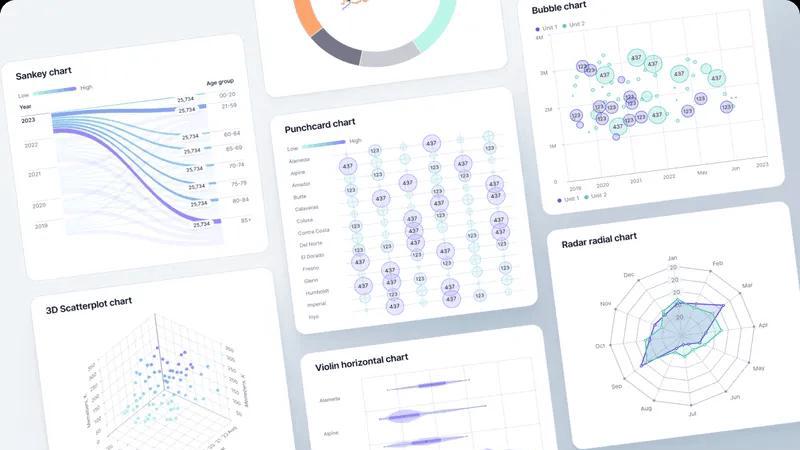
Fusedash transforms raw data into intuitive dashboards and interactive visuals for quick, informed decision-making.
Last updated: March 4, 2026

SERPView
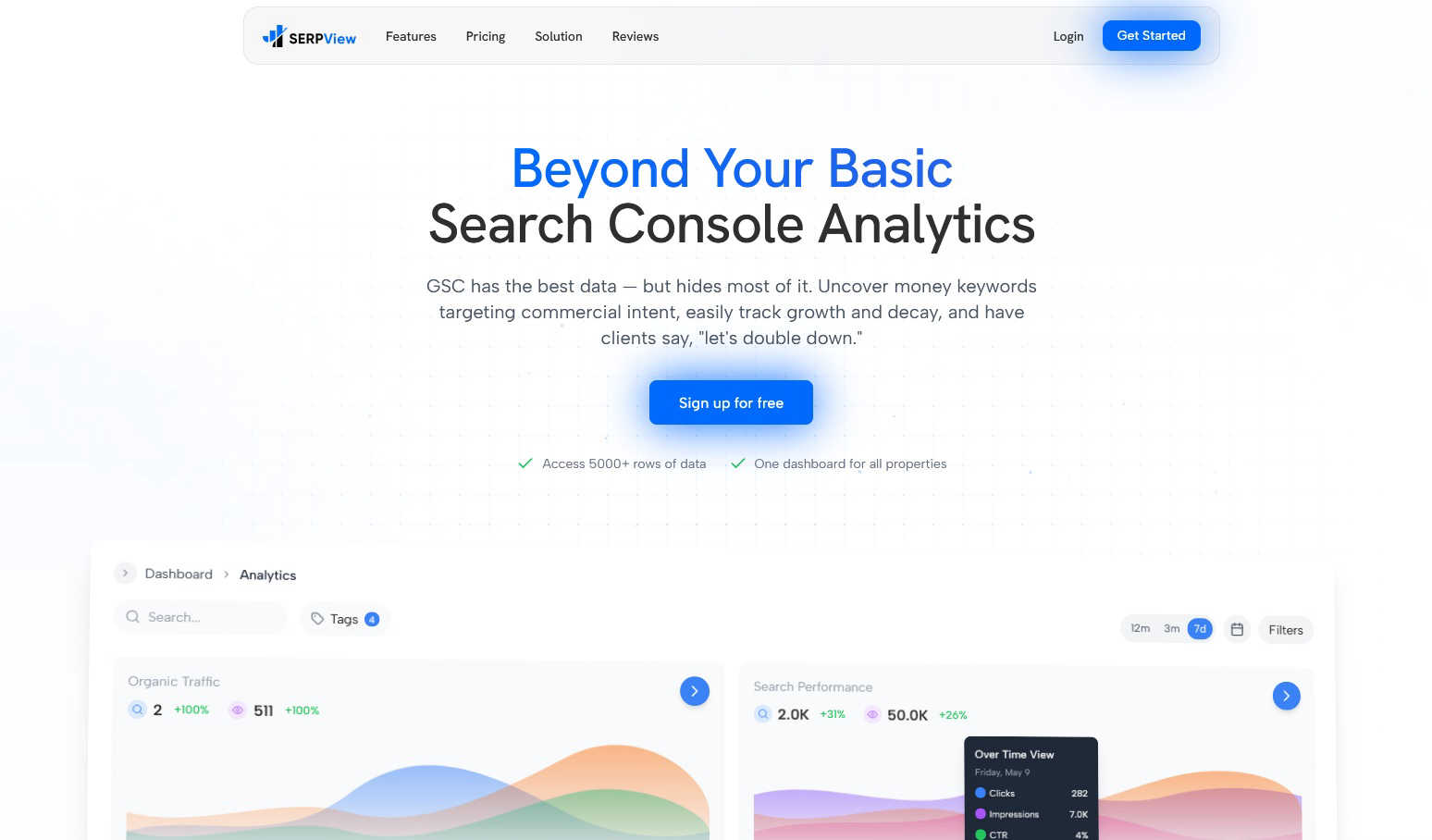
SERPView unlocks hidden Google Search Console insights for advanced SEO performance tracking and keyword analysis.
Last updated: March 1, 2026
Visual Comparison
Fusedash
SERPView
Feature Comparison
Fusedash
Flexible Views
Fusedash offers the ability to create various dashboard views tailored to different audiences. Stakeholders can access the insights that matter most without the need for extensive back-and-forth communication. Customization options like layouts, filters, and time ranges ensure that each team receives relevant data in their preferred format.
AI Chart Generator
The AI Chart Generator enables users to create compelling charts from CSV files or APIs in mere minutes. This feature simplifies the process of selecting the appropriate chart type, applying comparisons, and refining labels to effectively communicate the data story, making it easy to integrate these visuals into dashboards or use them independently for reporting.
Dashboard Software
Fusedash combines the functionality of dashboards and reporting into a single workspace. This integration allows teams to monitor KPIs while also providing the necessary context through narrative reporting. By incorporating storytelling elements, users can clarify what changed, the implications of those changes, and future actions, reducing the risk of conflicting reports.
AI Chat
The Smart Chat feature offers users the ability to ask questions in plain language, facilitating quicker navigation through the data. By providing suggested metrics, charts, and breakdowns, Smart Chat allows users to transform insights into shareable dashboard views, making data exploration more intuitive and efficient.
About SERPView
Expanded Data Access & Performance Tracking
SERPView fundamentally removes the data ceiling imposed by Google Search Console, allowing users to export and analyze up to 50,000 rows of historical performance data. This feature enables comprehensive tracking of clicks, impressions, click-through rate (CTR), and average position across an entire site's keyword portfolio without sampling or arbitrary limits. Users can perform deep-dive analyses over extended periods, identify long-term trends, and make strategic decisions based on complete datasets rather than fragmented snapshots, ensuring no critical insight is overlooked due to platform constraints.
Unified Multi-Property Dashboard
This feature consolidates data from multiple Google Search Console properties and websites into a single, centralized interface. Users can connect various domains, subdomains, and URL-prefix properties to view aggregated or comparative analytics without manually logging in and out of different accounts. It streamlines workflow for agencies and businesses managing numerous sites, providing a holistic view of organic search performance and enabling efficient cross-property benchmarking and reporting from one location.
Advanced Keyword & Page Analysis
SERPView provides specialized modules for dissecting keyword and page performance beyond surface-level metrics. The Keyword Analysis tool helps identify "money keywords" with commercial intent and tracks precise ranking fluctuations. Simultaneously, the Page Analysis feature pinpoints top-performing and underperforming content, revealing optimization opportunities by showing which pages drive traffic and which lag in rankings, facilitating targeted content audits and updates.
Mobile vs. Desktop & International SEO Insights
The platform offers dedicated comparative analytics for device and geographical performance. Users can segment data to analyze how their site performs on mobile versus desktop devices, identifying potential UX or technical SEO issues specific to each. Furthermore, the International SEO Insights feature breaks down traffic and rankings by country, allowing marketers to tailor their global SEO strategy, understand regional market penetration, and optimize for specific locales.
Use Cases
Fusedash
Marketing Performance Monitoring
Fusedash is invaluable for marketing teams looking to track campaign performance in real-time. By utilizing customizable dashboards, marketers can visualize key metrics, understand audience engagement, and promptly adjust strategies based on actionable insights.
Sales Analytics
Sales teams can leverage Fusedash to monitor sales performance, identify trends, and pinpoint areas for improvement. With interactive charts and real-time data, sales professionals can make informed decisions that enhance revenue generation and customer satisfaction.
Operational Efficiency Tracking
Operations teams can utilize Fusedash to analyze workflow efficiency and resource allocation. By creating detailed maps and dashboards, they can visualize operational bottlenecks and implement changes that improve productivity and reduce costs.
Financial Reporting
Finance departments can benefit from Fusedash by consolidating financial data into comprehensive reports. The ability to create consistent KPIs and metrics ensures that all stakeholders are aligned on financial performance, enabling more strategic decision-making.
SERPView
SEO Agency Reporting and Client Management
SEO agencies utilize SERPView to manage reporting for multiple clients efficiently. By connecting all client GSC properties to one dashboard, agencies can automate data aggregation, create customized reports with advanced filters, and provide clients with clear, actionable insights into campaign performance, keyword progress, and ROI, all while saving countless hours previously spent on manual data compilation from disparate sources.
In-depth Content Strategy Optimization
Content managers and SEO specialists use SERPView's Page and Keyword Analysis features to audit and refine their content strategy. By identifying which pages rank for valuable commercial keywords and which high-potential keywords are not being targeted, they can prioritize content updates, plan new topic clusters, and re-optimize underperforming articles to better align with search intent and drive more qualified organic traffic.
Technical SEO and Site Health Monitoring
Technical SEO experts leverage the platform's expanded data access and filtering to diagnose site-wide issues. By analyzing performance drops across large sets of keywords or pages, correlating them with Google algorithm updates via annotations, and comparing mobile vs. desktop performance disparities, they can pinpoint technical problems like indexing errors, mobile usability issues, or penalties impacting search visibility.
Global Enterprise SEO Strategy
Large organizations with international websites use SERPView's unified dashboard and country-specific insights to coordinate global SEO efforts. Teams can track performance across different regional domains and languages from a single platform, allocate resources based on regional opportunity, and ensure local SEO strategies are data-informed and aligned with overarching business goals.
Overview
About Fusedash
Fusedash is an advanced AI-powered data visualization platform that streamlines the process of transforming connected data into actionable insights. Designed for teams across various sectors, it serves as a unified workspace where users can create decision-ready dashboards, interactive charts, detailed maps, and narrative reports without the hassle of duplicating efforts across multiple tools. The core value proposition of Fusedash lies in its commitment to consistency and efficiency; users can define key metrics and KPIs once, ensuring that every view and report reflects the same trusted numbers. This feature is particularly advantageous for organizations seeking to eliminate manual reporting cycles and conflicting data narratives. Fusedash empowers users to monitor real-time data while also enabling them to drill down into specific segments, regions, or time periods to understand the underlying reasons behind data trends. With integrated AI functionalities like natural language data chat and smart visualization assistance, Fusedash simplifies data exploration and reporting, turning raw data into a shared source of truth that fosters alignment and drives decisive action.
About SERPView
SERPView is a sophisticated, cloud-based analytics and reporting platform engineered to unlock the full potential of data from Google Search Console (GSC). It is designed explicitly for SEO professionals, digital marketers, and website owners who find the native GSC interface limiting for deep, strategic analysis. The core value proposition of SERPView lies in its ability to transcend the inherent restrictions of Google's platform, most notably by providing access to over 50,000 rows of performance data compared to GSC's 1,000-row cap. This allows for comprehensive, unfiltered insights into keyword rankings, page performance, and search traffic trends. Beyond sheer data volume, SERPView aggregates multiple GSC properties into a single, unified dashboard, eliminating the need to switch between accounts manually. The platform enriches this data with advanced analytical features such as granular mobile versus desktop performance breakdowns, international SEO tracking, query counting, and visual annotations for Google algorithm updates. By transforming raw, siloed GSC data into actionable, shareable intelligence, SERPView empowers users to make data-driven decisions, identify untapped opportunities, and significantly enhance their overall organic search strategy and reporting efficiency.
Frequently Asked Questions
Fusedash FAQ
What types of data can Fusedash integrate?
Fusedash can integrate a wide range of data sources, including CSV files, APIs, and public datasets. This flexibility allows users to combine various data types into a single cohesive platform for analysis and reporting.
How does Fusedash ensure data consistency?
Fusedash allows users to define key metrics and KPIs once, which can then be reused across all dashboards and reports. This ensures that everyone in the organization is referencing the same trusted numbers, promoting transparency and alignment.
Is Fusedash suitable for non-technical users?
Yes, Fusedash is designed to be user-friendly, with features like the AI Chart Generator and Smart Chat that simplify data visualization and exploration. This makes it accessible for users without extensive technical expertise.
Can I customize the dashboards in Fusedash?
Absolutely. Fusedash offers extensive customization options for dashboards, including layouts, filters, and time ranges, allowing users to tailor their views to meet the specific needs of different teams and stakeholders.
SERPView FAQ
How is SERPView different from Google Search Console?
SERPView is not a replacement for Google Search Console but a powerful analytics layer built on top of it. While GSC provides the raw data directly from Google, SERPView removes its limitations, such as the 1,000-row data cap and lack of multi-property aggregation. It offers advanced analytics, historical data access, custom reporting, and features like query counting and update annotations that are not available in the native GSC interface, transforming data into actionable business intelligence.
What data does SERPView access, and is it secure?
SERPView accesses data via the official Google Search Console API, using secure OAuth 2.0 authentication. It only reads performance data (clicks, impressions, CTR, position, queries, pages) that you already have access to in your GSC account. The platform does not have permission to modify any settings on your Google properties or websites. Data is encrypted in transit and at rest, adhering to industry-standard security practices to ensure your information remains protected.
Can I track historical data that wasn't collected before I signed up?
SERPView can access and import the 16 months of historical performance data that Google Search Console retains via its API. Once you connect your GSC property, the platform will pull in all available historical data up to that limit. For ongoing tracking, SERPView will continuously sync new data, building a comprehensive, long-term performance database for your site moving forward.
Is SERPView suitable for beginners in SEO?
Yes, while SERPView offers deep analytical capabilities for experts, its intuitive dashboard and visual reporting make it accessible for beginners. Users unfamiliar with GSC's complexities can benefit from the organized presentation of key metrics, clear visualizations of trends, and guided insights that highlight opportunities. It serves as an educational tool that helps newer marketers understand SEO performance more clearly than the native GSC interface.
Alternatives
Fusedash Alternatives
Fusedash is an AI-powered data visualization platform that belongs to the analytics and business intelligence category. It enables teams to convert raw data into clear dashboards and charts, promoting immediate action on insights. Users often seek alternatives to Fusedash due to various reasons, including pricing concerns, specific feature requirements, or the need for compatibility with existing platforms. Additionally, organizations may look for tools that better fit their unique workflows or user experience preferences. When choosing an alternative to Fusedash, it is essential to consider several factors. Look for platforms that offer similar capabilities in data visualization and dashboard creation, ensuring they can effectively transform raw data into actionable insights. Evaluate the user interface for ease of use, the flexibility of features, and the platform's ability to integrate with other tools your team already utilizes.
SERPView Alternatives
SERPView is a specialized analytics platform that transforms raw Google Search Console data into actionable SEO insights. It falls into the category of SEO analytics and reporting tools, designed to overcome the native limitations of GSC by providing deeper data access and more robust analysis capabilities. Users may explore alternatives to SERPView for various reasons, including budget constraints, specific feature requirements not covered by the platform, or the need to integrate with a different tech stack. Some may seek tools with broader functionality beyond GSC data enrichment, such as rank tracking or backlink analysis, while others prioritize different pricing models or user interface preferences. When evaluating an alternative, key considerations should include the depth of data access from Google Search Console, the ability to consolidate multiple properties, the sophistication of filtering and segmentation options, and the tool's capacity for trend analysis and performance tracking. The ideal solution should efficiently bridge the gap between raw data and strategic SEO decision-making.