
HookMesh vs qtrl.ai
Side-by-side comparison to help you choose the right product.

HookMesh simplifies webhook delivery with automatic retries and a self-service portal, ensuring reliability and peace.
Last updated: February 26, 2026

qtrl.ai
qtrl.ai empowers QA teams to scale testing with AI agents while maintaining control and governance throughout the.
Last updated: March 4, 2026
Visual Comparison
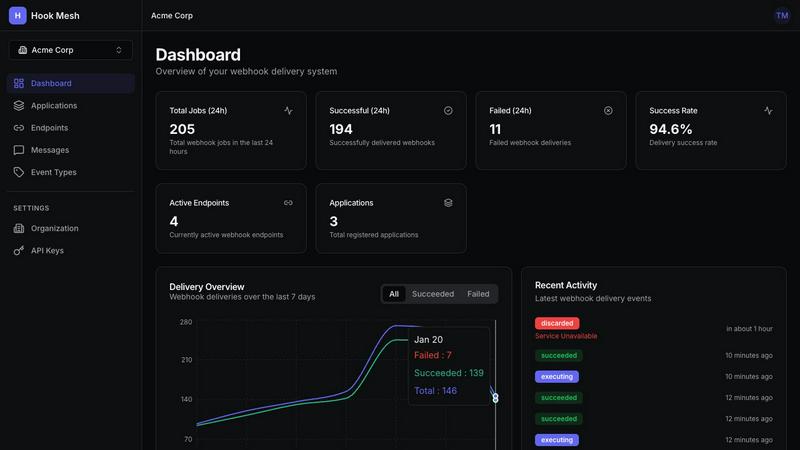
HookMesh
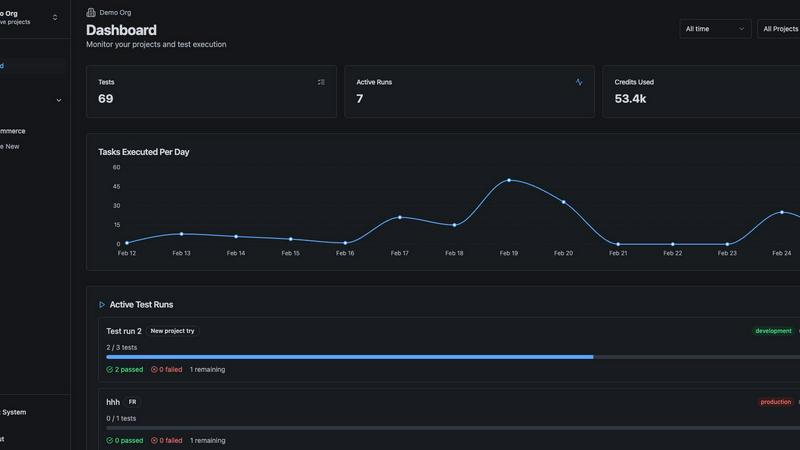
qtrl.ai
Feature Comparison
HookMesh
Reliable Delivery
HookMesh ensures that webhook delivery is never compromised. The platform employs automatic retries, utilizing exponential backoff strategies combined with jitter, allowing it to retry failed webhooks for up to 48 hours. This feature guarantees that webhook events reach their intended destinations without loss.
Circuit Breaker
The circuit breaker feature is designed to automatically disable failing endpoints, preventing them from disrupting the entire webhook delivery process. Once the endpoint recovers, it is re-enabled automatically, ensuring that issues are managed efficiently without manual intervention.
Customer Portal
HookMesh provides an embeddable user interface that enhances customer experience. This self-service portal allows customers to manage their endpoints, view detailed delivery logs, and replay failed webhook events with just one click, promoting greater transparency and operational efficiency.
Developer Experience
Designed with developers in mind, HookMesh offers a full REST API and official SDKs for JavaScript, Python, and Go. This comprehensive access allows for seamless integration into existing applications, enabling developers to send webhook events with minimal setup and maximum efficiency.
About qtrl.ai
Autonomous QA Agents
qtrl.ai's autonomous QA agents can execute instructions on demand or continuously, allowing for scalable test execution across various environments. These agents operate under user-defined rules, ensuring compliance while performing real browser executions rather than relying on simulations.
Enterprise-Grade Test Management
The platform offers centralized management of test cases, plans, and runs, providing full traceability and audit trails. This feature supports both manual and automated workflows, making it an ideal choice for organizations that prioritize compliance and auditability in their testing processes.
Progressive Automation
With qtrl.ai, teams can start with human-written test instructions and progressively transition to AI-generated tests as they become more comfortable. The platform actively suggests new tests based on coverage gaps, allowing teams to review, approve, and refine tests at every stage of development.
Adaptive Memory
qtrl.ai features an adaptive memory system that builds a living knowledge base of the application. This intelligent system learns from exploration, test execution, and encountered issues, enabling smarter, context-aware test generation that improves efficacy over time.
Use Cases
HookMesh
E-commerce Order Notifications
In an e-commerce setting, HookMesh can be utilized to send real-time order notifications to various external services. By ensuring reliable delivery, businesses can keep customers informed about their order status, enhancing the overall shopping experience.
Payment Processing
Payment processors can leverage HookMesh to deliver transaction updates to merchants effectively. The automatic retry and circuit breaker features ensure that critical payment notifications are consistently delivered, even in cases of temporary endpoint failures.
SaaS Integration
For SaaS products that need to communicate with other services, HookMesh simplifies the process of sending webhook events. This integration allows for seamless data flow between applications, enabling features like user account updates, data synchronization, and more.
Event-Driven Architecture
Companies adopting an event-driven architecture can use HookMesh to manage event notifications between microservices. By ensuring that all events are reliably delivered, organizations can maintain operational continuity and responsiveness in their systems.
qtrl.ai
Product-Led Engineering Teams
Product-led engineering teams can leverage qtrl.ai to streamline their testing processes, ensuring that quality assurance is embedded within their development cycles. With the ability to manage tests and automate execution, these teams can focus on delivering high-quality products faster.
QA Teams Scaling Beyond Manual Testing
As QA teams evolve from traditional manual testing, qtrl.ai provides the necessary tools to enhance their capabilities. By incorporating automation and intelligent agents, these teams can improve efficiency and effectiveness while maintaining control over their testing processes.
Companies Modernizing Legacy QA Workflows
Organizations looking to modernize outdated QA workflows can utilize qtrl.ai to bridge the gap between manual and automated testing. The platform offers a structured approach to integrating modern testing practices while ensuring governance and compliance.
Enterprises Requiring Governance and Traceability
Enterprises that must adhere to strict compliance regulations can benefit greatly from qtrl.ai's robust test management features. The platform's emphasis on traceability and auditability ensures that testing processes are transparent, manageable, and compliant with industry standards.
Overview
About HookMesh
HookMesh is a cutting-edge solution designed to streamline and enhance the delivery of webhooks for modern Software as a Service (SaaS) products. It tackles the myriad complexities associated with building webhooks internally, such as implementing retry logic, managing circuit breakers, and diagnosing delivery issues. By adopting HookMesh, businesses can concentrate on their core offerings rather than being encumbered by the intricate technicalities of webhook management. This robust platform boasts a battle-tested infrastructure that guarantees reliable delivery through features like automatic retries, exponential backoff, and idempotency keys. HookMesh is tailored for developers and product teams who aim to deliver a seamless customer experience while ensuring consistent and reliable webhook event delivery. With a self-service portal that empowers users, HookMesh facilitates straightforward endpoint management and visibility. Users can also effortlessly replay failed webhooks with a single click, making it the preferred choice for organizations seeking a dependable webhook strategy that promotes peace of mind.
About qtrl.ai
qtrl.ai is an innovative quality assurance (QA) platform specifically designed to enhance the quality assurance processes of software development teams. By combining enterprise-grade test management with advanced AI automation, qtrl.ai serves as a centralized hub that allows teams to organize test cases, plan test runs, and trace requirements to coverage. This platform enables the tracking of quality metrics through real-time dashboards, offering clear visibility into testing progress, pass rates, and potential risks. Ideal for product-led engineering teams, QA groups transitioning from manual testing, and enterprises requiring strict compliance, qtrl.ai provides a trusted pathway to accelerate quality assurance without sacrificing control or governance. Its unique proposition lies in its gradual adoption of intelligent automation, allowing teams to begin with manual processes and seamlessly transition to AI-driven solutions as their readiness grows.
Frequently Asked Questions
HookMesh FAQ
What are webhooks and how do they work?
Webhooks are automated messages sent from apps when something happens. They send data in real-time to another application, allowing for instant updates. Webhooks work via HTTP requests to a specified URL when triggered by an event in the source application.
How does HookMesh ensure webhook reliability?
HookMesh guarantees webhook reliability through a combination of automatic retries, exponential backoff, and circuit breaker mechanisms. These features work together to ensure that webhook events are delivered successfully, even in the face of temporary failures.
Can I manage my webhook endpoints with HookMesh?
Yes, HookMesh provides a self-service portal that allows users to manage their webhook endpoints easily. This includes adding new endpoints, viewing delivery logs, and replaying failed webhooks with just a click.
What programming languages does HookMesh support?
HookMesh offers official SDKs for JavaScript, Python, and Go, enabling developers to integrate webhook functionalities into their applications quickly. The REST API also supports sending webhook events from any programming language that can make HTTP requests.
qtrl.ai FAQ
What types of teams can benefit from qtrl.ai?
qtrl.ai is designed for a variety of teams, including product-led engineering groups, QA teams transitioning from manual testing, companies modernizing legacy workflows, and enterprises that require governance and traceability in their testing processes.
How does qtrl.ai ensure compliance and auditability?
By providing centralized test management, full traceability, and audit trails, qtrl.ai ensures that all testing activities are documented and comply with necessary regulations, making it suitable for enterprises with strict compliance requirements.
Can teams start with manual testing on qtrl.ai?
Yes, qtrl.ai allows teams to begin their quality assurance journey with manual test management. As teams gain confidence, they can gradually adopt automation and AI-driven testing solutions tailored to their needs.
What is unique about qtrl.ai's approach to AI in testing?
qtrl.ai employs a progressive approach to AI automation, allowing teams to incrementally integrate intelligent automation into their workflows. This reduces risks associated with black-box AI solutions and maintains user control over testing processes.
Alternatives
HookMesh Alternatives
HookMesh is a cutting-edge solution that falls within the category of webhook delivery services, designed to optimize and streamline the webhook management process for SaaS products. It alleviates the technical burdens associated with in-house webhook implementations, such as error handling and retry mechanisms, allowing businesses to focus on their core offerings. Users often seek alternatives to HookMesh for various reasons, including pricing considerations, feature sets that may better align with their specific needs, or the desire for a platform that integrates more seamlessly with their existing tech stack. When evaluating alternatives to HookMesh, it is essential to consider several factors. Users should assess the reliability of delivery mechanisms, the usability of customer portals, and the overall developer experience. Additionally, understanding the pricing models, support options, and customizability of the alternatives can significantly impact the decision-making process. A thorough comparison of these attributes will help ensure that the chosen solution meets both current and future webhook management needs.
qtrl.ai Alternatives
qtrl.ai is a cutting-edge quality assurance platform tailored for software teams aiming to enhance their testing processes through automation while retaining oversight and governance. By marrying enterprise-level test management with sophisticated AI-driven automation, qtrl.ai serves as a comprehensive hub for organizing testing efforts, planning test runs, and tracking quality metrics in real time. This approach is particularly beneficial for teams looking to transition from manual testing to a more efficient, AI-augmented framework. Users often seek alternatives to qtrl.ai for various reasons, including pricing structures, feature sets, and specific platform requirements. As organizations grow and their needs evolve, they may find that certain solutions better align with their operational workflows or budget constraints. When considering alternatives, it is essential to assess factors such as ease of use, integration capabilities, scalability, and the ability to maintain control over the testing process while benefiting from automation.