
Mod vs qtrl.ai
Side-by-side comparison to help you choose the right product.

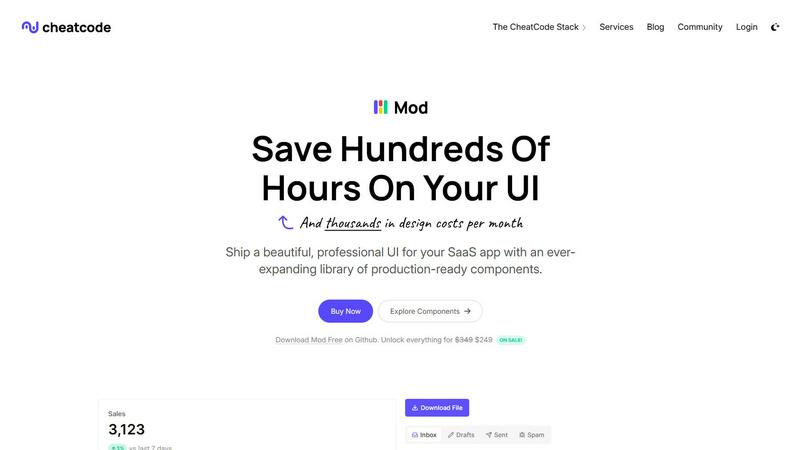
Mod is a CSS framework with a component library for rapidly building SaaS application user interfaces.

qtrl.ai
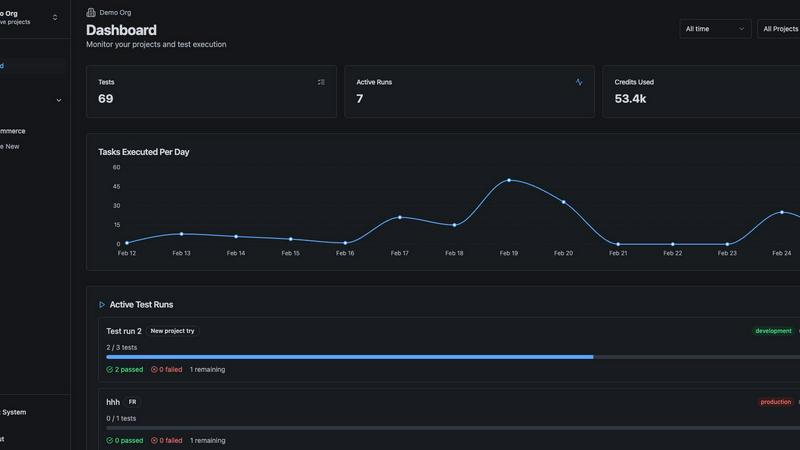
qtrl.ai empowers QA teams to scale testing with AI agents while maintaining control and governance throughout the.
Last updated: March 4, 2026
Visual Comparison
Mod
qtrl.ai
Feature Comparison
Mod
Extensive Component Library
Mod provides an extensive library of over 88 professionally designed, reusable UI components that are fundamental to SaaS applications. This includes complex compound components like data tables with sorting and filtering, interactive dashboards with charts and stats cards, multi-step forms, application shells with navigation, modals, and user profile menus. Each component is built with accessibility (a11y) best practices in mind, featuring proper ARIA attributes, keyboard navigation, and focus management. This depth ensures developers are not building common interfaces from scratch but are assembling them from proven, polished parts, guaranteeing a high standard of usability and a cohesive look and feel across the entire application.
Comprehensive Design System & Theming
Beyond individual components, Mod offers a complete and systematic design language with 168 distinct style utilities, two built-in themes (light and dark), and over 1,500 customizable icons. The design system encompasses a consistent scale for typography, a harmonious color palette with semantic meanings (primary, success, warning, error), a unified spacing scale, and shadow elevations. The built-in dark mode support is not an afterthought but a first-class feature, with all components styled appropriately for both themes. This systematic approach ensures visual consistency at scale, making it easy to maintain brand identity and update the look of an entire application by modifying a centralized set of design tokens.
Framework-Agnostic & Lightweight Integration
A defining technical feature of Mod is its complete agnosticism to any specific JavaScript framework or backend language. It is distributed as pure, well-structured CSS with clear HTML markup examples, allowing it to integrate seamlessly into projects using Next.js, Nuxt, Svelte, Vue, React, or even traditional server-rendered applications in Rails or Django. This eliminates vendor lock-in and provides long-term flexibility. The framework is built with a mobile-first, responsive approach, ensuring all components adapt flawlessly from desktop to tablet to mobile screens without requiring developers to write extensive custom media queries, thereby streamlining the development of truly responsive applications.
Production-Ready & Regularly Updated
Mod is engineered for real-world production environments, emphasizing performance, stability, and maintainability. The CSS is optimized and minified for fast loading times. Components are designed to be composable and customizable without breaking their core functionality. Furthermore, CheatCode commits to yearly updates for the library, ensuring that Mod evolves with modern web standards, browser capabilities, and design trends. This update policy provides users with peace of mind, knowing their UI foundation will receive ongoing improvements, security patches, and new components, protecting their investment and reducing the long-term maintenance burden.
About qtrl.ai
Autonomous QA Agents
qtrl.ai's autonomous QA agents can execute instructions on demand or continuously, allowing for scalable test execution across various environments. These agents operate under user-defined rules, ensuring compliance while performing real browser executions rather than relying on simulations.
Enterprise-Grade Test Management
The platform offers centralized management of test cases, plans, and runs, providing full traceability and audit trails. This feature supports both manual and automated workflows, making it an ideal choice for organizations that prioritize compliance and auditability in their testing processes.
Progressive Automation
With qtrl.ai, teams can start with human-written test instructions and progressively transition to AI-generated tests as they become more comfortable. The platform actively suggests new tests based on coverage gaps, allowing teams to review, approve, and refine tests at every stage of development.
Adaptive Memory
qtrl.ai features an adaptive memory system that builds a living knowledge base of the application. This intelligent system learns from exploration, test execution, and encountered issues, enabling smarter, context-aware test generation that improves efficacy over time.
Use Cases
Mod
Rapid Prototyping and MVP Development
For startups and entrepreneurs, speed to market is critical. Mod is an ideal tool for rapidly prototyping a SaaS idea or building a Minimum Viable Product (MVP). Developers can use the pre-designed components and layouts to assemble a fully functional, professional-looking interface in days rather than weeks. This allows teams to validate their business concept with real users quickly without incurring significant design costs or spending months on front-end development, enabling faster feedback loops and more agile product iteration.
Standardizing UI Across Large Development Teams
In larger organizations or distributed teams, maintaining a consistent UI can be challenging. Mod acts as an enforced design system, providing a single source of truth for all visual elements. By adopting Mod, engineering leads can ensure that every developer, regardless of their individual design skills, produces interfaces that align with the company's brand and usability standards. This reduces design debt, streamlines code reviews focused on logic rather than pixel-pushing, and accelerates onboarding for new team members who can immediately leverage the familiar component library.
Modernizing Legacy Application Interfaces
Many established SaaS products suffer from outdated, inconsistent, or non-responsive user interfaces that hinder user experience. Mod provides a strategic path for incremental UI modernization. Development teams can systematically replace old, custom CSS and components with Mod's modern, accessible equivalents one section or feature at a time. This framework-agnostic approach allows for a gradual refactor without requiring a risky, full-scale rewrite of the application's underlying technology stack, significantly reducing the risk and cost of a UI overhaul.
Building Internal Admin Dashboards and Tools
Companies frequently need to build robust internal tools for operations, customer support, or data analysis. These tools require functional, clear, and efficient interfaces but often do not justify a large design budget. Mod is perfectly suited for this use case, as it provides all the necessary components—data tables, charts, forms, filters, and navigation—to build powerful admin panels quickly. The result is an internal tool that is both highly usable and professionally presented, improving employee productivity without diverting significant design and development resources from customer-facing products.
qtrl.ai
Product-Led Engineering Teams
Product-led engineering teams can leverage qtrl.ai to streamline their testing processes, ensuring that quality assurance is embedded within their development cycles. With the ability to manage tests and automate execution, these teams can focus on delivering high-quality products faster.
QA Teams Scaling Beyond Manual Testing
As QA teams evolve from traditional manual testing, qtrl.ai provides the necessary tools to enhance their capabilities. By incorporating automation and intelligent agents, these teams can improve efficiency and effectiveness while maintaining control over their testing processes.
Companies Modernizing Legacy QA Workflows
Organizations looking to modernize outdated QA workflows can utilize qtrl.ai to bridge the gap between manual and automated testing. The platform offers a structured approach to integrating modern testing practices while ensuring governance and compliance.
Enterprises Requiring Governance and Traceability
Enterprises that must adhere to strict compliance regulations can benefit greatly from qtrl.ai's robust test management features. The platform's emphasis on traceability and auditability ensures that testing processes are transparent, manageable, and compliant with industry standards.
Overview
About Mod
Mod is a comprehensive, production-ready CSS framework and component library specifically engineered for building modern, polished Software-as-a-Service (SaaS) user interfaces. It functions as a core pillar of the CheatCode developer stack, designed to eliminate the traditional bottlenecks associated with UI design and front-end styling. The product delivers a vast, meticulously crafted design system that provides developers with a complete visual toolkit, enabling them to ship professional-grade applications with remarkable speed and consistency. Its primary value proposition lies in drastically reducing design costs, development time, and cognitive load for both solo developers and engineering teams. By offering a vast collection of pre-built, accessible, and responsive components, Mod allows developers to focus on application logic and unique features rather than wrestling with CSS intricacies or design system governance. Its framework-agnostic architecture ensures seamless integration with virtually any modern tech stack, making it a versatile and future-proof investment for projects built on Next.js, Nuxt, SvelteKit, Vite, Ruby on Rails, Django, and beyond.
About qtrl.ai
qtrl.ai is an innovative quality assurance (QA) platform specifically designed to enhance the quality assurance processes of software development teams. By combining enterprise-grade test management with advanced AI automation, qtrl.ai serves as a centralized hub that allows teams to organize test cases, plan test runs, and trace requirements to coverage. This platform enables the tracking of quality metrics through real-time dashboards, offering clear visibility into testing progress, pass rates, and potential risks. Ideal for product-led engineering teams, QA groups transitioning from manual testing, and enterprises requiring strict compliance, qtrl.ai provides a trusted pathway to accelerate quality assurance without sacrificing control or governance. Its unique proposition lies in its gradual adoption of intelligent automation, allowing teams to begin with manual processes and seamlessly transition to AI-driven solutions as their readiness grows.
Frequently Asked Questions
Mod FAQ
What makes Mod different from other CSS frameworks like Tailwind or Bootstrap?
While frameworks like Tailwind provide low-level utility classes and Bootstrap offers generic components, Mod is specifically hyper-focused on the needs of SaaS applications. It provides higher-level, complex components (like dashboards and data-rich tables) that are immediately useful for SaaS products, whereas others require significant composition. Mod also includes a complete, opinionated design system (themes, icons, dark mode) out of the box, reducing the need for additional design decisions. It is more comparable to a specialized SaaS design system than a general-purpose CSS utility framework.
Is Mod compatible with React/Vue/Svelte components?
Yes, absolutely. Mod is framework-agnostic, meaning it is written in standard CSS with plain HTML structure. You can seamlessly use its CSS classes and HTML patterns within any component architecture. For React, Vue, or Svelte, you would build your components using your framework's syntax and apply Mod's provided CSS class names to the elements to style them. This approach gives you the full power of your chosen JavaScript framework while leveraging Mod's pre-built styles and layouts.
How does dark mode implementation work with Mod?
Dark mode in Mod is implemented natively and seamlessly at the CSS level. The framework includes two fully realized themes—light and dark—as part of its core design system. Developers can trigger the dark theme by simply applying a specific CSS class (e.g., .theme-dark) to a top-level container, such as the <html> or <body> tag. All Mod components, with their 168+ styles, will automatically switch to their dark-themed variants. This eliminates the need to manually adjust colors or write custom theme-switching logic for each component.
What is included in the yearly updates for Mod?
The yearly updates are a commitment from CheatCode to continuously improve the Mod library. These updates typically include new components that reflect emerging SaaS UI patterns, enhancements to existing components for better accessibility or functionality, updates to the underlying CSS to support new browser features, and refinements to the design tokens (colors, spacing). This ensures that applications built with Mod remain modern, secure, and aligned with current best practices without requiring developers to manually manage and integrate these ongoing improvements themselves.
qtrl.ai FAQ
What types of teams can benefit from qtrl.ai?
qtrl.ai is designed for a variety of teams, including product-led engineering groups, QA teams transitioning from manual testing, companies modernizing legacy workflows, and enterprises that require governance and traceability in their testing processes.
How does qtrl.ai ensure compliance and auditability?
By providing centralized test management, full traceability, and audit trails, qtrl.ai ensures that all testing activities are documented and comply with necessary regulations, making it suitable for enterprises with strict compliance requirements.
Can teams start with manual testing on qtrl.ai?
Yes, qtrl.ai allows teams to begin their quality assurance journey with manual test management. As teams gain confidence, they can gradually adopt automation and AI-driven testing solutions tailored to their needs.
What is unique about qtrl.ai's approach to AI in testing?
qtrl.ai employs a progressive approach to AI automation, allowing teams to incrementally integrate intelligent automation into their workflows. This reduces risks associated with black-box AI solutions and maintains user control over testing processes.