
ninthsystemsagents vs qtrl.ai
Side-by-side comparison to help you choose the right product.

ninthsystemsagents
Ninth Systems Agents builds custom enterprise AI agents that automate business tasks with built-in governance and audit.
Last updated: March 1, 2026

qtrl.ai
qtrl.ai empowers QA teams to scale testing with AI agents while maintaining control and governance throughout the.
Last updated: March 4, 2026
Visual Comparison
ninthsystemsagents

qtrl.ai
Feature Comparison
ninthsystemsagents
Enterprise Governance & Human-in-the-Loop Approvals
A foundational feature distinguishing Ninth Systems Agents is its robust governance framework. Every AI agent is built with mandatory human approval gates for critical actions, ensuring that human oversight is an integral part of automated workflows. This "human-in-the-loop" model prevents autonomous errors and aligns agent actions with company policy and risk tolerance. It is a core component for deploying AI in sensitive areas like customer data modification, financial operations, or compliance-related tasks, providing safety and control alongside automation.
Comprehensive Audit Log Visibility
For every action an AI agent performs, from retrieving data to executing a task or requesting an approval, a detailed and immutable audit log is generated. This provides complete traceability and transparency into the agent's decision-making process and actions. These logs are compliance-ready, supporting internal audits, regulatory requirements, and SOC 2 governance standards. Operations and compliance teams gain real-time visibility into workflow execution, enabling quick troubleshooting and demonstrating due diligence.
Custom AI Agent Development for Business Execution
Ninth Systems Agents does not offer off-the-shelf bots but provides a full-service development program to create custom AI agents tailored to specific business processes. Their approach involves turning a company's unique runbooks, decision logic, and operational knowledge into a functional AI agent. This service encompasses the entire lifecycle: design, build, and ongoing operation. The agents are engineered to perform real, consequential work—such as updating CRM records, triaging support tickets, or cleansing analytics data—rather than merely conversing.
Secure Integration with Role-Based Access Control
The AI agents are designed for secure execution within an enterprise technology stack. They integrate directly with existing systems like CRMs, support platforms, and internal APIs using secure authentication protocols. Access to agent functions, data, and approval queues is managed through role-based access control (RBAC). This ensures that only authorized personnel can configure agents, view sensitive audit logs, or approve high-stakes actions, maintaining strict security and data privacy standards.
About qtrl.ai
Autonomous QA Agents
qtrl.ai's autonomous QA agents can execute instructions on demand or continuously, allowing for scalable test execution across various environments. These agents operate under user-defined rules, ensuring compliance while performing real browser executions rather than relying on simulations.
Enterprise-Grade Test Management
The platform offers centralized management of test cases, plans, and runs, providing full traceability and audit trails. This feature supports both manual and automated workflows, making it an ideal choice for organizations that prioritize compliance and auditability in their testing processes.
Progressive Automation
With qtrl.ai, teams can start with human-written test instructions and progressively transition to AI-generated tests as they become more comfortable. The platform actively suggests new tests based on coverage gaps, allowing teams to review, approve, and refine tests at every stage of development.
Adaptive Memory
qtrl.ai features an adaptive memory system that builds a living knowledge base of the application. This intelligent system learns from exploration, test execution, and encountered issues, enabling smarter, context-aware test generation that improves efficacy over time.
Use Cases
ninthsystemsagents
Operational Runbook Standardization and Execution
Operations leaders can use Ninth Systems Agents to codify and automate complex, manual runbooks. For instance, an agent can be deployed to manage employee onboarding by coordinating across HR, IT, and facilities systems—sending equipment requests, provisioning software access, and scheduling training—all while requiring manager approvals at key stages and logging every step. This reduces bottlenecks, ensures consistent execution, and lowers operational overhead.
Customer Support Triage and Escalation Automation
Customer support teams can deploy AI agents to automatically triage incoming support tickets. The agent can read the ticket, retrieve relevant customer history and knowledge base articles, categorize the issue, suggest a resolution, or escalate it to the correct human agent based on complexity and priority. This drastically lowers average time-to-resolution, improves customer satisfaction (CSAT) consistency, and reduces agent burnout by handling routine inquiries.
Revenue Operations (RevOps) and CRM Data Hygiene
RevOps and data teams can utilize AI agents to maintain clean and actionable data within CRM and analytics platforms. An agent can be programmed to routinely scan for incomplete records, standardize data formats, identify duplicates, and update contact information based on triggers or schedules. This ongoing maintenance ensures pipeline accuracy, leads to more reliable sales forecasting and reporting, and eliminates tedious manual data-cleansing tasks for analysts.
Analytics Reporting and Insight Generation
Beyond data cleaning, AI agents can automate the generation and distribution of key reports. An agent can be tasked with querying analytics platforms, applying predefined business logic to interpret the data, compiling insights into a formatted report, and distributing it to stakeholders on a schedule. It can also monitor for specific metric thresholds (e.g., a sudden drop in website traffic) and automatically trigger alerts or create tasks for relevant teams, making data-driven actions proactive.
qtrl.ai
Product-Led Engineering Teams
Product-led engineering teams can leverage qtrl.ai to streamline their testing processes, ensuring that quality assurance is embedded within their development cycles. With the ability to manage tests and automate execution, these teams can focus on delivering high-quality products faster.
QA Teams Scaling Beyond Manual Testing
As QA teams evolve from traditional manual testing, qtrl.ai provides the necessary tools to enhance their capabilities. By incorporating automation and intelligent agents, these teams can improve efficiency and effectiveness while maintaining control over their testing processes.
Companies Modernizing Legacy QA Workflows
Organizations looking to modernize outdated QA workflows can utilize qtrl.ai to bridge the gap between manual and automated testing. The platform offers a structured approach to integrating modern testing practices while ensuring governance and compliance.
Enterprises Requiring Governance and Traceability
Enterprises that must adhere to strict compliance regulations can benefit greatly from qtrl.ai's robust test management features. The platform's emphasis on traceability and auditability ensures that testing processes are transparent, manageable, and compliant with industry standards.
Overview
About ninthsystemsagents
Ninth Systems Agents is an enterprise-grade AI agent development company specializing in the creation and deployment of custom, autonomous AI agents for business operations. Unlike simple chatbots or generic automation tools, Ninth Systems Agents builds sophisticated "digital employees" capable of executing complex, multi-step workflows with built-in governance. These agents are designed to integrate seamlessly with critical business systems such as Customer Relationship Management (CRM) platforms, customer support software, analytics dashboards, and internal APIs. The core value proposition lies in transforming static operational runbooks into dynamic, governed workflows that automate tasks, enforce business logic, and require human approval for critical steps. This approach is specifically tailored for operations leaders, customer support teams, and revenue operations (RevOps) professionals who need to scale efficiency, ensure consistent and auditable execution, and reduce operational overhead without compromising on security or compliance. By leveraging advanced technologies like Retrieval-Augmented Generation (RAG) for knowledge grounding and Multi-Context Processing (MCP), Ninth Systems Agents delivers production-ready AI solutions that provide measurable outcomes, clear success metrics, and a rapid return on investment.
About qtrl.ai
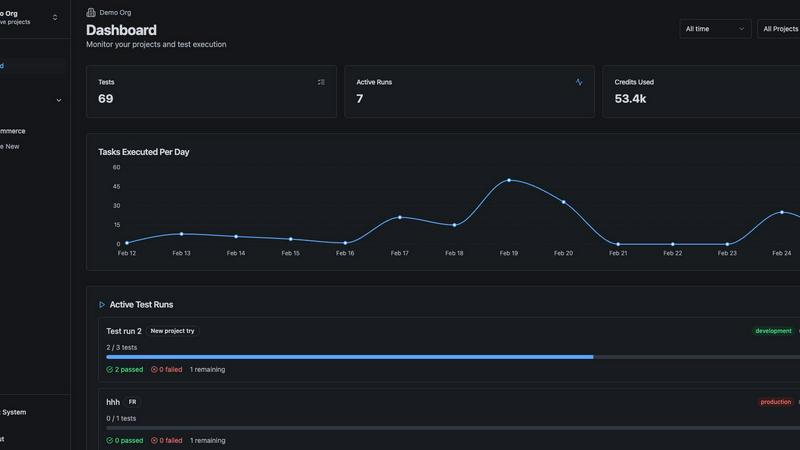
qtrl.ai is an innovative quality assurance (QA) platform specifically designed to enhance the quality assurance processes of software development teams. By combining enterprise-grade test management with advanced AI automation, qtrl.ai serves as a centralized hub that allows teams to organize test cases, plan test runs, and trace requirements to coverage. This platform enables the tracking of quality metrics through real-time dashboards, offering clear visibility into testing progress, pass rates, and potential risks. Ideal for product-led engineering teams, QA groups transitioning from manual testing, and enterprises requiring strict compliance, qtrl.ai provides a trusted pathway to accelerate quality assurance without sacrificing control or governance. Its unique proposition lies in its gradual adoption of intelligent automation, allowing teams to begin with manual processes and seamlessly transition to AI-driven solutions as their readiness grows.
Frequently Asked Questions
ninthsystemsagents FAQ
How are Ninth Systems Agents different from standard AI chatbots?
Ninth Systems Agents are fundamentally different from chatbots in their capability and purpose. While chatbots are primarily designed for conversational question-answering within a limited context, Ninth Systems Agents are built for workflow execution. They can make decisions based on business logic, retrieve and process information from multiple company systems, take concrete actions (like updating a CRM or creating a ticket), and operate within a governed framework that includes human approvals and audit logs. They are digital workers, not just conversational interfaces.
What does the development and deployment process for a custom AI agent look like?
The process begins with a collaborative design phase where Ninth Systems Agents works with your team to understand the specific business workflow, decision logic, and integration points. They then build the agent, incorporating your company knowledge (via RAG), defining approval gates, and establishing audit log requirements. Following development, the agent is deployed into your environment and integrated with your designated systems (CRM, support tools, etc.). Ninth Systems Agents often provides ongoing operational support, monitoring performance and iterating on the agent as business needs evolve.
Is this platform secure and compliant for enterprise use?
Yes, Ninth Systems Agents is built with enterprise security and compliance as a priority. The platform is SOC 2-ready, meaning its controls and processes are designed to meet rigorous standards for security, availability, and confidentiality. Features like role-based access control, detailed audit logs for every action, and secure API integrations ensure that execution is governed and visible. The built-in human approval workflow further enforces compliance by preventing fully autonomous actions on sensitive tasks.
Can I start with a small automation and scale later?
Absolutely. The company's approach is designed for scalable adoption. Organizations can begin with a focused AI agent development service targeting a single, high-impact workflow—such as lead qualification or support ticket categorization. As governance maturity and trust in the system grow, businesses can expand the agent's capabilities or develop additional agents for more complex workflows across departments, gradually building toward comprehensive workflow automation.
qtrl.ai FAQ
What types of teams can benefit from qtrl.ai?
qtrl.ai is designed for a variety of teams, including product-led engineering groups, QA teams transitioning from manual testing, companies modernizing legacy workflows, and enterprises that require governance and traceability in their testing processes.
How does qtrl.ai ensure compliance and auditability?
By providing centralized test management, full traceability, and audit trails, qtrl.ai ensures that all testing activities are documented and comply with necessary regulations, making it suitable for enterprises with strict compliance requirements.
Can teams start with manual testing on qtrl.ai?
Yes, qtrl.ai allows teams to begin their quality assurance journey with manual test management. As teams gain confidence, they can gradually adopt automation and AI-driven testing solutions tailored to their needs.
What is unique about qtrl.ai's approach to AI in testing?
qtrl.ai employs a progressive approach to AI automation, allowing teams to incrementally integrate intelligent automation into their workflows. This reduces risks associated with black-box AI solutions and maintains user control over testing processes.
Alternatives
ninthsystemsagents Alternatives
Ninth Systems Agents is a provider of advanced, autonomous AI agents designed to automate complex business tasks and workflows. It falls within the category of enterprise-grade AI assistants, focusing on deep integration with existing systems like CRMs and APIs to function as sophisticated digital employees that enhance operational efficiency and reduce costs. Users may explore alternatives for various reasons, including budget constraints, specific feature requirements not covered by the platform, or a need for a different deployment model such as open-source frameworks. The search often stems from a desire to compare capabilities in areas like customizability, the breadth of pre-built tools, or the granularity of success metrics and reporting. When evaluating alternatives, key considerations should include the depth of system integration, the sophistication of the agent's decision-making and tool orchestration, and the clarity of the performance metrics provided. The ideal solution should align with the technical stack and operational goals of the business, ensuring the AI agents can act effectively within defined approval flows and deliver measurable ROI.
qtrl.ai Alternatives
qtrl.ai is a cutting-edge quality assurance platform tailored for software teams aiming to enhance their testing processes through automation while retaining oversight and governance. By marrying enterprise-level test management with sophisticated AI-driven automation, qtrl.ai serves as a comprehensive hub for organizing testing efforts, planning test runs, and tracking quality metrics in real time. This approach is particularly beneficial for teams looking to transition from manual testing to a more efficient, AI-augmented framework. Users often seek alternatives to qtrl.ai for various reasons, including pricing structures, feature sets, and specific platform requirements. As organizations grow and their needs evolve, they may find that certain solutions better align with their operational workflows or budget constraints. When considering alternatives, it is essential to assess factors such as ease of use, integration capabilities, scalability, and the ability to maintain control over the testing process while benefiting from automation.