
OpenMark AI vs Prefactor
Side-by-side comparison to help you choose the right product.

OpenMark AI benchmarks over 100 LLMs for your tasks, providing insights on cost, speed, quality, and stability without coding or API keys.
Last updated: March 26, 2026

Prefactor
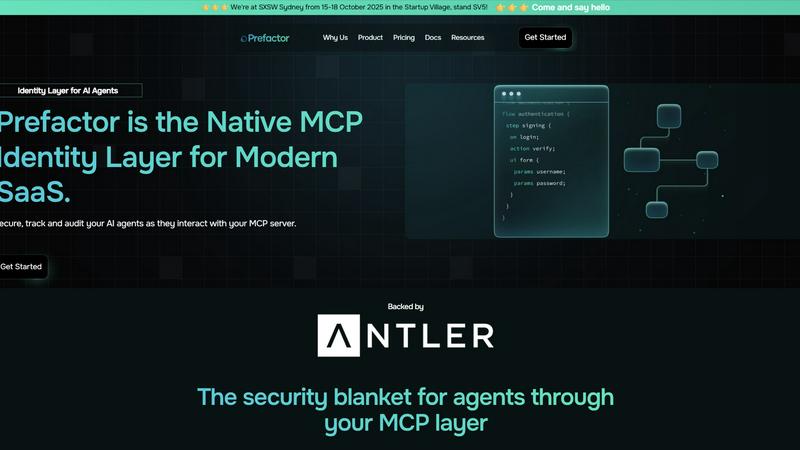
Prefactor governs AI agents in regulated industries, ensuring compliance, visibility, and control at scale.
Last updated: March 1, 2026
Visual Comparison
OpenMark AI
Prefactor
Feature Comparison
OpenMark AI
Task Configuration
OpenMark AI offers a flexible task configuration feature that allows users to describe their benchmarking tasks in plain language. This intuitive interface enables users to easily set up tasks for various applications, ensuring that they can tailor their tests to meet specific needs without requiring extensive technical knowledge.
Side-by-Side Model Comparison
The platform provides a side-by-side comparison of results from real API calls to multiple models. This feature ensures that users can evaluate different models based on actual performance metrics rather than relying on cached or theoretical data, allowing for a more accurate assessment of each model's capabilities.
Cost Efficiency Analysis
OpenMark AI emphasizes cost efficiency by allowing users to compare the quality of outputs relative to the pricing of API calls. This insight is crucial for organizations looking to optimize their AI expenditures, as it enables them to select a model that delivers high-quality responses without incurring excessive costs.
Stability and Consistency Testing
One of the hallmark features of OpenMark AI is its ability to test the stability and consistency of model outputs across repeated runs. Users can assess whether a model delivers reliable results over time, ensuring that the chosen model will perform consistently under similar conditions.
About Prefactor
Real-Time Visibility
Prefactor provides real-time tracking of all AI agents, allowing users to monitor which agents are active, what resources they access, and identify potential issues before they escalate into significant incidents. This feature enables organizations to gain complete operational visibility through an intuitive control plane dashboard.
Compliance-Ready Audit Trails
Every action taken by an AI agent is recorded in detailed audit logs that translate technical events into business context. This ensures clarity when compliance teams inquire about agent activities, providing straightforward answers rather than obscure API call records. This feature is crucial for regulated industries that require transparent auditing processes.
Identity-First Control
Prefactor enforces an identity-first approach for AI agents, ensuring that every agent has a unique identity, all actions are authenticated, and permissions are finely scoped. This governance model mirrors the principles applied to human users, providing a structured framework for managing agent behavior effectively.
Integration Ready
The platform seamlessly integrates with various frameworks, including LangChain, CrewAI, and AutoGen, facilitating quick deployments. Organizations can set up Prefactor in hours rather than months, making it easier to incorporate into existing workflows and enhancing overall productivity.
Use Cases
OpenMark AI
Model Selection for AI Features
OpenMark AI is invaluable for product teams seeking to identify the most suitable AI model for new features. By benchmarking various models against specific tasks, teams can ensure that they select the model that best meets their quality and performance requirements.
Cost-Benefit Analysis for AI Deployment
Organizations can utilize OpenMark AI to conduct a thorough cost-benefit analysis of different AI models. By comparing the cost per request and output quality, teams can make informed decisions that align with budget constraints while still achieving desired performance levels.
Consistency Validation for AI Models
For developers concerned about the reliability of AI outputs, OpenMark AI offers a robust solution for validating model consistency. By running multiple tests on the same task, teams can determine if a model consistently delivers the same quality of output, which is critical for applications that rely on dependable AI responses.
Pre-Deployment Testing and Validation
Before deploying AI features into production, teams can leverage OpenMark AI to validate their model choices. The platform's capability to benchmark a wide array of models allows organizations to ensure that their selected model meets all performance and cost criteria, thereby reducing the risk of post-deployment issues.
Prefactor
Regulated Industries
In sectors such as banking, healthcare, and mining, where compliance is non-negotiable, Prefactor enables organizations to deploy AI agents while maintaining strict adherence to regulatory requirements. This use case emphasizes the platform's ability to provide necessary audit trails and control mechanisms.
Multi-Agent Environments
Organizations running multiple AI agent pilots can utilize Prefactor to manage and monitor these agents effectively. This use case highlights how teams can align their security and compliance efforts around a centralized control plane, thus enhancing operational efficiency.
Cost Management
Companies can leverage Prefactor to track agent compute costs across different cloud providers. By identifying expensive patterns and optimizing spending, businesses can make informed decisions that lead to significant cost savings while maintaining agent performance.
Enhanced Visibility for Compliance Teams
Prefactor empowers compliance teams by offering them real-time insights into agent activities. This use case showcases how organizations can address compliance inquiries promptly, allowing for smoother audits and reducing friction between technical and compliance teams.
Overview
About OpenMark AI
OpenMark AI is a powerful web application designed specifically for task-level benchmarking of large language models (LLMs). It allows users to articulate their testing requirements in straightforward language, facilitating the execution of multiple prompts against various AI models in a single session. This enables users to evaluate critical performance metrics such as cost per request, latency, scored quality, and the consistency of outputs across multiple runs. By focusing on variance rather than relying on a singular favorable output, OpenMark AI empowers developers and product teams to make informed decisions about model selection and validation before deploying AI features. The application streamlines the benchmarking process by eliminating the need for individual API key configurations for OpenAI, Anthropic, or Google, as it operates on a credit-based system. With a wide array of supported models, OpenMark AI is ideal for those who prioritize cost efficiency and consistent performance, ensuring that teams can confidently identify the optimal model for their specific workflows.
About Prefactor
Prefactor is an advanced control plane specifically crafted for the management of AI agents across diverse industries. It offers a comprehensive suite of features that empower organizations to oversee their AI deployments with confidence and clarity. Designed primarily for Software as a Service (SaaS) companies and regulated enterprises, Prefactor provides essential tools for dynamic client registration, delegated access, and meticulous role controls. This ensures that each AI agent maintains a secure and auditable identity, thereby fostering a robust environment for agent authentication. With capabilities such as policy-as-code management, automated permissions in CI/CD pipelines, and a holistic view of agent activities, Prefactor aligns the efforts of security, product, engineering, and compliance teams around a single source of truth. Its architecture is built for scalability and compliance, ensuring that organizations can govern their AI agents efficiently while adhering to regulatory standards. Prefactor stands out in its ability to deliver SOC 2-ready security and seamless interoperability with OAuth and OpenID Connect (OIDC), making it an indispensable tool for businesses navigating the complexities of AI governance.
Frequently Asked Questions
OpenMark AI FAQ
What types of models can I benchmark with OpenMark AI?
OpenMark AI supports a wide variety of models, including those from OpenAI, Anthropic, and Google. This extensive catalog allows users to conduct comprehensive comparisons across different AI frameworks.
Do I need to set up API keys to use OpenMark AI?
No, OpenMark AI eliminates the need for users to configure separate API keys for each model. The benchmarking process is facilitated through a credit system, streamlining the testing experience.
Can I test multiple tasks simultaneously?
Yes, OpenMark AI allows users to run multiple tasks in one session, enabling efficient benchmarking and comparison across various models and tasks without the need for repetitive setups.
Is there a free version of OpenMark AI?
Yes, OpenMark AI offers both free and paid plans, allowing users to explore its features without financial commitment. Users can sign up to receive free credits to begin testing immediately.
Prefactor FAQ
What industries benefit from using Prefactor?
Prefactor is designed for use in regulated industries such as banking, healthcare, mining, and other sectors where compliance is critical. Its features cater to the unique needs of these industries, ensuring secure and auditable AI agent management.
How does Prefactor ensure compliance?
Prefactor ensures compliance through detailed audit trails that translate agent actions into understandable business contexts. This feature helps organizations meet regulatory expectations while maintaining transparency in their AI operations.
What integration capabilities does Prefactor offer?
Prefactor integrates seamlessly with frameworks like LangChain, CrewAI, and AutoGen, allowing organizations to deploy the platform quickly and efficiently. This integration flexibility supports a variety of workflows and enhances operational productivity.
How does Prefactor support real-time monitoring?
Real-time monitoring is facilitated through a comprehensive control plane dashboard that provides visibility into agent activities. Users can track active agents, access patterns, and potential issues as they arise, enabling proactive management of AI deployments.
Alternatives
OpenMark AI Alternatives
OpenMark AI is a sophisticated web application designed for the task-level benchmarking of large language models (LLMs). It allows users to evaluate over 100 models based on criteria such as cost, speed, quality, and stability. This tool is particularly valuable for developers and product teams who need to select or validate an AI model before integrating it into their applications. Users often seek alternatives to OpenMark AI for various reasons, including pricing structures, feature sets, and specific platform needs. When looking for an alternative, it is essential to consider factors such as the breadth of model support, the ease of use of the interface, the accuracy of benchmarking results, and the overall cost efficiency in relation to the functionality provided. These considerations will help ensure that the selected tool meets the specific requirements of your AI projects.
Prefactor Alternatives
Prefactor is a sophisticated control plane designed to govern AI agents, particularly in regulated industries. By ensuring compliance and providing visibility, it facilitates secure identity management while enabling organizations to automate permissions and maintain operational transparency. Users often seek alternatives to Prefactor for various reasons, including pricing considerations, different feature sets, or specific platform requirements that better align with their operational needs. When choosing an alternative, it is essential to evaluate factors such as security features, scalability, compliance capabilities, and the overall ease of integration with existing systems to ensure that the chosen solution effectively meets organizational objectives.