
Kane AI vs PoYo API
Side-by-side comparison to help you choose the right product.

Kane AI
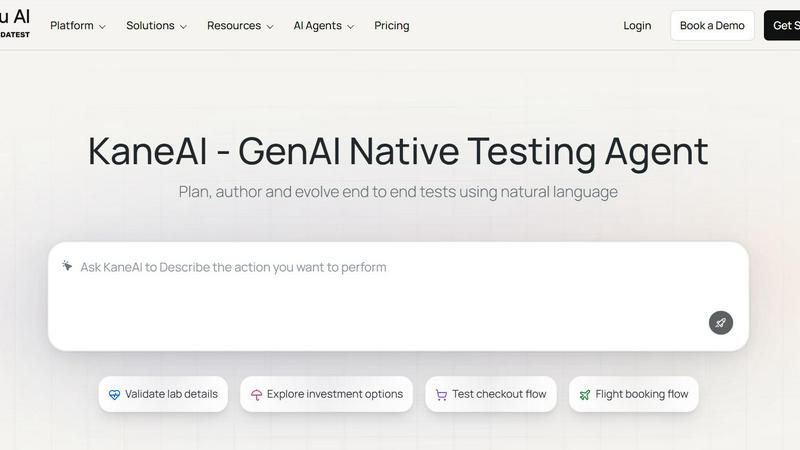
Kane AI is a GenAI-native testing agent that simplifies test creation and evolution through natural language for.
Last updated: February 26, 2026

PoYo API
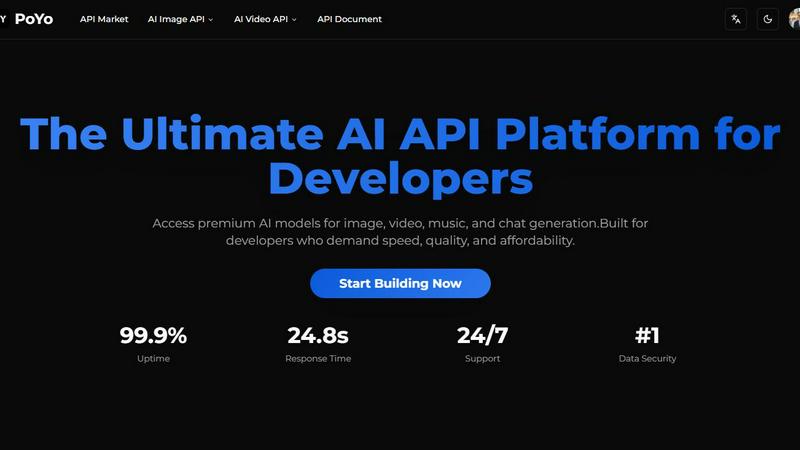
PoYo API provides unified developer access to premium AI models for image, video, music, and chat generation.
Last updated: February 28, 2026
Visual Comparison
Kane AI
PoYo API
Feature Comparison
Kane AI
Intelligent Test Generation
Kane AI utilizes NLP-based instructions to enable users to describe the actions they want to perform in a conversational manner. This feature simplifies the test creation process, allowing teams to automate tests without needing to write code manually, thus removing technical complexity and reducing overhead.
Unified Testing Capabilities
Kane AI supports a comprehensive testing approach by allowing users to plan, author, and evolve end-to-end tests across various layers, including databases, APIs, and accessibility. This unified strategy ensures that all aspects of an application are tested seamlessly, providing full coverage and maintaining the integrity of software releases.
Smarter API Testing
With Kane AI, users can validate APIs alongside UI flows in a single cohesive strategy. This eliminates silos in testing processes and ensures that there are no gaps in coverage. By integrating API testing with user interface testing, Kane AI enhances the reliability of software applications.
Real-Time Bug Detection and Resolution
Kane AI features advanced auto bug detection capabilities that identify failures during test execution. The system can automatically raise tickets in JIRA or Azure DevOps, streamlining the bug resolution process. This feature ensures that development teams are promptly informed about issues, allowing for quicker fixes and improved software quality.
PoYo API
Unified Multi-Model API Access
PoYo API provides a single, consolidated endpoint for accessing a curated library of over 500 leading AI models spanning image, video, music, and chat generation. This eliminates the need for developers to manage multiple API keys, SDKs, and billing accounts across different providers. The platform's standardized interface simplifies integration, reduces code complexity, and accelerates development cycles, allowing teams to focus on building application logic rather than managing vendor-specific integrations.
Flexible Credit-Based Pricing Model
The platform operates on a transparent, pay-as-you-go credit system, fundamentally diverging from restrictive subscription plans. Users purchase credits that never expire and are consumed based on the specific model and task complexity used. This model offers unparalleled financial flexibility, enabling developers to scale usage up or down based on real demand without being locked into fixed monthly fees or over-provisioning for unused capacity, ensuring optimal cost-efficiency.
Enterprise-Grade Security & Reliability
PoYo API is built with a zero-knowledge architecture, ensuring API keys and user credentials are stored with industry-standard encryption. The platform guarantees 99.9% operational uptime through robust monitoring systems and provides full audit logging for compliance. This commitment to security and reliability makes it suitable for handling sensitive data and mission-critical production workloads where data integrity and service availability are paramount.
Comprehensive Developer Tools & Support
Developers benefit from a suite of tools designed to streamline the development process, including a free playground for testing all models without a credit card, simple two-endpoint async API design, and webhook support for real-time task callbacks. This is complemented by 24/7 dedicated technical support and a dashboard with manual retry capabilities for failed tasks, providing developers with full control and assistance throughout the integration and deployment lifecycle.
Use Cases
Kane AI
End-to-End Testing Automation
One of the primary use cases for Kane AI is automating end-to-end testing for web and mobile applications. Teams can create comprehensive test cases by simply describing the desired actions, ensuring that all user journeys are thoroughly validated without manual intervention.
Continuous Integration and Continuous Delivery (CI/CD)
Kane AI seamlessly integrates with CI/CD pipelines, enabling teams to run automated tests continuously with minimal setup. This integration allows for immediate feedback on code changes, helping teams maintain high software quality and speed up release cycles.
API and UI Validation
Kane AI is ideal for teams needing to validate both API functionality and user interface interactions. By combining these testing processes into a single workflow, Kane AI helps ensure that both backend and frontend components work together as intended, enhancing overall application reliability.
Accessibility Testing
Kane AI also supports accessibility testing, allowing teams to deliver inclusive software experiences without delaying release schedules. By validating accessibility features and compliance, Kane AI ensures that applications are usable by all individuals, including those with disabilities.
PoYo API
Content Creation & Marketing Automation
Marketing teams and content platforms can leverage PoYo API to automate the generation of high-quality visual and audio content at scale. This includes creating promotional images, social media videos, advertising jingles, and product demo scripts using models like Nano Banana Pro, Sora-2, and Suno AI. The API's concurrency and speed enable the rapid production of personalized content for campaigns, significantly reducing manual effort and time-to-market.
AI-Powered Application Development
Software development companies and indie developers can integrate state-of-the-art AI capabilities directly into their applications. This allows for building features such as in-app image editors, video generation tools, AI music composers, or intelligent chatbots powered by models like GPT-5 and Claude Sonnet, all through a single API integration, enhancing product value and user engagement without managing underlying AI infrastructure.
Research & Prototyping
Researchers, data scientists, and product teams can use the platform's free playground and flexible credits to rapidly prototype and test various AI models for specific use cases. They can compare outputs from different image, video, or music generation models to determine the best fit for their project's quality, style, and cost requirements before committing to full-scale integration and development.
Media & Entertainment Production
Studios and independent creators can utilize the advanced video and music APIs for storyboarding, generating visual effects, creating background scores, or even producing short-form content. Access to models like Veo3.1 and the complete Suno suite (for lyrics-to-song, vocal removal, etc.) provides professional-grade tools that can augment traditional production pipelines with AI-driven creativity.
Overview
About Kane AI
Kane AI by TestMu AI is a revolutionary GenAI-native testing agent tailored for high-speed Quality Engineering teams. This innovative tool streamlines the entire testing process by enabling test authoring, management, debugging, and evolution using natural language. Unlike traditional low-code platforms that often require extensive programming knowledge, Kane AI is designed to accommodate complex workflows across all major programming languages and frameworks without sacrificing performance. Its primary value proposition lies in drastically reducing the time and expertise needed to initiate and scale test automation. Kane AI empowers teams to engage in intelligent test generation using natural language processing (NLP) instructions, facilitating effortless automation of tests. With features such as an Intelligent Test Planner, multi-language code export, and seamless integration with tools like JIRA, Kane AI enhances collaboration and efficiency in software testing, ultimately accelerating reliable software delivery.
About PoYo API
PoYo API is a sophisticated, centralized platform engineered to provide developers with streamlined, high-performance access to a vast and diverse ecosystem of over 500 premium artificial intelligence models. It functions as a singular, unified gateway for AI-powered generation across multiple modalities, including image, video, music, and conversational chat. Designed explicitly for developers, startups, and enterprises, PoYo API eliminates the traditional complexities of integrating disparate AI services by consolidating them under one intuitive interface and a single API key. Its core value proposition lies in delivering exceptional quality, remarkable speed with sub-50ms response times, and a transparent, cost-effective credit-based pricing model that charges only for actual usage without mandatory recurring subscriptions. By offering immediate access to cutting-edge models like Sora-2 for video, Nano Banana Pro for high-resolution imagery, and GPT-5 for chat, all backed by enterprise-grade security and 99.9% uptime, PoYo API empowers developers to build and scale next-generation AI applications with unprecedented efficiency and reliability.
Frequently Asked Questions
Kane AI FAQ
What programming languages and frameworks does Kane AI support?
Kane AI is designed to work with all major programming languages and frameworks, making it a versatile tool for diverse development environments. This flexibility allows teams to leverage Kane AI's capabilities without being limited by their tech stack.
How does Kane AI handle test management and debugging?
Kane AI streamlines test management by enabling users to author, manage, and debug tests using natural language. This approach reduces the complexity of traditional test management systems and allows for quick iterations and adjustments based on real-time feedback.
Can Kane AI integrate with existing tools and workflows?
Yes, Kane AI offers seamless integration capabilities with tools like JIRA and Azure DevOps. This allows teams to maintain their existing workflows while benefiting from Kane AI's intelligent testing features, ensuring a smooth transition and enhanced collaboration.
Is Kane AI suitable for enterprise-level organizations?
Absolutely. Kane AI is built with enterprise readiness in mind, featuring Single Sign-On (SSO), Role-Based Access Control (RBAC), audit logs, and compliance controls. These features help organizations manage teams confidently while adhering to strict security and compliance standards.
PoYo API FAQ
What is the PoYo API credit system and how does it work?
PoYo API uses a prepaid credit system where you purchase credits that are then consumed based on the AI model and task you execute. Each model has a defined credit cost per task (e.g., per image generation, per second of video). Credits do not expire, and you only pay for successful generations, with no charges for failed tasks. This system replaces traditional monthly subscriptions, offering greater flexibility and cost control.
How does PoYo API ensure low latency and handle high-volume requests?
The platform is engineered for performance, boasting an average response time of under 50ms and built to handle massive parallel requests. It utilizes an asynchronous API design for long-running tasks (like video generation) with webhook callback support, ensuring your application isn't blocked waiting for a response. This architecture, combined with robust backend infrastructure, allows for high concurrency and ultra-low latency suitable for scalable production applications.
Is there a way to test the AI models before purchasing credits?
Yes, PoYo API provides completely free playground access on each model's dedicated page. You can experiment with various generation parameters, test prompts, and evaluate the output quality of any model in the library without needing to sign up for a paid plan or provide credit card details. This allows for thorough testing and debugging before integrating the API into your application.
What security measures are in place to protect my API keys and data?
PoYo API employs enterprise-grade security practices, including a zero-knowledge architecture. Your API keys are encrypted using industry-standard protocols. The platform ensures that your credentials and data are protected, with full audit logging available for security monitoring and compliance purposes. This makes it a secure choice for developers handling sensitive information or building applications for regulated industries.
Alternatives
Kane AI Alternatives
Kane AI is a groundbreaking GenAI-native testing agent that empowers quality engineering teams to efficiently plan, create, and evolve tests using natural language. As a member of the AI Assistants category, Kane AI stands out for its ability to drastically reduce the time and expertise required for test automation, making it an appealing choice for organizations seeking to streamline their testing processes. However, users often explore alternatives to Kane AI due to factors such as pricing, feature sets, compatibility with specific platforms, or varying team requirements. When considering alternatives, it is crucial to evaluate the ease of use, integration capabilities, language support, and overall performance to ensure that the chosen solution meets the unique needs of your testing environment.
PoYo API Alternatives
PoYo API is a centralized platform in the AI Assistants and generative AI category, providing developers with unified access to a vast library of over 500 premium models for image, video, music, and chat generation. It simplifies integration through a single API key and employs a flexible, consumption-based credit system. Developers may seek alternatives for various reasons, including specific budgetary constraints, the need for different pricing models like monthly subscriptions, or requirements for niche AI models not covered by a generalist platform. Others might prioritize direct relationships with model providers or have unique compliance and data residency needs that influence their platform choice. When evaluating alternatives, key considerations include the breadth and specialization of the available AI models, the overall cost structure and transparency, performance metrics like latency and uptime, and the robustness of security and support frameworks. The ideal platform aligns with both the technical demands of the application and the strategic goals of the development project.