
Prefactor vs Prompt Builder
Side-by-side comparison to help you choose the right product.

Prefactor
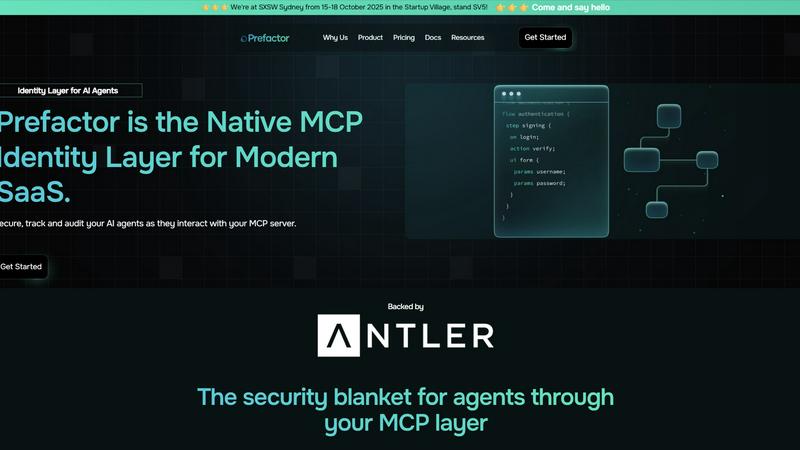
Prefactor governs AI agents in regulated industries, ensuring compliance, visibility, and control at scale.
Last updated: March 1, 2026

Prompt Builder
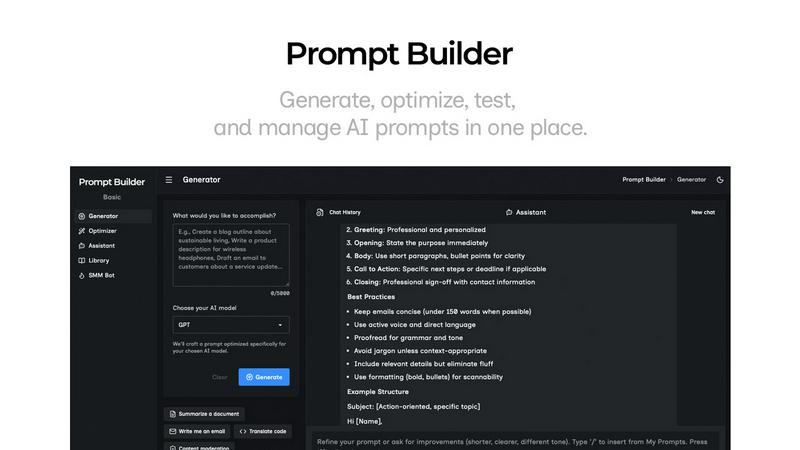
Prompt Builder is a unified platform to generate, optimize, test, and manage AI prompts for models like ChatGPT and Gemini.
Last updated: April 13, 2026
Visual Comparison
Prefactor
Prompt Builder
Feature Comparison
Prefactor
Real-Time Visibility
Prefactor provides real-time tracking of all AI agents, allowing users to monitor which agents are active, what resources they access, and identify potential issues before they escalate into significant incidents. This feature enables organizations to gain complete operational visibility through an intuitive control plane dashboard.
Compliance-Ready Audit Trails
Every action taken by an AI agent is recorded in detailed audit logs that translate technical events into business context. This ensures clarity when compliance teams inquire about agent activities, providing straightforward answers rather than obscure API call records. This feature is crucial for regulated industries that require transparent auditing processes.
Identity-First Control
Prefactor enforces an identity-first approach for AI agents, ensuring that every agent has a unique identity, all actions are authenticated, and permissions are finely scoped. This governance model mirrors the principles applied to human users, providing a structured framework for managing agent behavior effectively.
Integration Ready
The platform seamlessly integrates with various frameworks, including LangChain, CrewAI, and AutoGen, facilitating quick deployments. Organizations can set up Prefactor in hours rather than months, making it easier to incorporate into existing workflows and enhancing overall productivity.
About Prompt Builder
Prompt Generator
The Prompt Generator is the foundational feature that transforms a simple idea into a robust, model-specific prompt. Users describe their intended task in natural language and select their target AI model (e.g., GPT-4, Claude 3, Gemini Pro). The system then crafts a detailed prompt draft tailored to the selected model's nuances and optimal prompting structures. This includes appropriate formatting, context setting, and constraint phrasing, providing a solid, professional-grade starting point that can be further refined in the integrated chat workspace, significantly reducing initial setup time.
Prompt Assistant & Chat Workspace
This integrated feature allows for seamless testing and iteration of prompts without ever leaving the Prompt Builder environment. The Prompt Assistant provides a chat-first interface where users can run their generated or optimized prompts. It includes a model selector to test outputs across different assistants like Grok, Gemini, or DeepSeek. Users can engage in follow-up conversations, make adjustments, and see results in real-time. All chat histories are preserved, enabling fast iterations and preventing the loss of successful prompt versions across disparate tools.
Prompt Optimizer
The Optimizer tool is designed to enhance existing prompts. Users can paste any prompt—whether from an external source or selected from their personal Library—and the Optimizer will analyze and rewrite it for improved clarity, specificity, and effectiveness. It provides structured improvements across key dimensions such as instruction clarity, added constraints, defined output formats, and inclusion of examples. Each optimization is saved in a history log, and optimized prompts can be instantly sent to the Prompt Assistant for testing with a single click.
Prompt Library & Community Templates
This feature offers a dual-purpose repository for prompt management and discovery. The "My Prompts" section allows users to save, pin, organize, and tag their best prompt versions for easy reuse across projects and teams. Simultaneously, the "Community Prompts" section provides a curated library of reusable prompts and templates shared by other users, searchable and filterable by category and model. This fosters knowledge sharing and provides immediate, proven starting points for common tasks, from creative writing to data analysis.
Use Cases
Prefactor
Regulated Industries
In sectors such as banking, healthcare, and mining, where compliance is non-negotiable, Prefactor enables organizations to deploy AI agents while maintaining strict adherence to regulatory requirements. This use case emphasizes the platform's ability to provide necessary audit trails and control mechanisms.
Multi-Agent Environments
Organizations running multiple AI agent pilots can utilize Prefactor to manage and monitor these agents effectively. This use case highlights how teams can align their security and compliance efforts around a centralized control plane, thus enhancing operational efficiency.
Cost Management
Companies can leverage Prefactor to track agent compute costs across different cloud providers. By identifying expensive patterns and optimizing spending, businesses can make informed decisions that lead to significant cost savings while maintaining agent performance.
Enhanced Visibility for Compliance Teams
Prefactor empowers compliance teams by offering them real-time insights into agent activities. This use case showcases how organizations can address compliance inquiries promptly, allowing for smoother audits and reducing friction between technical and compliance teams.
Prompt Builder
Content Creation and Marketing
Marketing professionals and content creators can use Prompt Builder to rapidly generate and refine copy for blogs, social media posts, ad copy, and email campaigns. The SMM Bot feature specifically streamlines creating platform-ready content for X, LinkedIn, and Instagram by generating tailored posts with appropriate tones, hashtags, and calls-to-action. This ensures brand-consistent, engaging content is produced efficiently for multiple channels from a single brief.
Technical Development and Coding
Developers and engineers can leverage the platform to create precise prompts for code generation, debugging, documentation, and system design explanations. By generating prompts tuned for models like Claude or GPT-4, which are strong in reasoning, they can get more accurate, syntactically correct code snippets and detailed technical explanations, saving hours of manual coding and research time.
Research and Data Analysis
Academics, analysts, and students can utilize Prompt Builder to craft detailed prompts for summarizing complex research papers, extracting insights from datasets, generating literature reviews, or formulating hypotheses. The ability to optimize prompts for clarity and structure ensures the AI provides comprehensive, well-formatted, and relevant outputs, making the research process more systematic and productive.
Business Process Automation
Business professionals and operations teams can build a library of standardized prompts to automate routine tasks such as drafting reports, generating meeting agendas and minutes, creating standard operating procedures, or formatting data. This ensures consistency in output quality, reduces repetitive work, and allows team members to reuse and share effective prompt templates, scaling best practices across the organization.
Overview
About Prefactor
Prefactor is an advanced control plane specifically crafted for the management of AI agents across diverse industries. It offers a comprehensive suite of features that empower organizations to oversee their AI deployments with confidence and clarity. Designed primarily for Software as a Service (SaaS) companies and regulated enterprises, Prefactor provides essential tools for dynamic client registration, delegated access, and meticulous role controls. This ensures that each AI agent maintains a secure and auditable identity, thereby fostering a robust environment for agent authentication. With capabilities such as policy-as-code management, automated permissions in CI/CD pipelines, and a holistic view of agent activities, Prefactor aligns the efforts of security, product, engineering, and compliance teams around a single source of truth. Its architecture is built for scalability and compliance, ensuring that organizations can govern their AI agents efficiently while adhering to regulatory standards. Prefactor stands out in its ability to deliver SOC 2-ready security and seamless interoperability with OAuth and OpenID Connect (OIDC), making it an indispensable tool for businesses navigating the complexities of AI governance.
About Prompt Builder
Prompt Builder is a sophisticated, all-in-one prompt engineering workspace designed to streamline the entire lifecycle of creating and deploying effective AI prompts. It serves as a centralized platform for writing, testing, optimizing, and managing prompts across a vast array of leading large language models (LLMs). The core value proposition lies in eliminating the inefficiencies of manual prompt crafting. Instead of spending hours rewriting and adapting instructions for different AI systems, users describe their task in plain English, select a target model, and Prompt Builder generates a professionally structured, model-optimized draft in seconds. This draft can then be interactively refined within a built-in chat interface, saved into a personal or community library, and executed directly within the platform. It is an indispensable tool for AI practitioners, content creators, developers, marketers, and any professional seeking to maximize the quality, consistency, and reusability of their AI interactions without being locked into a single model's ecosystem.
Frequently Asked Questions
Prefactor FAQ
What industries benefit from using Prefactor?
Prefactor is designed for use in regulated industries such as banking, healthcare, mining, and other sectors where compliance is critical. Its features cater to the unique needs of these industries, ensuring secure and auditable AI agent management.
How does Prefactor ensure compliance?
Prefactor ensures compliance through detailed audit trails that translate agent actions into understandable business contexts. This feature helps organizations meet regulatory expectations while maintaining transparency in their AI operations.
What integration capabilities does Prefactor offer?
Prefactor integrates seamlessly with frameworks like LangChain, CrewAI, and AutoGen, allowing organizations to deploy the platform quickly and efficiently. This integration flexibility supports a variety of workflows and enhances operational productivity.
How does Prefactor support real-time monitoring?
Real-time monitoring is facilitated through a comprehensive control plane dashboard that provides visibility into agent activities. Users can track active agents, access patterns, and potential issues as they arise, enabling proactive management of AI deployments.
Prompt Builder FAQ
What AI models does Prompt Builder support?
Prompt Builder supports a wide and growing range of leading large language models. This includes OpenAI's GPT series, Anthropic's Claude, Google's Gemini, Meta's Llama, Mistral AI's models, DeepSeek, xAI's Grok, Perplexity, and Cohere. The platform is designed to be model-agnostic, allowing you to generate prompts tailored for each specific model's strengths and expected input formats.
How does the free plan work?
The free plan offers users a generous starting point to explore the platform's core capabilities. It includes 25 assistant requests per month, allowing you to test and run prompts within the built-in Prompt Assistant using various models. This plan provides access to the Prompt Generator, Optimizer, and Library features, requiring no credit card to sign up, so you can evaluate the tool's effectiveness for your workflow at no cost.
Can I use prompts created in Prompt Builder outside of the platform?
Absolutely. Prompts created, optimized, and saved within your Prompt Builder Library are yours to use. You can easily copy any prompt and paste it directly into the native interface of your chosen AI model, such as the ChatGPT website, Claude.ai, or Google Gemini. The platform is designed to enhance prompt creation for use anywhere, while also providing the convenience of an integrated testing environment.
How does the Prompt Optimizer improve my existing prompts?
The Prompt Optimizer acts as an AI-powered editor for your prompts. It analyzes the provided text and applies structured enhancements focused on key areas: improving overall clarity and instruction specificity, adding necessary constraints to narrow the output, defining a clear format for the response (e.g., JSON, markdown, bullet points), and suggesting or incorporating examples to guide the model. This process transforms vague or generic prompts into precise, high-yield instructions.
Alternatives
Prefactor Alternatives
Prefactor is a sophisticated control plane designed to govern AI agents, particularly in regulated industries. By ensuring compliance and providing visibility, it facilitates secure identity management while enabling organizations to automate permissions and maintain operational transparency. Users often seek alternatives to Prefactor for various reasons, including pricing considerations, different feature sets, or specific platform requirements that better align with their operational needs. When choosing an alternative, it is essential to evaluate factors such as security features, scalability, compliance capabilities, and the overall ease of integration with existing systems to ensure that the chosen solution effectively meets organizational objectives.
Prompt Builder Alternatives
Prompt Builder is a comprehensive AI prompt engineering workspace designed to streamline the process of creating, optimizing, and managing prompts for large language models. It falls into the category of AI assistants and productivity tools, specifically built for developers, content creators, and professionals who regularly interact with models like GPT, Claude, and Gemini. The platform allows users to transform a simple idea into a refined, executable prompt through an intuitive drafting, testing, and versioning system. Users may seek alternatives to Prompt Builder for various reasons, including budget constraints, specific feature requirements not covered by the platform, or a need for deeper integration within a particular ecosystem or workflow. Some may prioritize open-source solutions, while others might look for a tool with a different user interface or collaboration capabilities. The search often stems from a desire to find the optimal balance of cost, functionality, and ease of use for their unique projects. When evaluating alternatives, key considerations should include the range of supported AI models, the sophistication of prompt testing and optimization tools, and the ability to organize and reuse prompt libraries. Security and data privacy policies are critical for handling sensitive prompts, while collaboration features can be vital for team use. Ultimately, the best choice depends on aligning the tool's core strengths with the user's primary objective: efficiently producing high-quality, reliable outputs from AI models.