
SERPView vs Skippership
Side-by-side comparison to help you choose the right product.

SERPView
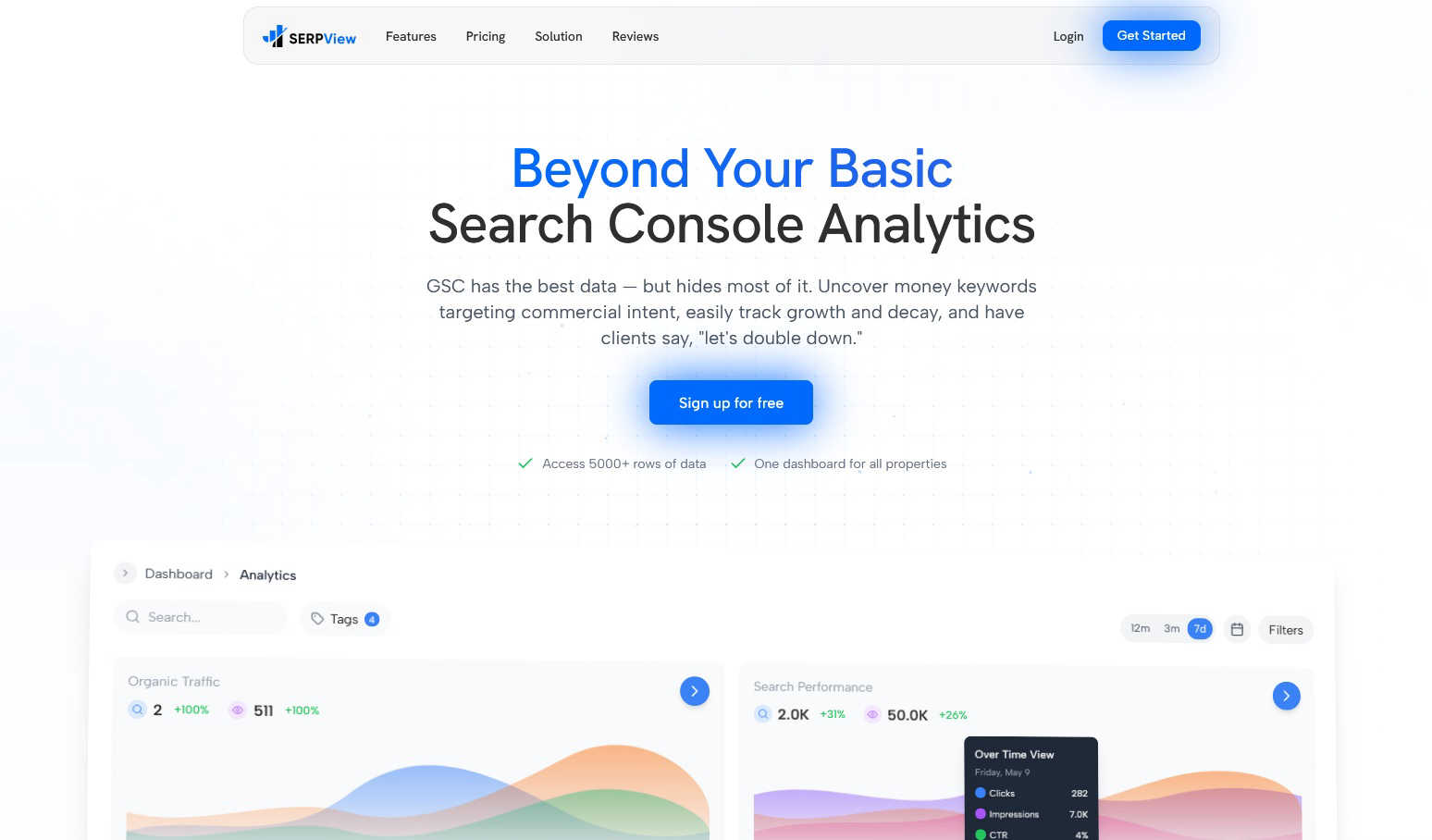
SERPView unlocks hidden Google Search Console insights for advanced SEO performance tracking and keyword analysis.
Last updated: March 1, 2026

Skippership
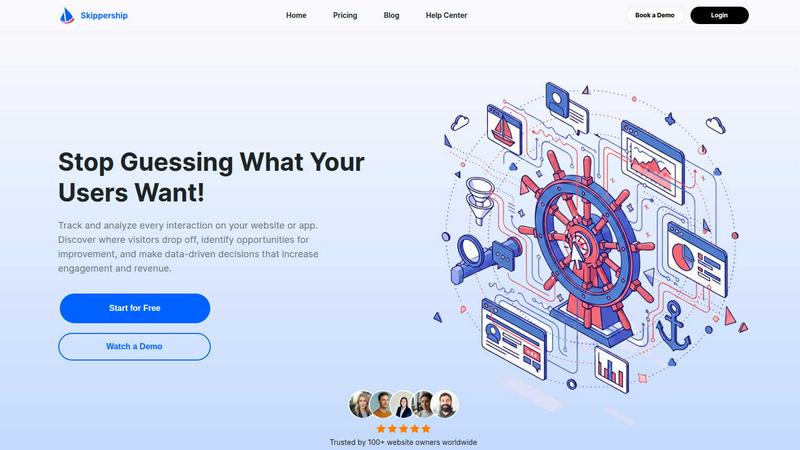
Skippership analyzes user behavior to identify friction points and enhance website engagement and conversions.
Last updated: March 1, 2026
Visual Comparison
SERPView
Skippership
Feature Comparison
SERPView
Expanded Data Access & Performance Tracking
SERPView fundamentally removes the data ceiling imposed by Google Search Console, allowing users to export and analyze up to 50,000 rows of historical performance data. This feature enables comprehensive tracking of clicks, impressions, click-through rate (CTR), and average position across an entire site's keyword portfolio without sampling or arbitrary limits. Users can perform deep-dive analyses over extended periods, identify long-term trends, and make strategic decisions based on complete datasets rather than fragmented snapshots, ensuring no critical insight is overlooked due to platform constraints.
Unified Multi-Property Dashboard
This feature consolidates data from multiple Google Search Console properties and websites into a single, centralized interface. Users can connect various domains, subdomains, and URL-prefix properties to view aggregated or comparative analytics without manually logging in and out of different accounts. It streamlines workflow for agencies and businesses managing numerous sites, providing a holistic view of organic search performance and enabling efficient cross-property benchmarking and reporting from one location.
Advanced Keyword & Page Analysis
SERPView provides specialized modules for dissecting keyword and page performance beyond surface-level metrics. The Keyword Analysis tool helps identify "money keywords" with commercial intent and tracks precise ranking fluctuations. Simultaneously, the Page Analysis feature pinpoints top-performing and underperforming content, revealing optimization opportunities by showing which pages drive traffic and which lag in rankings, facilitating targeted content audits and updates.
Mobile vs. Desktop & International SEO Insights
The platform offers dedicated comparative analytics for device and geographical performance. Users can segment data to analyze how their site performs on mobile versus desktop devices, identifying potential UX or technical SEO issues specific to each. Furthermore, the International SEO Insights feature breaks down traffic and rankings by country, allowing marketers to tailor their global SEO strategy, understand regional market penetration, and optimize for specific locales.
Skippership
Session Replays
Session Replays provide an unfiltered, video-like recording of real user interactions on your website or application. This feature allows you to observe exactly how visitors navigate, where they hesitate, click, or encounter errors. It is instrumental in uncovering usability issues, identifying points of confusion in forms or checkout processes, and understanding the context behind quantitative data like bounce rates. By watching these replays, teams can diagnose specific friction points and conversion blockers that aggregate statistics often miss, leading to more precise and effective optimizations.
Interactive Heatmaps
Skippership's Interactive Heatmaps offer a visual aggregation of user engagement data, displaying where visitors most frequently click, move their mouse, and how far they scroll on any given page. Click heatmaps reveal the elements that attract attention, while scroll maps show content visibility and engagement depth. This feature is crucial for optimizing page layout, call-to-action placement, and content hierarchy. By identifying which sections are ignored, businesses can strategically reposition key information and buttons to guide user behavior, reduce cognitive load, and ultimately boost conversion rates.
Goal and Event Tracking
This feature enables businesses to define, track, and analyze key performance indicators (KPIs) and specific user actions, such as form submissions, product purchases, button clicks, or sign-ups. Goal Tracking transforms vague aspirations into measurable metrics, allowing for real-time performance monitoring. It helps uncover patterns in user behavior that lead to conversions, facilitating A/B testing and providing clear evidence of what design or content changes directly impact business outcomes. This data-driven approach ensures that optimization efforts are focused on actions that genuinely drive results.
AI-Powered Insights Analytics
Going beyond raw data presentation, Skippership's AI Analytics automatically processes vast amounts of behavioral data to surface meaningful patterns, trends, and actionable insights. The AI can highlight common drop-off points, detect recurring usability issues like "rage clicks," and suggest potential areas for improvement. This feature accelerates the analysis process, helping teams move faster from data collection to decision-making. It empowers users to understand the "why" behind user behavior, making it easier to prioritize fixes and enhancements that will have the most significant impact on engagement and revenue.
Use Cases
SERPView
SEO Agency Reporting and Client Management
SEO agencies utilize SERPView to manage reporting for multiple clients efficiently. By connecting all client GSC properties to one dashboard, agencies can automate data aggregation, create customized reports with advanced filters, and provide clients with clear, actionable insights into campaign performance, keyword progress, and ROI, all while saving countless hours previously spent on manual data compilation from disparate sources.
In-depth Content Strategy Optimization
Content managers and SEO specialists use SERPView's Page and Keyword Analysis features to audit and refine their content strategy. By identifying which pages rank for valuable commercial keywords and which high-potential keywords are not being targeted, they can prioritize content updates, plan new topic clusters, and re-optimize underperforming articles to better align with search intent and drive more qualified organic traffic.
Technical SEO and Site Health Monitoring
Technical SEO experts leverage the platform's expanded data access and filtering to diagnose site-wide issues. By analyzing performance drops across large sets of keywords or pages, correlating them with Google algorithm updates via annotations, and comparing mobile vs. desktop performance disparities, they can pinpoint technical problems like indexing errors, mobile usability issues, or penalties impacting search visibility.
Global Enterprise SEO Strategy
Large organizations with international websites use SERPView's unified dashboard and country-specific insights to coordinate global SEO efforts. Teams can track performance across different regional domains and languages from a single platform, allocate resources based on regional opportunity, and ensure local SEO strategies are data-informed and aligned with overarching business goals.
Skippership
E-commerce Conversion Rate Optimization
E-commerce managers utilize Skippership to pinpoint exactly where potential customers abandon their shopping carts. By analyzing session replays of failed checkouts and heatmaps on product pages, they can identify confusing form fields, unexpected shipping costs, or technical errors. Tracking goals for "Purchase Completed" allows them to measure the direct impact of changes, such as simplifying the checkout process or clarifying call-to-action buttons, leading to a measurable increase in sales and average order value.
SaaS Product Onboarding Improvement
Product teams at Software-as-a-Service companies employ Skippership to enhance user onboarding flows. Session replays reveal where new users get stuck or confused when first using the application. Heatmaps on tutorial pages show which help content is engaged with or skipped. By tracking goals for "Key Feature Activated" or "Subscription Upgraded," teams can iteratively refine the onboarding experience, reduce time-to-value, and improve user retention rates by ensuring customers successfully discover core product benefits.
Content and Blog Engagement Analysis
Website owners and content marketers use Skippership to understand how visitors interact with blog posts and articles. Scroll heatmaps indicate how far readers progress and which sections hold attention, while click heatmaps show which internal links or promotional banners are effective. This data informs content structure, ideal article length, and placement of subscription forms or related content suggestions, ultimately increasing page engagement, average session duration, and lead generation from content marketing efforts.
UX and Usability Testing
User Experience designers and researchers leverage Skippership as a continuous, remote usability testing tool. Instead of organizing costly lab studies, they can review anonymous session replays to observe real users interacting with new designs or features in their natural environment. Identifying rage clicks, excessive scrolling, or navigation loops provides direct feedback on design intuitiveness. This allows for rapid, evidence-based iterations of wireframes and prototypes before full development, saving time and resources while improving the final product usability.
Overview
About SERPView
SERPView is a sophisticated, cloud-based analytics and reporting platform engineered to unlock the full potential of data from Google Search Console (GSC). It is designed explicitly for SEO professionals, digital marketers, and website owners who find the native GSC interface limiting for deep, strategic analysis. The core value proposition of SERPView lies in its ability to transcend the inherent restrictions of Google's platform, most notably by providing access to over 50,000 rows of performance data compared to GSC's 1,000-row cap. This allows for comprehensive, unfiltered insights into keyword rankings, page performance, and search traffic trends. Beyond sheer data volume, SERPView aggregates multiple GSC properties into a single, unified dashboard, eliminating the need to switch between accounts manually. The platform enriches this data with advanced analytical features such as granular mobile versus desktop performance breakdowns, international SEO tracking, query counting, and visual annotations for Google algorithm updates. By transforming raw, siloed GSC data into actionable, shareable intelligence, SERPView empowers users to make data-driven decisions, identify untapped opportunities, and significantly enhance their overall organic search strategy and reporting efficiency.
About Skippership
Skippership is a comprehensive, AI-powered analytics and user experience optimization platform designed to transform how businesses understand and interact with their website and application visitors. It moves beyond traditional analytics by providing a unified suite of tools that visualize actual user behavior, enabling organizations to move from speculation to data-driven action. The platform is engineered for digital marketers, product managers, UX designers, and website owners who require deep, actionable insights into user journeys without the complexity of fragmented tools. Its core value proposition lies in delivering "Maximum Clarity" through an all-in-one, intuitive interface that combines qualitative and quantitative data. By leveraging session recordings, interactive heatmaps, conversion goal tracking, and proprietary AI analytics, Skippership identifies precise friction points, conversion blockers, and untapped opportunities for improvement. This empowers teams to make confident decisions that directly enhance user engagement, strengthen customer retention, and increase revenue. With a strong emphasis on privacy, security, and ease of use—featuring a no-code setup and minimal performance impact—Skippership is built to scale with businesses of any size, providing the visibility needed to optimize online presence effectively and efficiently.
Frequently Asked Questions
SERPView FAQ
How is SERPView different from Google Search Console?
SERPView is not a replacement for Google Search Console but a powerful analytics layer built on top of it. While GSC provides the raw data directly from Google, SERPView removes its limitations, such as the 1,000-row data cap and lack of multi-property aggregation. It offers advanced analytics, historical data access, custom reporting, and features like query counting and update annotations that are not available in the native GSC interface, transforming data into actionable business intelligence.
What data does SERPView access, and is it secure?
SERPView accesses data via the official Google Search Console API, using secure OAuth 2.0 authentication. It only reads performance data (clicks, impressions, CTR, position, queries, pages) that you already have access to in your GSC account. The platform does not have permission to modify any settings on your Google properties or websites. Data is encrypted in transit and at rest, adhering to industry-standard security practices to ensure your information remains protected.
Can I track historical data that wasn't collected before I signed up?
SERPView can access and import the 16 months of historical performance data that Google Search Console retains via its API. Once you connect your GSC property, the platform will pull in all available historical data up to that limit. For ongoing tracking, SERPView will continuously sync new data, building a comprehensive, long-term performance database for your site moving forward.
Is SERPView suitable for beginners in SEO?
Yes, while SERPView offers deep analytical capabilities for experts, its intuitive dashboard and visual reporting make it accessible for beginners. Users unfamiliar with GSC's complexities can benefit from the organized presentation of key metrics, clear visualizations of trends, and guided insights that highlight opportunities. It serves as an educational tool that helps newer marketers understand SEO performance more clearly than the native GSC interface.
Skippership FAQ
How does Skippership ensure user privacy and data security?
Skippership is built with a privacy-first architecture. It does not process personal or sensitive user data and is designed to comply with major regulations like GDPR and CCPA. All data is encrypted in transit using SSL/TLS and securely stored on reliable cloud infrastructure. The platform allows for easy data management and provides tools to respect visitor consent preferences, ensuring that businesses can gain insights while maintaining the highest standards of data protection and ethical data collection practices.
What is the performance impact of installing Skippership on my website?
Skippership is engineered for minimal performance impact. The tracking script is lightweight and asynchronous, meaning it loads without blocking other elements of your website. The platform employs efficient data collection and processing methods to ensure your site's loading speed and overall user experience are not compromised. This allows you to gather comprehensive behavioral analytics without sacrificing the core performance metrics that are also crucial for SEO and user satisfaction.
Can Skippership integrate with other tools in my tech stack?
Yes, Skippership offers robust integration capabilities with over 50 popular platforms to streamline workflows and unify data. This includes direct integrations with content management systems like WordPress, Joomla, and Drupal; e-commerce platforms like Shopify, WooCommerce, and Magento; and marketing tools like Google Analytics and HubSpot. These integrations allow you to correlate behavioral insights with other business data, creating a more holistic view of your customer journey and operational effectiveness.
How quickly can I start getting insights after setting up Skippership?
Setup is designed to be fast and code-free for most standard websites. Typically, you can install the provided tracking snippet and begin collecting data within minutes. While some data, like session replays, is available almost immediately, building comprehensive heatmaps and AI-driven insights may require a short period of data collection (usually a few days to a week, depending on your site traffic) to ensure statistical significance and provide you with reliable, actionable findings.
Alternatives
SERPView Alternatives
SERPView is a specialized analytics platform that transforms raw Google Search Console data into actionable SEO insights. It falls into the category of SEO analytics and reporting tools, designed to overcome the native limitations of GSC by providing deeper data access and more robust analysis capabilities. Users may explore alternatives to SERPView for various reasons, including budget constraints, specific feature requirements not covered by the platform, or the need to integrate with a different tech stack. Some may seek tools with broader functionality beyond GSC data enrichment, such as rank tracking or backlink analysis, while others prioritize different pricing models or user interface preferences. When evaluating an alternative, key considerations should include the depth of data access from Google Search Console, the ability to consolidate multiple properties, the sophistication of filtering and segmentation options, and the tool's capacity for trend analysis and performance tracking. The ideal solution should efficiently bridge the gap between raw data and strategic SEO decision-making.
Skippership Alternatives
Skippership is a comprehensive AI-powered analytics and user behavior platform. It falls within the digital analytics and user experience optimization category, providing tools like session replays and heatmaps to help businesses understand and improve website engagement. Users may seek alternatives to Skippership for various reasons. Common considerations include budget constraints and specific pricing models, the need for different feature sets or integrations, or requirements for analyzing particular platforms like mobile apps or e-commerce systems. The scale of the website and the desired depth of technical support also influence the search for a suitable tool. When evaluating an alternative, key factors to assess include the core feature alignment with your goals, such as session recording fidelity and heatmap types. Data privacy compliance, ease of implementation, the quality of actionable insights generated, and the overall cost relative to the value provided are all critical dimensions for a thorough comparison.