
Agent to Agent Testing Platform vs Prefactor
Side-by-side comparison to help you choose the right product.

Agent to Agent Testing Platform
Validate AI agent performance across chat, voice, and phone interactions while detecting compliance and security risks.
Last updated: February 26, 2026

Prefactor
Prefactor governs AI agents in regulated industries, ensuring compliance, visibility, and control at scale.
Last updated: March 1, 2026
Visual Comparison
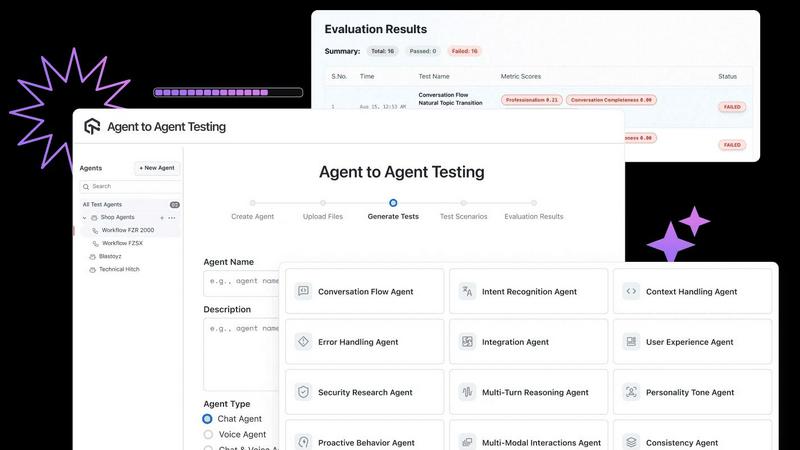
Agent to Agent Testing Platform
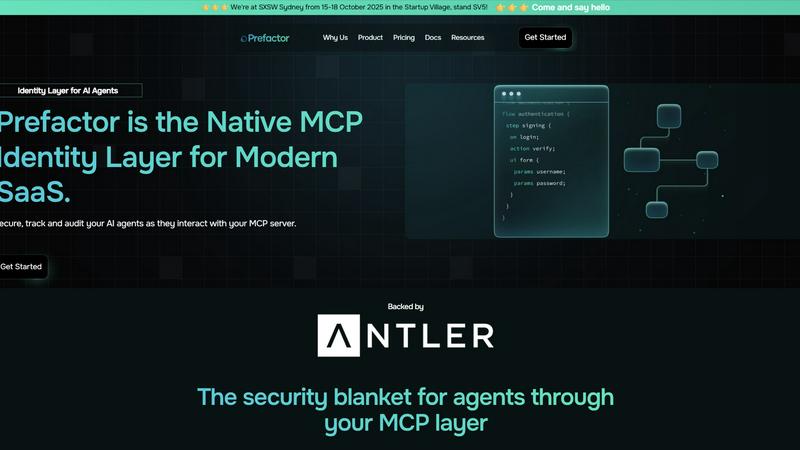
Prefactor
Feature Comparison
Agent to Agent Testing Platform
Automated Scenario Generation
This feature allows users to create diverse test cases for AI agents automatically, simulating various interactions such as chat, voice, hybrid, or phone calls. This capability ensures comprehensive coverage across different communication scenarios.
True Multi-Modal Understanding
By enabling the input of multiple formats, including text, images, audio, and video, this feature allows users to set detailed requirements that reflect real-world conditions. It helps gauge the expected output of AI agents in a more holistic manner.
Autonomous Test Scenario Generation
Access to a library of hundreds of pre-defined scenarios empowers users to efficiently evaluate AI agents. Custom scenarios can also be developed, catering to specific testing needs such as assessing personality tone or intent recognition.
Regression Testing with Risk Scoring
This feature conducts end-to-end regression testing, highlighting potential areas of concern through risk scoring. It allows organizations to prioritize critical issues, optimizing their testing efforts and ensuring a robust AI agent performance.
Prefactor
Real-Time Visibility
Prefactor provides real-time tracking of all AI agents, allowing users to monitor which agents are active, what resources they access, and identify potential issues before they escalate into significant incidents. This feature enables organizations to gain complete operational visibility through an intuitive control plane dashboard.
Compliance-Ready Audit Trails
Every action taken by an AI agent is recorded in detailed audit logs that translate technical events into business context. This ensures clarity when compliance teams inquire about agent activities, providing straightforward answers rather than obscure API call records. This feature is crucial for regulated industries that require transparent auditing processes.
Identity-First Control
Prefactor enforces an identity-first approach for AI agents, ensuring that every agent has a unique identity, all actions are authenticated, and permissions are finely scoped. This governance model mirrors the principles applied to human users, providing a structured framework for managing agent behavior effectively.
Integration Ready
The platform seamlessly integrates with various frameworks, including LangChain, CrewAI, and AutoGen, facilitating quick deployments. Organizations can set up Prefactor in hours rather than months, making it easier to incorporate into existing workflows and enhancing overall productivity.
Use Cases
Agent to Agent Testing Platform
Quality Assurance for Chatbots
Enterprises can employ the platform to rigorously test chatbots across various scenarios, ensuring they respond accurately and effectively to user inquiries while maintaining a friendly tone and adherence to data privacy policies.
Voice Assistant Testing
The platform is ideal for validating the performance of voice assistants, simulating real-world interactions to assess their understanding of user intent, tone, and their ability to handle complex queries seamlessly.
Phone Caller Agent Evaluation
Organizations can utilize the Agent to Agent Testing Platform to evaluate phone caller agents, ensuring they deliver a professional and empathetic interaction experience while adhering to compliance and escalation protocols.
Multi-Persona Testing
By leveraging diverse personas, businesses can simulate different user behaviors and needs during testing. This ensures that AI agents are equipped to handle a wide range of customer interactions effectively and efficiently.
Prefactor
Regulated Industries
In sectors such as banking, healthcare, and mining, where compliance is non-negotiable, Prefactor enables organizations to deploy AI agents while maintaining strict adherence to regulatory requirements. This use case emphasizes the platform's ability to provide necessary audit trails and control mechanisms.
Multi-Agent Environments
Organizations running multiple AI agent pilots can utilize Prefactor to manage and monitor these agents effectively. This use case highlights how teams can align their security and compliance efforts around a centralized control plane, thus enhancing operational efficiency.
Cost Management
Companies can leverage Prefactor to track agent compute costs across different cloud providers. By identifying expensive patterns and optimizing spending, businesses can make informed decisions that lead to significant cost savings while maintaining agent performance.
Enhanced Visibility for Compliance Teams
Prefactor empowers compliance teams by offering them real-time insights into agent activities. This use case showcases how organizations can address compliance inquiries promptly, allowing for smoother audits and reducing friction between technical and compliance teams.
Overview
About Agent to Agent Testing Platform
Agent to Agent Testing Platform is an innovative, AI-native quality assurance framework tailored to assess the performance of AI agents in real-world scenarios. As AI agents become increasingly autonomous and complex, traditional quality assurance methods designed for static software systems are proving inadequate. This platform offers a comprehensive solution that evaluates multi-turn conversations across various interfaces, including chat, voice, and phone interactions. It is aimed at enterprises that require rigorous validation processes before deploying AI agents in production. The platform excels in identifying long-tail failures, edge cases, and interaction patterns that manual testing often overlooks, ensuring that AI agents operate reliably and effectively. By leveraging a suite of over 17 specialized AI agents, it empowers businesses to simulate thousands of interactions, providing insights into critical metrics such as bias, toxicity, and hallucinations. Ultimately, the Agent to Agent Testing Platform is essential for organizations seeking to enhance the quality of their AI systems while maintaining user trust and satisfaction.
About Prefactor
Prefactor is an advanced control plane specifically crafted for the management of AI agents across diverse industries. It offers a comprehensive suite of features that empower organizations to oversee their AI deployments with confidence and clarity. Designed primarily for Software as a Service (SaaS) companies and regulated enterprises, Prefactor provides essential tools for dynamic client registration, delegated access, and meticulous role controls. This ensures that each AI agent maintains a secure and auditable identity, thereby fostering a robust environment for agent authentication. With capabilities such as policy-as-code management, automated permissions in CI/CD pipelines, and a holistic view of agent activities, Prefactor aligns the efforts of security, product, engineering, and compliance teams around a single source of truth. Its architecture is built for scalability and compliance, ensuring that organizations can govern their AI agents efficiently while adhering to regulatory standards. Prefactor stands out in its ability to deliver SOC 2-ready security and seamless interoperability with OAuth and OpenID Connect (OIDC), making it an indispensable tool for businesses navigating the complexities of AI governance.
Frequently Asked Questions
Agent to Agent Testing Platform FAQ
What types of AI agents can be tested using the platform?
The Agent to Agent Testing Platform supports various types of AI agents, including chatbots, voice assistants, and phone caller agents. This versatility allows for comprehensive testing across numerous interaction types.
How does the platform ensure comprehensive test coverage?
The platform employs automated scenario generation and a library of predefined test cases to create diverse testing scenarios. This approach ensures that AI agents are evaluated under multiple conditions, covering a wide range of potential user interactions.
Can I create custom test scenarios?
Yes, users have the capability to create custom test scenarios tailored to their specific needs. This feature allows for focused testing on particular aspects of AI behavior such as personality tone or intent recognition.
How does risk scoring work in regression testing?
Risk scoring provides insights into potential vulnerabilities in the AI agent's performance following updates or changes. The system highlights areas of concern, allowing teams to prioritize issues and optimize their QA efforts effectively.
Prefactor FAQ
What industries benefit from using Prefactor?
Prefactor is designed for use in regulated industries such as banking, healthcare, mining, and other sectors where compliance is critical. Its features cater to the unique needs of these industries, ensuring secure and auditable AI agent management.
How does Prefactor ensure compliance?
Prefactor ensures compliance through detailed audit trails that translate agent actions into understandable business contexts. This feature helps organizations meet regulatory expectations while maintaining transparency in their AI operations.
What integration capabilities does Prefactor offer?
Prefactor integrates seamlessly with frameworks like LangChain, CrewAI, and AutoGen, allowing organizations to deploy the platform quickly and efficiently. This integration flexibility supports a variety of workflows and enhances operational productivity.
How does Prefactor support real-time monitoring?
Real-time monitoring is facilitated through a comprehensive control plane dashboard that provides visibility into agent activities. Users can track active agents, access patterns, and potential issues as they arise, enabling proactive management of AI deployments.
Alternatives
Agent to Agent Testing Platform Alternatives
The Agent to Agent Testing Platform is an innovative AI-native quality assurance framework specially designed to validate the behavior of AI agents across various communication channels, including chat, voice, phone, and multimodal systems. This platform is particularly crucial as it addresses the complexities of autonomous AI systems, which increasingly operate in unpredictable ways that traditional QA processes cannot adequately assess. Users often seek alternatives due to factors such as pricing, specific feature requirements, or the need for compatibility with existing platforms, reflecting a desire for tailored solutions that better align with their operational demands. When evaluating alternatives to the Agent to Agent Testing Platform, it is essential to consider several critical aspects. Look for platforms that offer comprehensive testing capabilities across multiple interaction types, scalability for synthetic user interactions, and robust validation mechanisms for compliance and security. Additionally, prioritize solutions that can accommodate the unique needs of your organization, such as integration with existing systems and access to advanced analytics for ongoing performance monitoring.
Prefactor Alternatives
Prefactor is a sophisticated control plane designed to govern AI agents, particularly in regulated industries. By ensuring compliance and providing visibility, it facilitates secure identity management while enabling organizations to automate permissions and maintain operational transparency. Users often seek alternatives to Prefactor for various reasons, including pricing considerations, different feature sets, or specific platform requirements that better align with their operational needs. When choosing an alternative, it is essential to evaluate factors such as security features, scalability, compliance capabilities, and the overall ease of integration with existing systems to ensure that the chosen solution effectively meets organizational objectives.