
Decode This Text vs Polym
Side-by-side comparison to help you choose the right product.

Decode This Text
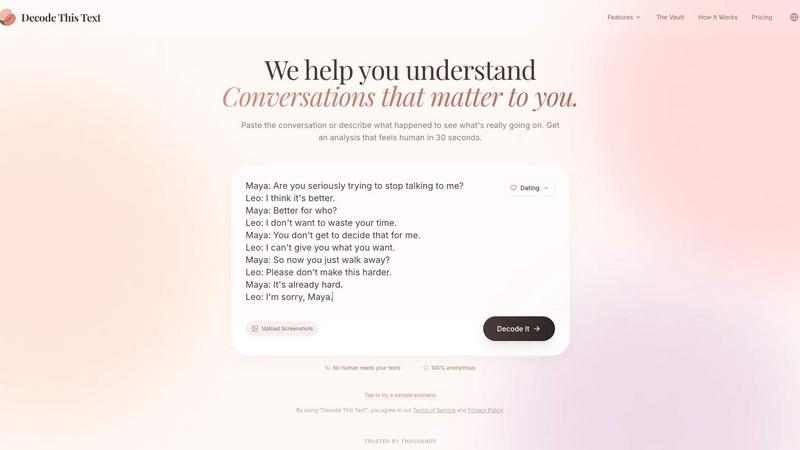
Decode This Text provides instant, human-like analysis of confusing conversations in just thirty seconds.
Last updated: February 28, 2026

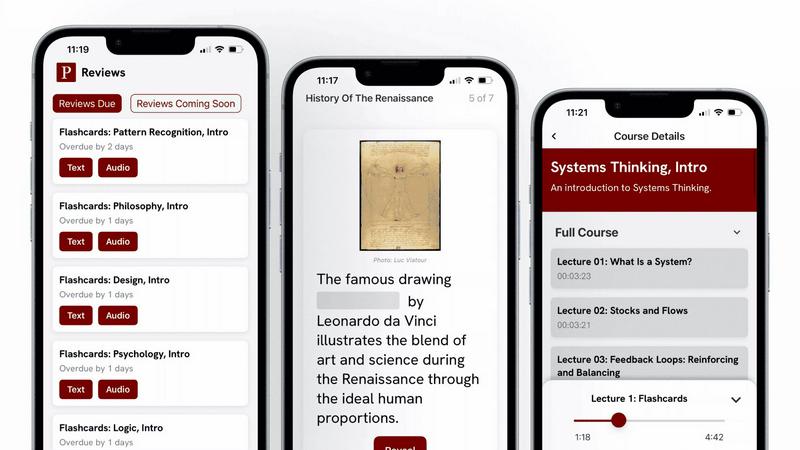
Polym is an audio app that uses active learning techniques to enhance long-term knowledge retention and recall.
Last updated: March 1, 2026
Visual Comparison
Decode This Text
Polym
Feature Comparison
Decode This Text
Multi-Format Input and Contextual Analysis
The platform accepts user input in three flexible formats: direct text pasting, screenshot uploads, or a descriptive narrative of the event. This versatility ensures that any conversational context can be captured and analyzed, whether it's a direct quote, a visual of a chat history, or a user's recollection of an interaction. The AI then performs a deep contextual analysis, examining not just the words but also timing, response patterns, and linguistic cues to construct a holistic understanding of the subtext and underlying dynamics at play.
Tone, Effort, and Intent Metrics
A cornerstone feature is the presentation of clear, quantified metrics for each analyzed message or conversation. The tool evaluates and displays percentages for Tone (the emotional temperature, e.g., friendly, cold, sarcastic), Effort (the level of engagement and investment shown by the other party), and Intent (their underlying motives or interest level). This data-driven breakdown moves users beyond gut feelings to an evidence-based assessment of the communication's true nature.
Pattern Detection and Behavioral Insights
Decode This Text's AI is trained to identify subtle behavioral patterns that individuals might overlook in the heat of the moment. This includes detecting if a contact only messages late at night, consistently avoids answering direct questions, or if their messages are becoming progressively shorter and less engaged. By highlighting these trends, the tool provides crucial "reality check" insights into the other person's communication habits and potential intentions.
AI-Generated Response Suggestions
To bridge analysis into action, the tool provides practical, AI-crafted response options. Users are presented with multiple tailored suggestions for how to reply, categorized by approach—such as calm, direct, or firm. This feature eliminates the paralysis of not knowing what to say next, equipping users with confident, context-appropriate language to navigate the conversation forward effectively.
About Polym
Medium-Form Audio Courses
Polym provides in-depth, medium-form audio courses focused on the conceptual understanding of foundational subjects. These courses are carefully curated to cover material that is not only professionally relevant across various fields but also enriching for general knowledge. The content is specifically engineered for the audio format, with a focus on abstract concepts and principles from technical and mathematical fields that are suitable for auditory learning, thereby overcoming a common hurdle in educational media.
Active Learning via Retrieval Practice
The app moves beyond passive consumption by embedding retrieval practice—a core active learning technique—into the user experience. This is operationalized through interactive audio flashcards and prompted recall exercises within courses. By actively requiring the user to retrieve information from memory, this feature strengthens neural pathways, significantly enhancing long-term retention and recall compared to re-reading or re-listening alone.
Spaced Repetition Scheduling
To combat the natural curve of forgetting, Polym incorporates a spaced repetition algorithm. This system intelligently schedules review sessions for key concepts and terms at strategically increasing intervals. By prompting users to revisit material just as they are about to forget it, the app maximizes memory consolidation, ensuring that learned information transitions from short-term to durable long-term knowledge.
Interleaved Practice Sessions
Polym employs the interleaving learning strategy by mixing related topics or questions from different courses during study and review sessions. Instead of blocking study on a single subject, this approach challenges the brain to discriminate between concepts and apply knowledge in varied contexts. This feature enhances deeper learning, improves problem-solving flexibility, and strengthens the connections between interrelated subjects.
Use Cases
Decode This Text
Deciphering Romantic and Dating Ambiguity
This is a primary use case, addressing the common anxieties of modern dating. Users can analyze texts from potential partners to understand mixed signals, gauge genuine interest after a date, interpret sudden changes in communication frequency, or decode the meaning behind vague phrases like "I'll let you know." It helps answer pressing questions such as whether someone is truly busy or is losing interest, providing clarity that prevents over-analysis and regretful messages.
Interpreting Professional and Workplace Communication
The tool is invaluable for navigating office politics and professional etiquette. Employees can use it to parse the meaning behind a terse, one-word email from a manager, understand the real implication behind phrases like "we'll keep your resume on file," or craft a polite but firm way to say "no" to a request. It aids in understanding power dynamics and unspoken expectations in professional correspondence.
Navigating Friendships and Family Dynamics
Decode This Text helps users manage complex social relationships within their inner circle. It can be used to understand why a group chat went silent after a specific message, interpret a family member's passive-aggressive comment, or determine if a friend's distant behavior is a sign of a problem or simply a reflection of their own stress. It acts as an impartial mediator for social friction.
Preventing Regret and Providing Emotional Validation
A critical use case is serving as a preventative "second opinion" before sending an emotionally charged message. By analyzing the situation first, users can avoid sending texts they might "regret forever." Furthermore, for many users, the tool's analysis provides essential emotional validation—confirming their perceptions or offering a wiser, more objective perspective that friends, who may be biased, cannot.
Polym
Professional Skill Reinforcement
Professionals in data science, finance, engineering, or management can use Polym to reinforce and retain core concepts in statistics, probability, logic, and economics. The audio format allows for learning during commutes or downtime, while the active recall and spaced repetition features ensure that these critical professional foundations remain sharp and readily accessible for application in work projects and decision-making.
Academic Study Aid for Students
University and graduate students can integrate Polym as a supplementary study tool for courses in computer science, philosophy, or history. The medium-form courses provide conceptual overviews, while the abbreviated versions and term-focused sessions are ideal for efficient exam review. The scientifically-backed methods help move information from crammed facts to deeply understood, long-term knowledge.
Lifelong Learning for Aspiring Polymaths
Individuals with broad intellectual curiosity who aim to build a wide base of foundational knowledge across disciplines will find Polym uniquely suited to their goals. The curated selection of subjects and the app's focus on conceptual understanding allow users to systematically explore fields like AI, philosophy, and scientific research, transforming scattered interest into structured, retained expertise.
Preparation for Certifications and Interviews
Job seekers or professionals preparing for technical certifications can utilize Polym to master key terminology and abstract concepts required for tests and interviews. The "Review Key Terms" feature and audio flashcards offer a highly efficient method for drilling definitions and principles, while interleaving helps in understanding how different concepts relate, a common interview question theme.
Overview
About Decode This Text
Decode This Text is a sophisticated AI-powered communication analysis tool engineered to demystify the complex subtext of digital conversations. It functions as a personal communication consultant, providing users with a clear, objective breakdown of the underlying intentions, emotional tone, and social dynamics present in text-based exchanges. The tool is designed for anyone navigating the often ambiguous world of modern messaging, from deciphering a partner's vague texts and a friend's sudden silence to interpreting a boss's terse email or a client's non-committal response. Its core value proposition lies in transforming subjective anxiety into objective clarity. By pasting a conversation, uploading a screenshot, or describing a scenario, users receive a comprehensive, human-like analysis in approximately 30 seconds. This process not only decodes what is being said but, more importantly, what is meant, thereby empowering users to respond with confidence, improve interpersonal relationships, and avoid costly misunderstandings. With a staunch commitment to privacy—ensuring no human ever reads the submitted texts—Decode This Text offers a secure, anonymous, and invaluable service for enhancing emotional intelligence and communication efficacy in both personal and professional spheres.
About Polym
Polym is a specialized audio learning application engineered to optimize the long-term retention and recall of foundational knowledge across a diverse range of academic and professional disciplines. Unlike passive listening platforms, Polym is explicitly designed around evidence-based cognitive science principles, integrating active learning techniques directly into its audio format. The app offers structured, medium-form courses on essential subjects such as Statistics, Probability, Logic, Economics, Computer Science, Artificial Intelligence, Philosophy, and History. Each course is supplemented with abbreviated versions and audio flashcards, creating a multi-layered learning system. The core value proposition lies in its systematic application of proven learning strategies—namely retrieval practice, spaced repetition, and interleaving—to transform casual listening into an effective memorization and comprehension tool. It caters to a broad audience of lifelong learners, including students seeking to solidify academic fundamentals, professionals aiming to cross-skill or deepen domain expertise, and intellectually curious individuals or aspiring polymaths who desire a flexible, engaging way to build and retain critical knowledge. By delivering technically tailored audio content that emphasizes abstract concepts, Polym enables users to efficiently learn and, more importantly, remember complex information through scientifically-backed methods, making education both portable and permanent.
Frequently Asked Questions
Decode This Text FAQ
How does Decode This Text protect my privacy?
Privacy is a fundamental principle of the service. The platform is designed to be 100% anonymous, and the company explicitly states that "no human reads your texts." All analysis is performed by automated AI systems. Users are encouraged to review the platform's Terms of Service and Privacy Policy for detailed information on data handling, security measures, and anonymity guarantees.
What kind of input does the tool accept for analysis?
The tool offers three primary input methods for maximum convenience. You can directly paste the text of the conversation, upload a screenshot or photo of your chat (which the AI will read), or simply provide a written description of what happened. This flexibility ensures you can get an analysis regardless of how the conversation is stored or remembered.
What specific elements does the analysis cover?
The comprehensive analysis examines multiple layers of communication. It assesses the emotional tone (e.g., warmth, sarcasm, hostility), measures the apparent effort and engagement level of the participants, and deduces the underlying intent or motivation. It also detects behavioral patterns, such as avoidance or inconsistent messaging, and synthesizes these elements into a clear explanation of "what's really going on."
How is this tool better than asking a friend for advice?
While friends can offer support, their advice is often biased by their personal relationship with you and their own experiences. Decode This Text provides a completely objective, data-informed analysis focused solely on the communication patterns present in the text. It acts as an impartial, "wise older sibling" figure, offering consistent, pattern-based insights without emotional baggage, and is available instantly without the social burden of asking "for the hundredth time."
Polym FAQ
What research supports the learning strategies used in Polym?
The methodologies underpinning Polym—retrieval practice, spaced repetition, and interleaving—are extensively validated by cognitive science research. These techniques are known collectively as desirable difficulties, as they make learning more challenging in the short term but far more effective for long-term retention. A comprehensive starting point for this research can be found in academic reviews, such as the article available through the National Institutes of Health (PMCID: PMC9781761), which synthesizes evidence on effective learning strategies.
What subjects are currently covered by Polym courses?
Polym offers a growing library focused on foundational knowledge. Confirmed subjects include Logic, Logical Fallacies, Cognitive Biases, Statistics, Probability, Scientific Research Methods, Algorithms, Economics, Philosophy, and History. The selection is designed to be relevant across professional fields and for general intellectual enrichment, with an emphasis on concepts that are suitable for and benefit from the audio learning format.
Who is the primary target audience for the Polym app?
Polym is designed for a wide audience united by a desire to learn and remember effectively. This includes students, professionals seeking cross-disciplinary knowledge, and lifelong learners or aspiring polymaths. Essentially, it is for anyone who wants to improve their retention and recall of key subjects that are applicable both in professional contexts and in enriching everyday life and personal decision-making.
Is Polym available for both iOS and Android devices?
Yes, Polym is officially launched and fully available for download on both major mobile platforms. You can install the app directly from the Apple App Store for iOS devices and from the Google Play Store for Android devices, allowing for flexible, on-the-go learning regardless of your preferred mobile operating system.
Alternatives
Decode This Text Alternatives
Decode This Text is a productivity tool designed to analyze and clarify ambiguous or confusing written communication. It falls within the broader category of communication enhancement and text analysis software, helping users interpret the subtext, tone, and intent behind messages from colleagues, friends, or clients. Users often seek alternatives to such tools for various practical reasons. These can include budget constraints, as pricing models vary widely, or a need for specific features not offered, such as integration with other platforms, support for different languages, or more advanced analytical capabilities. Some may also require a solution that works on a specific operating system or within a particular workflow. When evaluating an alternative, key considerations should include the accuracy and depth of the analysis provided, the tool's ease of use and speed, and its commitment to data privacy and security. It's also wise to assess the cost relative to the value delivered and whether the tool can handle the specific types of communication challenges you face most frequently in your personal or professional life.
Polym Alternatives
Polym is an audio-based learning application focused on enhancing long-term retention of foundational knowledge in subjects like statistics, economics, computer science, and philosophy. It operates within the education technology and self-study software category, leveraging active learning techniques such as retrieval practice and spaced repetition. Users may seek alternatives to Polym for various reasons, including budget constraints, a preference for different content formats like video or text, the need for specific platform availability, or a desire for a broader or more niche subject library. The search often stems from finding the optimal tool that aligns with an individual's unique learning style and practical requirements. When evaluating alternatives, key considerations should include the core learning methodologies employed, such as active recall and spaced repetition systems. The depth and breadth of the content library, the flexibility of the learning format, pricing transparency, and the overall user experience are also critical factors. The ideal platform effectively balances scientific pedagogy with engaging, accessible delivery.