
dmaya vs Postproxy
Side-by-side comparison to help you choose the right product.

dmaya
dMaya is an AI design platform for agencies that generates client-ready UI and exports to code.
Last updated: April 13, 2026

Postproxy
Postproxy simplifies social media publishing by unifying multiple platforms into one seamless API for efficient content.
Last updated: February 26, 2026
Visual Comparison
dmaya

Postproxy
Feature Comparison
dmaya
Conversational AI Design Generation
This foundational feature allows users to generate initial UI designs by describing their vision in plain English. You can request a SaaS dashboard, an e-commerce user flow, or a mobile app interface, and dmaya's AI agent will produce polished, production-ready screen designs within seconds. The system interprets the description to create complete layouts with logical component systems and responsive considerations, providing a professional starting point that far surpasses a blank canvas.
Multi-Screen Infinite Canvas
dmaya provides a flexible, Figma-like workspace where designers can work across multiple artboards for different devices (desktop, mobile, tablet) simultaneously on an infinite canvas. This allows for the holistic design of complete user flows and application states. Users can drag, zoom, and organize screens freely, facilitating a high-level view of the entire project while the AI handles the intricate design work, enabling efficient management of complex, multi-screen projects.
Client Presentation & Feedback Portal
This feature eliminates lengthy email threads and cumbersome presentation tools. Designers can share any design via a simple, secure link. Clients and stakeholders can view an interactive preview directly in their browser without needing an account, leave specific feedback and comments directly on the design, and grant approval. This creates a seamless, centralized review cycle that dramatically reduces iteration time and miscommunication, ensuring everyone is aligned visually before development commences.
Design-to-Code Export for AI Agents
Once a design is approved, dmaya exports it as clean, semantic HTML, CSS, and JavaScript code. This output is not raw, unpolished code but is structured specifically to be consumed effectively by modern AI coding assistants like Cursor, Claude Code, or GitHub Copilot. This allows developers or AI agents to accurately translate the visual design into functional components within any modern framework such as React, Next.js, or Flutter, ensuring fidelity between the approved design and the final built product.
About Postproxy
Unified API Access
Postproxy consolidates the need for multiple platform-specific integrations into a single API endpoint. This simplifies the process of social media publishing, allowing developers to avoid the complexities associated with individual platform rules and requirements.
Automation of OAuth and Permissions
The platform automates the OAuth flows and manages token storage and refresh processes, reducing the burden on developers who would typically need to handle these tasks individually for each social media platform.
Content Adaptation and Format Conversion
When content is submitted for publishing, Postproxy automatically transforms it to meet the specific requirements of each platform, including format conversions and media limitations. This feature eliminates the need for manual adjustments and ensures consistency across channels.
Reliable Delivery Mechanisms
Postproxy incorporates built-in delivery guarantees, including automatic retries, awareness of rate limits, and clear reporting of publish states. This makes it easy to track what content has been successfully published and identify any issues that arise during the process.
Use Cases
dmaya
Agency Pitch & Concept Development
Creative and digital agencies can use dmaya to radically accelerate their client acquisition and pitching process. During discovery calls or initial meetings, teams can generate live, visual concepts based on the client's verbal brief, presenting multiple professional design directions in hours instead of weeks. This tangible demonstration of capability and speed significantly increases win rates and builds immediate client confidence by visualizing ideas on the spot.
Product Team Ideation & Prototyping
Product managers and cross-functional teams can leverage dmaya to explore UI directions and validate concepts before committing valuable engineering resources. It allows for rapid prototyping of new features, user flows, or entire applications, facilitating collaboration between product, design, and engineering in a single workspace. This reduces risk, aligns stakeholders on visual direction early, and ensures the team builds the right thing from the outset.
Freelancer Project Delivery & Scaling
Independent designers and freelancers can utilize dmaya to increase their capacity and project throughput. By automating the initial heavy lifting of layout and component creation, a freelancer can take on more client projects or deliver higher-fidelity work faster without increasing their working hours. This efficiency enables them to improve profitability, offer more competitive turnaround times, and deliver impressive, interactive prototypes that enhance client satisfaction.
Design System Exploration & Iteration
Teams looking to establish or evolve a visual language can use dmaya's conversational iteration and design token consistency to experiment rapidly. Designers can prompt the AI to generate variations of a core component (like a button or card) with different color schemes, typography scales, or spacing rules, allowing for swift A/B testing of design system foundations and ensuring visual consistency is maintained automatically across all generated screens.
Postproxy
Streamlined Content Distribution
Businesses and content creators can use Postproxy to distribute their content across multiple social media platforms simultaneously, ensuring that their messaging remains consistent while saving time on manual posting.
Automated Social Media Campaigns
Marketers can integrate Postproxy into their automated workflows to launch large-scale social media campaigns. By scheduling posts in advance and utilizing AI-generated content, they can maintain an active online presence with minimal manual intervention.
Simplified Multi-Account Management
Agencies and brands managing multiple social media accounts can leverage Postproxy to simplify access control and ownership changes. This feature is crucial for efficient collaboration among teams and stakeholders.
Enhanced Analytics and Reporting
Postproxy provides analytics that help users understand the performance of their published content across platforms. By tracking engagement and reach, users can make data-driven decisions to improve their social media strategies.
Overview
About dmaya
dmaya is an advanced AI-powered design platform engineered specifically for professional agencies, product teams, and freelancers who operate within a structured, client-centric workflow. It addresses a critical gap in the current AI tool landscape by prioritizing the visual design phase that occurs before any code is written. Unlike tools that bypass design to generate code directly, dmaya facilitates intentional, collaborative design decisions early in the process. Its core value proposition lies in accelerating the entire design-to-approval cycle. Users can generate complete, professional UI designs from simple text descriptions, then iteratively refine them through conversational AI. The platform streamlines client collaboration with shareable preview links for instant feedback and approval. Finally, it bridges the gap to development by exporting clean, structured code (HTML, CSS, JS) that can be handed off to AI coding agents like Cursor or Claude Code for implementation in frameworks like React, Next.js, or Flutter. dmaya is built for teams that require speed, precision, and client alignment, transforming a process that traditionally takes days into one that can be completed in minutes.
About Postproxy
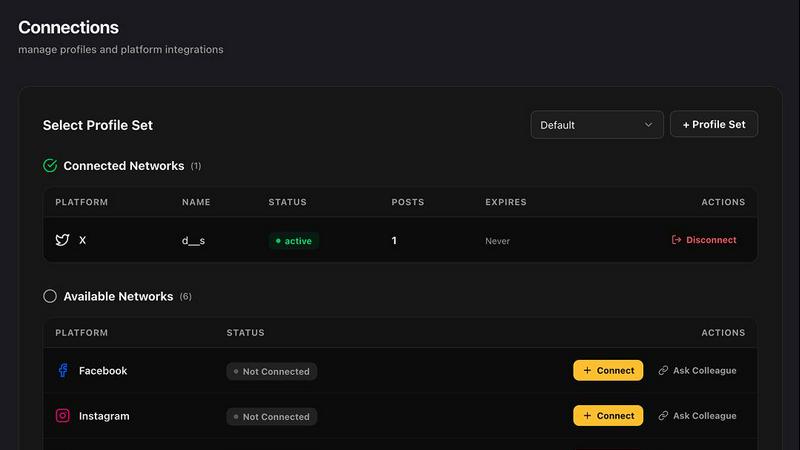
Postproxy is an advanced social media publishing tool designed to streamline the complexities of managing multiple social networks, including Instagram, Facebook, YouTube, LinkedIn, and X. By offering a unified API, Postproxy eliminates the chaos associated with individual platform integrations, making it an essential solution for developers and automators working with tools like n8n, Zapier, and CI/CD pipelines. Its primary value proposition lies in transforming the social media publishing process into a predictable infrastructure. This is achieved through automation of OAuth, handling rate limits, automatic retries, content adaptation, and providing analytics—all from a single, reliable endpoint. Whether you are generating AI content or managing multiple accounts, Postproxy simplifies the entire publishing workflow, allowing users to focus on content quality rather than operational headaches.
Frequently Asked Questions
dmaya FAQ
How does dmaya differ from other AI design tools?
dmaya is distinctively built for professional, client-facing workflows common in agencies and product teams, whereas many AI tools target solo builders or developers. It emphasizes the critical design and approval phase that precedes coding, offering features like client presentation links and collaborative feedback. Other tools often skip visual design to generate code immediately, which bypasses the necessary stakeholder alignment and iterative refinement process that dmaya facilitates.
What kind of code does dmaya export?
dmaya exports clean, production-ready front-end code consisting of semantic HTML, vanilla CSS, and JavaScript. This code is intentionally structured to be clear, well-commented, and easily interpretable by both human developers and AI coding assistants. It is not framework-specific but serves as a perfect, pixel-accurate blueprint that can be handed off to an AI agent like Claude Code to be converted into React, Vue, Flutter, or any other desired framework or library.
Can I collaborate with my team on dmaya?
Yes, dmaya includes robust collaboration features built for teams. You can invite team members to projects with role-based permissions to control access. Multiple designers can work within the same project environment. Furthermore, the platform extends collaboration to clients and external stakeholders through its signature shareable preview links, which allow for feedback collection without requiring viewers to have an account or learn the tool.
Is dmaya a replacement for Figma or Sketch?
dmaya is not a direct 1:1 replacement for traditional vector-based design tools like Figma or Sketch, which offer granular manual control for detailed visual design and intricate prototyping. Instead, dmaya is a complementary, AI-augmented platform focused on the earlier stages of conceptualization, rapid iteration, and client presentation. It is ideal for generating high-quality starting points, exploring ideas at speed, and securing approvals before investing time in detailed manual design or handoff.
Postproxy FAQ
What social media platforms does Postproxy support?
Postproxy currently supports Instagram, Facebook, YouTube, LinkedIn, and X, allowing users to publish to multiple channels from a single API integration.
How does Postproxy handle publishing failures?
Postproxy is designed to manage operational failures by incorporating automatic retries, rate limit handling, and clear reporting of publish states. Users are always informed about what succeeded or failed, without the need for manual checks.
Is there a free plan available for Postproxy?
Yes, Postproxy offers a free plan that allows users to get started without any credit card requirements. Users can scale their usage as their needs grow.
Can Postproxy integrate with automation tools?
Absolutely. Postproxy is built for developers and automators, making it easy to integrate with tools like n8n, Zapier, and CI/CD pipelines, thus enhancing existing workflows and automating the publishing process.
Alternatives
dmaya Alternatives
dmaya is an AI-powered vibe design platform that falls within the category of modern design-to-code tools. It is specifically engineered for agencies, teams, and freelancers who require a visual design and client approval phase before moving into development. The platform allows users to generate and iterate on UI designs through conversational AI, manage client feedback, and export production-ready code. Users may explore alternatives to dmaya for various reasons, including budget constraints, specific feature requirements not covered by the platform, or integration needs with their existing tech stack. Some teams might seek tools with different collaboration models, more granular design control, or alternative output formats for their development workflow. When evaluating an alternative, key considerations should include the tool's core AI capabilities for design generation, the efficiency of its client review and approval cycle, and the quality and flexibility of the exported code. The ideal solution should streamline the critical path from initial concept to developer handoff, ensuring visual consistency and reducing iteration time.
Postproxy Alternatives
Postproxy is a robust tool designed for developers and automators, enabling seamless publishing to multiple social networks through a single API. It simplifies the often chaotic process of managing platform-specific requirements by offering features such as automated OAuth, rate limits, and analytics, making it an attractive solution in the design tools category. Users frequently seek alternatives due to varying needs like pricing structures, feature sets, or specific platform support that may not align perfectly with their operational requirements. When exploring alternatives to Postproxy, it’s essential to assess the features that matter most to your use case, such as ease of integration, scalability, and the ability to automate tasks effectively. Consider the pricing options available to ensure they fit within your budget while still providing the necessary functionality. Additionally, look for user reviews or case studies that can offer insights into the reliability and performance of the alternatives you are considering.