
dmaya vs Refbox
Side-by-side comparison to help you choose the right product.

dmaya
dMaya is an AI design platform for agencies that generates client-ready UI and exports to code.
Last updated: April 13, 2026

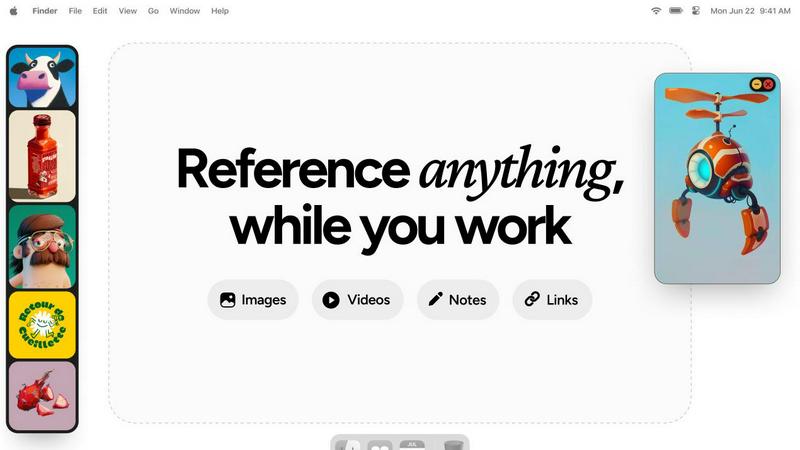
Refbox is a desktop app that keeps your reference images, videos, and notes instantly accessible above your workspace.
Last updated: February 28, 2026
Visual Comparison
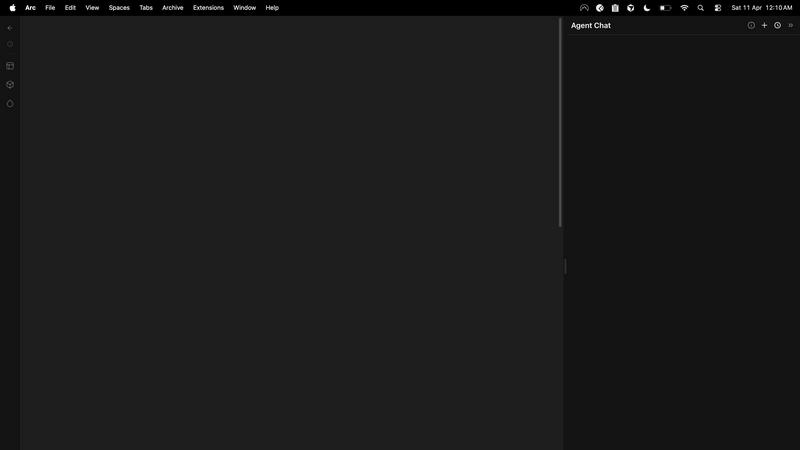
dmaya
Refbox
Feature Comparison
dmaya
Conversational AI Design Generation
This foundational feature allows users to generate initial UI designs by describing their vision in plain English. You can request a SaaS dashboard, an e-commerce user flow, or a mobile app interface, and dmaya's AI agent will produce polished, production-ready screen designs within seconds. The system interprets the description to create complete layouts with logical component systems and responsive considerations, providing a professional starting point that far surpasses a blank canvas.
Multi-Screen Infinite Canvas
dmaya provides a flexible, Figma-like workspace where designers can work across multiple artboards for different devices (desktop, mobile, tablet) simultaneously on an infinite canvas. This allows for the holistic design of complete user flows and application states. Users can drag, zoom, and organize screens freely, facilitating a high-level view of the entire project while the AI handles the intricate design work, enabling efficient management of complex, multi-screen projects.
Client Presentation & Feedback Portal
This feature eliminates lengthy email threads and cumbersome presentation tools. Designers can share any design via a simple, secure link. Clients and stakeholders can view an interactive preview directly in their browser without needing an account, leave specific feedback and comments directly on the design, and grant approval. This creates a seamless, centralized review cycle that dramatically reduces iteration time and miscommunication, ensuring everyone is aligned visually before development commences.
Design-to-Code Export for AI Agents
Once a design is approved, dmaya exports it as clean, semantic HTML, CSS, and JavaScript code. This output is not raw, unpolished code but is structured specifically to be consumed effectively by modern AI coding assistants like Cursor, Claude Code, or GitHub Copilot. This allows developers or AI agents to accurately translate the visual design into functional components within any modern framework such as React, Next.js, or Flutter, ensuring fidelity between the approved design and the final built product.
About Refbox
Always-on-Top Floating Frames
The cornerstone feature of Refbox is its ability to create resizable, transparent frames that float above all other desktop applications. Users can pin any reference media—be it an image, a video clip, or a text note—into these frames, ensuring critical inspiration or guidelines are perpetually in view without obstructing the main workspace. This eliminates window management clutter and the need to constantly switch contexts, allowing for direct visual comparison and continuous workflow.
Infinite Canvas and Collections
Refbox provides an expansive, infinite canvas where users can organize their references into distinct Collections. This spatial organization allows for mood boarding, project-based grouping, or categorizing by theme. Users can swiftly switch between entire sets of references with a single click, and view all items in a collection simultaneously for a holistic overview or flip through them in a slideshow mode for rapid comparison and iteration.
Advanced Media Handling and Tools
Beyond simple display, Refbox includes a suite of powerful tools for interacting with reference media. This includes stepping through GIFs frame-by-frame for detailed animation study, a built-in color picker to sample and copy hex codes from any image, and the ability to crop images directly within the app. It also supports unique media types like SVG files and can generate website screenshots simply by pasting a URL, making it an incredibly versatile reference hub.
Intuitive Shortcuts and Workflow Optimizations
Designed for efficiency, Refbox is packed with keyboard shortcuts and smart behaviors that save countless clicks. Users can navigate between references using arrow keys, instantly minimize frames to access underlying applications, and auto-hide their entire Refbox workspace, summoning it only when needed. Additional touches like lockable frames (to prevent accidental clicks) and pixel-perfect rendering modes for pixel artists demonstrate a deep understanding of professional creative needs.
Use Cases
dmaya
Agency Pitch & Concept Development
Creative and digital agencies can use dmaya to radically accelerate their client acquisition and pitching process. During discovery calls or initial meetings, teams can generate live, visual concepts based on the client's verbal brief, presenting multiple professional design directions in hours instead of weeks. This tangible demonstration of capability and speed significantly increases win rates and builds immediate client confidence by visualizing ideas on the spot.
Product Team Ideation & Prototyping
Product managers and cross-functional teams can leverage dmaya to explore UI directions and validate concepts before committing valuable engineering resources. It allows for rapid prototyping of new features, user flows, or entire applications, facilitating collaboration between product, design, and engineering in a single workspace. This reduces risk, aligns stakeholders on visual direction early, and ensures the team builds the right thing from the outset.
Freelancer Project Delivery & Scaling
Independent designers and freelancers can utilize dmaya to increase their capacity and project throughput. By automating the initial heavy lifting of layout and component creation, a freelancer can take on more client projects or deliver higher-fidelity work faster without increasing their working hours. This efficiency enables them to improve profitability, offer more competitive turnaround times, and deliver impressive, interactive prototypes that enhance client satisfaction.
Design System Exploration & Iteration
Teams looking to establish or evolve a visual language can use dmaya's conversational iteration and design token consistency to experiment rapidly. Designers can prompt the AI to generate variations of a core component (like a button or card) with different color schemes, typography scales, or spacing rules, allowing for swift A/B testing of design system foundations and ensuring visual consistency is maintained automatically across all generated screens.
Refbox
Digital Illustration and Concept Art
Illustrators and concept artists can pin multiple character sketches, environment photos, and color palettes in floating frames around their drawing software. This allows for constant visual feedback without leaving the canvas, enabling them to accurately translate proportions, lighting, and textures from their references directly into their original artwork, significantly speeding up the ideation and rendering process.
UI/UX and Graphic Design
Designers can use Refbox to keep brand guidelines, mood boards, competitor screenshots, and component libraries visible at all times. While working in Figma or Adobe XD, having these critical references just a glance away ensures design consistency and informed decision-making. The ability to take instant website screenshots and reference them side-by-side with a work-in-progress design is invaluable.
3D Modeling and Animation
3D artists and animators can pin orthographic reference sheets, texture maps, and video clips of motion studies directly over their 3D viewport in software like Blender or Maya. The GIF frame-stepping feature is particularly useful for animators to meticulously study movement cycles frame-by-frame while replicating them in their own scenes, enhancing the accuracy and realism of their work.
Motion Graphics and Video Editing
Motion designers and video editors can keep style frames, storyboards, and inspirational video clips floating above their timeline in After Effects or Premiere Pro. This provides a persistent creative compass throughout the editing process, ensuring the final product aligns with the initial vision. Notes with checklists can also be pinned to track complex project requirements and deliverables.
Overview
About dmaya
dmaya is an advanced AI-powered design platform engineered specifically for professional agencies, product teams, and freelancers who operate within a structured, client-centric workflow. It addresses a critical gap in the current AI tool landscape by prioritizing the visual design phase that occurs before any code is written. Unlike tools that bypass design to generate code directly, dmaya facilitates intentional, collaborative design decisions early in the process. Its core value proposition lies in accelerating the entire design-to-approval cycle. Users can generate complete, professional UI designs from simple text descriptions, then iteratively refine them through conversational AI. The platform streamlines client collaboration with shareable preview links for instant feedback and approval. Finally, it bridges the gap to development by exporting clean, structured code (HTML, CSS, JS) that can be handed off to AI coding agents like Cursor or Claude Code for implementation in frameworks like React, Next.js, or Flutter. dmaya is built for teams that require speed, precision, and client alignment, transforming a process that traditionally takes days into one that can be completed in minutes.
About Refbox
Refbox is a revolutionary desktop application engineered to fundamentally transform how creative professionals access and interact with their reference materials. It serves as a dynamic, floating workspace that pins images, GIFs, videos, and notes in "always-on-top" frames that hover above any other application window. This core functionality eliminates the disruptive and time-consuming cycle of alt-tabbing between folders, browser tabs, and creative software, allowing users to maintain an uninterrupted state of deep focus. Designed explicitly for artists, designers, animators, illustrators, and 3D artists, Refbox addresses the universal need for constant visual inspiration and technical reference. Its value proposition lies in creating a seamless bridge between a user's source material and their primary work canvas, thereby streamlining complex workflows, accelerating decision-making, and fostering a more intuitive and productive creative environment. By keeping references persistently visible and instantly accessible, Refbox empowers professionals to work faster and with greater accuracy, turning a fragmented process into a fluid and integrated experience.
Frequently Asked Questions
dmaya FAQ
How does dmaya differ from other AI design tools?
dmaya is distinctively built for professional, client-facing workflows common in agencies and product teams, whereas many AI tools target solo builders or developers. It emphasizes the critical design and approval phase that precedes coding, offering features like client presentation links and collaborative feedback. Other tools often skip visual design to generate code immediately, which bypasses the necessary stakeholder alignment and iterative refinement process that dmaya facilitates.
What kind of code does dmaya export?
dmaya exports clean, production-ready front-end code consisting of semantic HTML, vanilla CSS, and JavaScript. This code is intentionally structured to be clear, well-commented, and easily interpretable by both human developers and AI coding assistants. It is not framework-specific but serves as a perfect, pixel-accurate blueprint that can be handed off to an AI agent like Claude Code to be converted into React, Vue, Flutter, or any other desired framework or library.
Can I collaborate with my team on dmaya?
Yes, dmaya includes robust collaboration features built for teams. You can invite team members to projects with role-based permissions to control access. Multiple designers can work within the same project environment. Furthermore, the platform extends collaboration to clients and external stakeholders through its signature shareable preview links, which allow for feedback collection without requiring viewers to have an account or learn the tool.
Is dmaya a replacement for Figma or Sketch?
dmaya is not a direct 1:1 replacement for traditional vector-based design tools like Figma or Sketch, which offer granular manual control for detailed visual design and intricate prototyping. Instead, dmaya is a complementary, AI-augmented platform focused on the earlier stages of conceptualization, rapid iteration, and client presentation. It is ideal for generating high-quality starting points, exploring ideas at speed, and securing approvals before investing time in detailed manual design or handoff.
Refbox FAQ
What types of files and media does Refbox support?
Refbox supports a wide array of media formats crucial for creatives. You can directly import and display images (JPG, PNG, SVG, etc.), animated GIFs (with frame-by-frame control), and video files. It also supports rich text notes for checklists and instructions. Furthermore, you can paste image data from your clipboard or simply paste a website URL to automatically generate and import a screenshot.
How does Refbox impact my computer's performance?
Refbox is engineered to be lightweight and efficient. It uses minimal system resources when idle and is optimized to handle media display without significant impact on CPU or GPU performance, allowing your primary creative applications like Photoshop, Blender, or Figma to run smoothly alongside it. The auto-hide feature also ensures it's not rendering anything when not in active use.
Can I use Refbox with multiple monitors?
Yes, Refbox is fully compatible with multi-monitor setups. You can drag your floating reference frames and the main Refbox canvas onto any connected display. This allows you to dedicate one screen entirely to your references using the infinite canvas while using another screen for your primary creative application, creating an expansive and organized digital workspace.
Is there a way to organize a large number of references?
Absolutely. Refbox's core organizational system is based on Collections. You can create unlimited collections for different projects, clients, or themes (e.g., "Character Design," "Landscape Project," "Brand Colors"). Within each collection, you can spatially arrange references on the infinite canvas. You can switch between these collections instantly, keeping your workspace clean and context-specific.
Alternatives
dmaya Alternatives
dmaya is an AI-powered vibe design platform that falls within the category of modern design-to-code tools. It is specifically engineered for agencies, teams, and freelancers who require a visual design and client approval phase before moving into development. The platform allows users to generate and iterate on UI designs through conversational AI, manage client feedback, and export production-ready code. Users may explore alternatives to dmaya for various reasons, including budget constraints, specific feature requirements not covered by the platform, or integration needs with their existing tech stack. Some teams might seek tools with different collaboration models, more granular design control, or alternative output formats for their development workflow. When evaluating an alternative, key considerations should include the tool's core AI capabilities for design generation, the efficiency of its client review and approval cycle, and the quality and flexibility of the exported code. The ideal solution should streamline the critical path from initial concept to developer handoff, ensuring visual consistency and reducing iteration time.
Refbox Alternatives
Refbox is a specialized productivity application designed for creative professionals. It functions as a floating reference manager, allowing users to pin images, videos, and notes in always-on-top windows above their primary workspace. This tool is essential for artists, designers, and animators who require constant visual inspiration without disrupting their workflow through constant application switching. Users may seek alternatives to Refbox for various practical reasons. Common considerations include budget constraints, as some may prefer a free or more affordable solution. Others might require specific features not present in Refbox, such as advanced collaboration tools or integration with particular software suites. Platform compatibility is another key factor, with users needing applications that run on different operating systems like Linux or older versions of macOS and Windows. When evaluating an alternative, it is crucial to assess several core functionalities. The ability to create and manage floating, resizable windows is paramount. Equally important are robust media import options from the web, clipboard, and local files. A clean, intuitive interface for organizing references and a reliable note-taking feature are also significant factors that contribute to an efficient and streamlined creative process.