
Crawlkit vs Hostim.dev
Side-by-side comparison to help you choose the right product.

Crawlkit
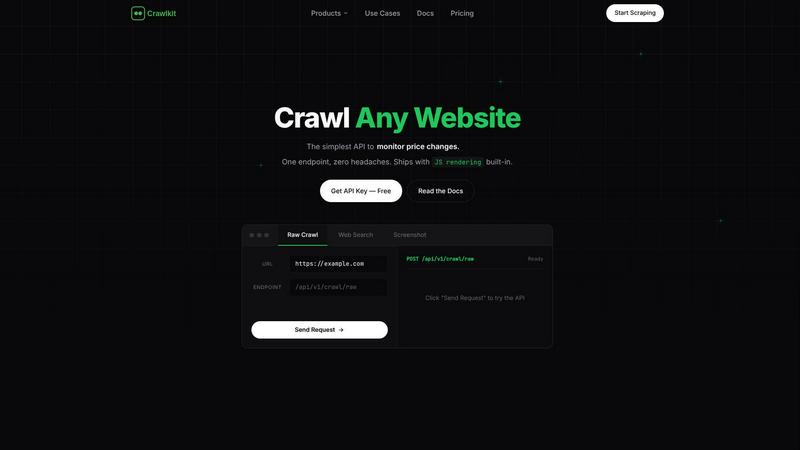
CrawlKit is an API-first platform that turns any website into structured data with a single request.
Last updated: February 28, 2026

Hostim.dev
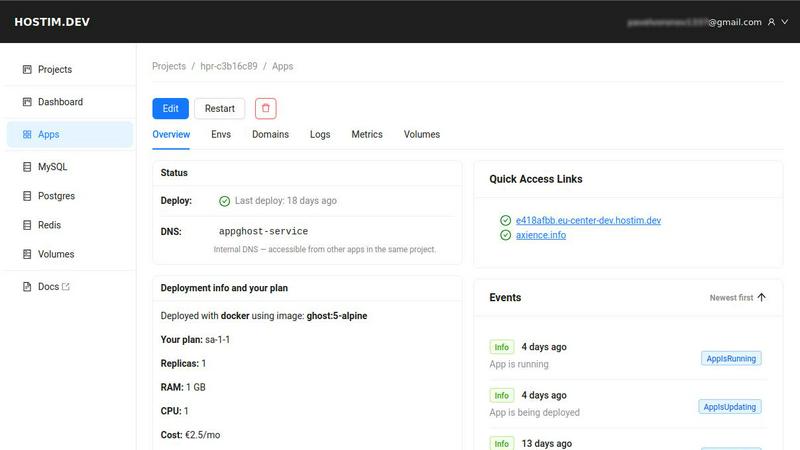
Hostim.dev deploys Docker apps with built-in databases on EU bare-metal for simple, predictable hosting.
Last updated: March 1, 2026
Visual Comparison
Crawlkit
Hostim.dev
Feature Comparison
Crawlkit
Unified Multi-Platform API
Crawlkit provides a single, cohesive API endpoint to extract structured data from a vast array of disparate web sources. Instead of building and maintaining separate scrapers for LinkedIn, Instagram, search engines, and app stores, developers can interact with one consistent interface. This unification drastically reduces development time, simplifies code maintenance, and ensures a standardized data output format across all platforms, making data integration and processing significantly more efficient.
Built-In Infrastructure Management
The platform completely handles the underlying infrastructure required for robust web scraping. This includes automated management of rotating residential and datacenter proxies to avoid IP bans, dynamic rendering of JavaScript-heavy pages using headless browser technology, and intelligent logic to bypass anti-bot systems like CAPTCHAs and fingerprinting. By internalizing these complexities, Crawlkit guarantees higher success rates and reliable data delivery without requiring any engineering effort from the user.
Transparent, Credit-Based Pricing
Crawlkit operates on a clear, pay-as-you-go credit system where each API call consumes a predetermined number of credits. This model offers full cost predictability with no monthly subscriptions, hidden fees, or surprise overage charges. Notably, credits are refunded if a request fails, and they never expire, providing exceptional flexibility. The pricing is transparently displayed per endpoint, and volume discounts are available for high-volume users, aligning cost directly with usage.
Guaranteed Data Completeness and Structure
Unlike basic HTTP clients that may return incomplete HTML, Crawlkit is engineered to ensure data completeness. It waits for full page loads, including all dynamic content rendered by JavaScript, and validates responses before delivery. The platform then parses the raw HTML into clean, structured JSON data, extracting the relevant fields (like follower counts, job titles, or review ratings) so users receive analysis-ready information instead of unstructured markup.
About Hostim.dev
Simplified Docker and Compose Deployment
Hostim.dev eliminates the need for complex configuration files or deep DevOps knowledge by supporting direct deployment from multiple sources. Users can launch applications by simply providing a public or private Docker image, connecting a Git repository for continuous deployment, or pasting an existing Docker Compose file. The platform handles the orchestration automatically, requiring no modification to standard Compose definitions, which drastically reduces the time from code to production.
Built-in Managed Databases and Persistent Volumes
The platform provides instant, integrated access to essential data services, removing the need to provision and manage separate database instances. Each project can be equipped with managed MySQL, PostgreSQL, and Redis databases, as well as persistent storage volumes, all pre-wired with automatic environment variables for seamless application connectivity. This integrated approach simplifies architecture and ensures data services are consistently available and properly configured.
Per-Project Isolation and Cost Tracking
Every application or client project on Hostim.dev runs within its own isolated Kubernetes namespace, ensuring complete environmental separation, security, and clean resource boundaries. This architecture is perfectly complemented by a transparent per-project billing model. Users can track exact costs for each individual project, providing unparalleled clarity for internal accounting or straightforward client invoicing, eliminating the opacity of aggregated cloud bills.
EU Bare-Metal Hosting with GDPR Compliance
Hostim.dev operates on physical bare-metal servers located in Germany, ensuring high performance and data sovereignty for European users and their clients. This infrastructure choice, combined with a privacy-by-design approach, means the platform is GDPR compliant by default. Users benefit from the performance of dedicated hardware without the management burden, and with the assurance that data residency and regulatory requirements are inherently addressed.
Use Cases
Crawlkit
CRM and Lead Enrichment
Sales and marketing teams can automate the enrichment of contact records in their Customer Relationship Management (CRM) systems. By programmatically feeding LinkedIn profile URLs into Crawlkit's API, they can pull structured data such as current job titles, company affiliations, professional summaries, and skills. This automates the manual research process, ensures data accuracy, and provides sales representatives with richer context for personalized outreach and lead scoring.
Competitive Intelligence and Market Research
Businesses can systematically monitor competitors by extracting public data from various sources. This includes tracking a competitor's Instagram growth metrics (follower count, engagement rates), analyzing reviews and ratings of their apps on the Play Store and App Store, or scraping their company details and job postings from LinkedIn. This aggregated, structured data fuels competitive analysis, informs strategic decisions, and identifies market trends.
Social Media Performance Tracking
Marketing agencies and brand managers can build automated dashboards to track the performance of social media campaigns. By regularly calling Crawlkit's Instagram API endpoints, they can gather historical data on profile growth, post engagement, and content performance for their own accounts or benchmark against industry influencers. This data is crucial for reporting, optimizing content strategy, and demonstrating ROI to clients.
App Store Optimization (ASO) Analysis
Mobile app developers and publishers can leverage Crawlkit to gather critical data for App Store Optimization. The API can extract detailed app metadata, user reviews, and ratings from both the Google Play Store and Apple App Store. Analyzing this structured data helps developers understand user sentiment, identify common complaints or requested features, monitor keyword performance, and benchmark against competing apps to improve their own app's visibility and conversion rates.
Hostim.dev
Freelancer Client Project Delivery
Freelancers can use Hostim.dev to rapidly deploy and hand off projects to clients. By deploying via Docker or Compose, they avoid lengthy server setup. The per-project isolation and clear cost tracking allow for creating a dedicated, secure environment for each client with a precise, billable monthly cost, facilitating clean and professional project handovers without ongoing maintenance obligations.
Agency Multi-Client Management
Digital agencies managing applications for multiple clients benefit from the inherent project isolation, which prevents resource or configuration conflicts between different client workloads. The per-project cost tracking provides exact breakdowns for each client, simplifying internal cost allocation and transparent billing. EU hosting also meets common client data residency requirements.
Startup and Side-Project Prototyping
Startups and individual developers working on prototypes or side projects can leverage the platform to go from idea to live deployment in minutes. The free trial, built-in databases, and simple scaling allow for validating concepts with real infrastructure without upfront investment in DevOps expertise or fear of unexpected costs, enabling faster iteration and market testing.
Educational and Portfolio Development
Students and developers looking to build practical skills can use Hostim.dev to learn modern deployment practices using real Docker containers and managed databases without navigating the complexity of cloud consoles. The platform allows them to create live, publicly accessible portfolio projects that demonstrate hands-on experience with professional-grade deployment workflows.
Overview
About Crawlkit
Crawlkit is a sophisticated, developer-centric web data extraction platform engineered to transform the complex, often frustrating process of web scraping into a simple, reliable, and scalable API service. Its core value proposition is to "Turn the Web into an API," providing developers and data teams with structured data from virtually any website or online platform through a single, unified interface. The platform is meticulously designed to abstract away the immense technical overhead traditionally associated with data collection, including the management of rotating proxy networks, execution of headless browsers, circumvention of sophisticated anti-bot protections, and adherence to platform-specific rate limits. This allows users to shift their focus entirely from the mechanics of data gathering to the strategic analysis and utilization of the data itself. Catering to a broad spectrum of users, from agile startups to large-scale enterprises, Crawlkit supports extraction from diverse sources like LinkedIn for professional networking data, Instagram for social media metrics, Google and DuckDuckGo for search results, and major app stores for application details and reviews. With a transparent, credit-based pricing model, no monthly commitments, and a promise that credits never expire, Crawlkit positions itself as a flexible, cost-effective, and powerful foundation for building data-driven applications and workflows.
About Hostim.dev
Hostim.dev is a specialized, developer-centric Platform-as-a-Service (PaaS) that provides a streamlined solution for deploying and managing containerized applications on bare-metal infrastructure. It is engineered to bridge the critical gap between the simplicity of traditional PaaS platforms and the powerful flexibility of container orchestration systems like Kubernetes. The platform is explicitly designed for developers, freelancers, digital agencies, and startups who require the portability and modern workflow of Docker containers but wish to completely avoid the operational overhead, steep learning curve, and unpredictable costs associated with managing underlying infrastructure and DevOps tooling.
Its core value proposition lies in abstracting away complexity while delivering essential, pre-integrated services. Users can deploy applications directly from a Docker image, a Git repository, or a full Docker Compose file without any modification, enabling launch in minutes. Every project is automatically provisioned with an isolated Kubernetes namespace for security and clean separation. A significant differentiator is its transparent, predictable pricing model with per-project cost tracking, coupled with GDPR-compliant hosting on bare-metal servers in Germany. Hostim.dev effectively delivers a controlled, efficient, and cost-predictable environment that empowers teams to focus on building software rather than managing infrastructure.
Frequently Asked Questions
Crawlkit FAQ
What happens if an API request fails?
Crawlkit operates on a refund policy for failed requests. If an API call does not successfully return the requested structured data due to issues on Crawlkit's side (such as a parsing error or infrastructure problem), the credits spent on that request are automatically refunded to your account. This policy ensures you only pay for successful, usable data delivery.
Do I need to manage proxies or browsers?
No, absolutely not. One of Crawlkit's primary value propositions is the complete abstraction of infrastructure management. The platform automatically handles all aspects of proxy rotation, browser emulation, and session management to navigate anti-bot measures. As a user, you simply send an API request with your target URL and receive structured data, with no need to configure or maintain any underlying scraping infrastructure.
How does the credit system work?
Crawlkit uses a credit-based pricing model. You purchase a bundle of credits upfront. Different API endpoints cost a different, transparent number of credits per call (e.g., a LinkedIn profile may cost 2 credits). Credits are deducted from your balance only for successful requests. They have no expiration date, and you can purchase more at any time, with volume discounts applied for larger bundles. There are no recurring monthly fees.
Can I request a new data source or API endpoint?
Yes, Crawlkit actively encourages user feedback for new integrations. The platform states, "Need an API we don't have yet? Talk to us, we'll build it." Users can contact the Crawlkit team to request support for additional websites, social platforms, or specific data extraction needs. This collaborative approach ensures the platform evolves to meet the real-world requirements of its developer community.
Hostim.dev FAQ
What does the free tier include?
The platform offers a 5-day free trial project with no credit card required for signup. This trial allows full access to deploy applications using Docker images, Git, or Compose files, and includes the use of built-in services to test functionality. It provides a complete, time-limited environment to evaluate the platform's capabilities with your actual workload before any commitment.
Can I deploy with just a Docker Compose file?
Yes, this is a core capability of Hostim.dev. You can directly paste your existing Docker Compose file (typically docker-compose.yml) into the platform's interface. The system will parse and deploy the defined services without requiring any modifications, automatically handling networking, service discovery, and orchestration on your behalf, making migration and deployment exceptionally straightforward.
Where is my application hosted?
All applications deployed on Hostim.dev are hosted on bare-metal servers located in Germany within the European Union. This ensures data sovereignty, low latency for European users, and inherent compliance with GDPR regulations. The use of physical servers (bare-metal) also provides performance benefits compared to virtualized cloud instances.
Do I need to know Kubernetes to use Hostim.dev?
No, you do not need any knowledge of Kubernetes. Hostim.dev uses Kubernetes as a robust underlying orchestration layer, but it completely abstracts this complexity away from the user. Developers interact only with familiar concepts like Docker images, Git repos, and Compose files. The platform automatically manages all Kubernetes objects and configurations.
Alternatives
Crawlkit Alternatives
Crawlkit is a prominent API-first web scraping platform within the analytics and data category, designed to streamline the extraction of web data for developers and data teams. It abstracts the complexities of managing proxies, headless browsers, and anti-bot measures, allowing users to focus on data utilization rather than infrastructure. Users often explore alternatives to Crawlkit for various reasons, including budget constraints, specific feature requirements not covered by the platform, or the need for a different deployment model such as on-premise solutions. The search can also be driven by project scale, desired integration capabilities, or particular data source specializations. When evaluating an alternative, key considerations include the platform's success rate in data extraction, its ability to handle JavaScript-rendered content, the sophistication of its anti-blocking technology, and the clarity of its pricing structure. Scalability, data delivery speed, and the quality of developer documentation and support are also critical factors that determine long-term viability for data-intensive projects.
Hostim.dev Alternatives
Hostim.dev is a specialized bare-metal Platform-as-a-Service (PaaS) designed to simplify the deployment of Docker-based applications. It targets developers and small teams who want the power of containerized environments without the operational overhead of managing infrastructure. The platform automates deployment from Docker images, Git, or Docker Compose and provides built-in managed databases. Users may explore alternatives for various reasons, including budget constraints, specific geographic hosting requirements, or the need for different feature sets like more advanced scaling options or support for non-containerized workloads. The search often stems from a need to balance simplicity, cost, control, and performance. When evaluating alternatives, key considerations include the deployment model's simplicity, the transparency and predictability of pricing, the availability of essential managed services, and compliance with data residency regulations. The ideal platform should align with your team's technical expertise and project requirements without introducing unnecessary complexity.