
Pursuit vs Storydoc
Side-by-side comparison to help you choose the right product.

Pursuit
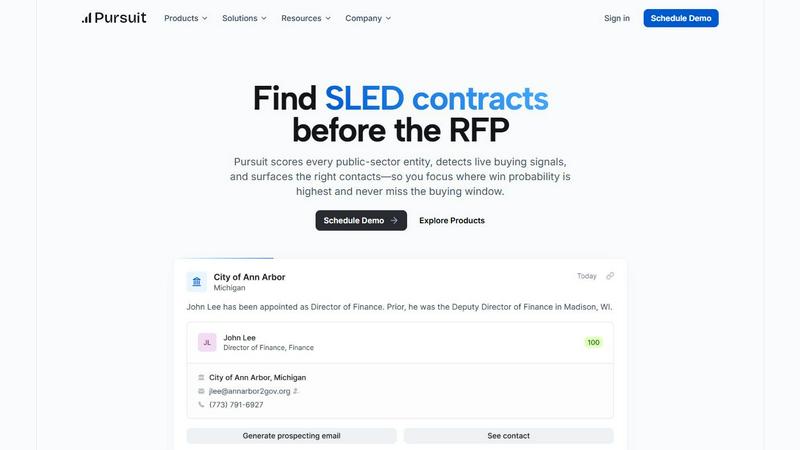
Pursuit is a pre-RFP intelligence platform that helps sales teams win SLED deals by surfacing early buying signals.
Last updated: February 28, 2026

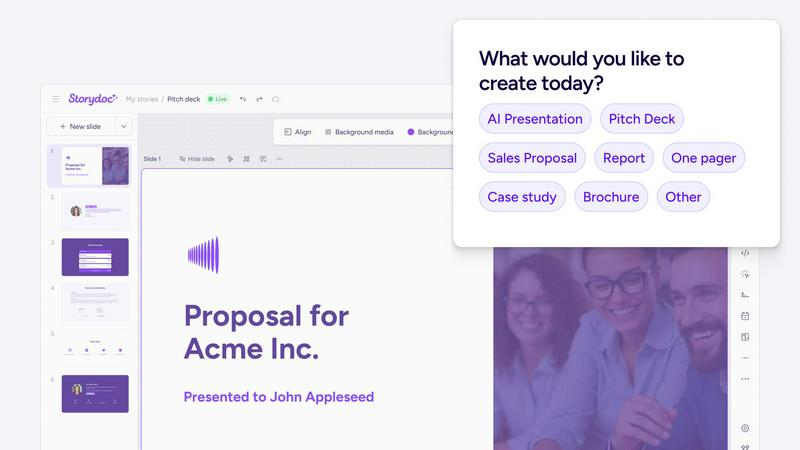
Storydoc empowers professionals to effortlessly create and manage interactive AI-driven presentations and business documents that drive results.
Last updated: March 26, 2026
Visual Comparison
Pursuit
Storydoc
Feature Comparison
Pursuit
Pre-RFP Buying Signal Detection
Pursuit's proprietary AI engine scans and interprets millions of data points from public records to identify genuine buying intent signals long before a formal procurement process begins. These signals include budget approvals for new initiatives, discussions of pain points in meeting minutes, contract expirations, leadership changes indicating new priorities, and mentions of specific projects or technology needs. This early-warning system is the cornerstone of the platform, transforming sales from a reactive game to a proactive strategic pursuit.
Comprehensive SLED Entity Database & Scoring
The platform maintains a dynamic database of over 110,000 public-sector entities, each profiled and scored based on their procurement activity, budget, technology adoption, and other relevant factors. This scoring mechanism helps organizations instantly prioritize which entities are most likely to buy, enabling efficient allocation of sales resources. Each entity profile includes enriched data on organizational structure, key decision-makers, incumbent vendors, and historical contract awards.
Native CRM & MarTech Integrations
Pursuit is built for operational efficiency with seamless, bi-directional integrations into core go-to-market systems. It natively syncs with Salesforce and HubSpot, ensuring that enriched account data, contact information, and live buying signals flow automatically into a team's existing workflow without manual entry or engineering effort. Marketing teams can also push targeted audiences directly to platforms like LinkedIn Ads, Marketo, and HubSpot for precision ABM campaigns.
Role-Specific Intelligence Delivery
Intelligence is delivered in the format most actionable for each user persona. For BDRs, this means daily prioritized call lists based on fresh signals in their territory. For Account Executives, a Chrome extension provides instant meeting prep with full account intel. Customer Success receives configurable alerts for upcoming renewals and churn risks, while Sales Leaders gain team-wide visibility into signal engagement and territory coverage, enabling better forecasting and management.
About Storydoc
AI Creation
The AI creation feature allows users to generate beautifully structured documents in mere seconds, eliminating the need for advanced design or writing skills. This empowers professionals to focus on content rather than aesthetics, ensuring that even those without a design background can produce high-quality presentations effortlessly.
Interactive & Dynamic Elements
Storydoc enhances user engagement through the integration of interactive and dynamic elements directly within documents. Users can embed various media types, including videos, calendars, and forms, making presentations more engaging and informative. This interactivity transforms static content into a lively experience that captivates audiences and drives action.
Personalization & Automation
With Storydoc's personalization and automation capabilities, users can create and share documents at scale, delivering tailored content that resonates with specific audiences. By utilizing dynamic fields and integrating live CRM data, teams can ensure that every document is customized to meet the unique needs of their clients, enhancing relevance and engagement.
Deep Analytics
The platform provides deep analytics that enable users to track engagement metrics such as opens, clicks, and scroll depth. This data-driven approach allows businesses to understand what content resonates with their audiences and what elements may need adjustment. By analyzing these insights, teams can refine their strategies and improve their overall effectiveness.
Use Cases
Pursuit
Proactive Pipeline Generation for BDR/SDR Teams
Business Development Representatives use Pursuit to move beyond cold outreach based on firmographics. The platform provides daily, prioritized lists of accounts exhibiting concrete buying signals, such as a school district approving a budget for cybersecurity upgrades or a city council discussing public Wi-Fi initiatives. This allows BDRs to make relevant, timely contact, resulting in significantly higher conversion rates and a more qualified sales pipeline.
Strategic Account Planning for Sales Leaders & AEs
Sales leaders and account executives leverage Pursuit for strategic territory planning and deal execution. The platform reveals the complete procurement landscape for a target entity, including the incumbent vendor, contract value, expiration date, and the specific procurement vehicle likely to be used. This intelligence allows AEs to craft tailored solutions, anticipate competitor moves, and engage with stakeholders from a position of deep knowledge, dramatically improving win rates.
Account-Based Marketing (ABM) Campaign Execution
Marketing teams utilize Pursuit's buying signals to fuel highly targeted and effective ABM programs. Instead of targeting accounts based on static attributes, marketers can build campaigns around real-time events, such as a state agency's new technology initiative or a county's approved budget for infrastructure projects. By syncing these in-market audiences to advertising and email platforms, marketing achieves higher engagement and conversion lifts.
Customer Success & Renewal Risk Management
Customer Success managers employ Pursuit to protect and grow existing revenue. The platform provides configurable alerts 90-180 days before a customer's contract is set to expire, enabling proactive renewal conversations. Furthermore, it monitors for churn risk signals like budget cuts, leadership changes, or competitor RFPs being issued to the client's organization, allowing CSMs to mitigate risk and identify expansion opportunities early.
Storydoc
Sales Presentations
Sales teams can leverage Storydoc to create compelling, interactive presentations that showcase their products and services. By embedding videos and interactive elements, they can engage potential clients more effectively, leading to increased interest and higher conversion rates.
Marketing Proposals
Marketing professionals can use Storydoc to craft personalized proposals that stand out from traditional static documents. By incorporating dynamic content and real-time data, they can create proposals that address specific client needs, enhancing their chances of winning contracts.
Corporate Reports
Storydoc is ideal for generating corporate reports that require a modern touch. By utilizing multimedia elements and interactive storytelling, organizations can present complex data in a more digestible format, making it easier for stakeholders to grasp critical insights.
Training Materials
Educational institutions and corporate trainers can utilize Storydoc to develop engaging training materials. By employing interactive features and personalized content, they can create a more effective learning environment that fosters better retention and understanding among participants.
Overview
About Pursuit
Pursuit is a pre-RFP (Request for Proposal) intelligence platform engineered specifically for businesses selling to the SLED (State, Local, and Education) public sector. It addresses the fundamental challenge of timing and visibility in a market characterized by over 110,000 unique entities, complex procurement rules, and lengthy budget cycles. The platform's core mission is to transform public-sector sales by shifting engagement from reactive RFP responses to proactive, intelligence-driven outreach. By leveraging AI to continuously monitor and analyze a vast array of public data sources—including council meetings, budget documents, board agendas, and contract postings—Pursuit detects live buying signals 6 to 18 months before an RFP is formally issued. This provides sales teams with an unprecedented first-mover advantage, allowing them to shape requirements and establish themselves as the incumbent solution before competitors are even aware of the opportunity. With a comprehensive, continuously enriched database scoring every entity and providing key contact information, Pursuit serves the entire go-to-market organization, from Marketing and Business Development Representatives to Account Executives, Sales Leaders, and Customer Success, ensuring shared intelligence drives cohesive strategy and execution.
About Storydoc
Storydoc is a cutting-edge AI platform designed to revolutionize the way business professionals create, manage, and distribute presentations and documents. It automates the creation of various business materials, including proposals, pitch decks, and reports, allowing users to transition from static to dynamic, interactive storytelling. This tool caters to a wide range of users, from solo entrepreneurs to large marketing teams, providing them with the ability to produce on-brand content quickly and efficiently. The main value proposition of Storydoc lies in its capacity to centralize the creation and personalization of business collateral while incorporating engaging elements like videos and interactive forms. By streamlining workflows and tracking engagement metrics, Storydoc empowers teams to convert passive reading experiences into actionable insights, ultimately driving better decision-making and faster deal closures.
Frequently Asked Questions
Pursuit FAQ
What types of buying signals does Pursuit detect?
Pursuit detects a wide range of intent signals from public documents and data. Key examples include budget line-item approvals for specific projects, discussions of needs or challenges in council/board meeting minutes, the publication of RFIs (Requests for Information), contract expiration notices, leadership changes that often signal new priorities, and mentions of specific technologies or initiatives in strategic planning documents. The AI contextualizes these data points to confirm genuine procurement intent.
How does Pursuit ensure data accuracy and freshness?
Pursuit maintains a 94% data accuracy rate through a continuous, automated enrichment process. The platform's systems constantly monitor primary source documents from government and educational institutions. Any changes in contacts, organizational charts, budget status, or new procurement activities are detected and updated in the database in real-time, ensuring sales teams are always working with the most current intelligence available.
Can Pursuit integrate with our existing tech stack (CRM, marketing automation)?
Yes, Pursuit is designed for seamless integration. It offers native, bi-directional synchronization with major CRM platforms like Salesforce and HubSpot, automatically pushing enriched account/contact data and buying signals. For marketing teams, it provides direct audience sync capabilities with LinkedIn Campaign Manager, Marketo, and HubSpot, enabling signal-based campaigns without manual data export or import processes.
Who within my organization is Pursuit designed for?
Pursuit is a platform built for the entire go-to-market team selling to SLED. This includes Revenue Operations for data management, Sales Leaders for forecasting and coaching, Marketing for ABM, Account Executives for deal execution, Business Development Reps for outbound prospecting, and Customer Success for renewal and expansion management. Each persona receives tailored insights and workflows within the same shared intelligence platform.
Storydoc FAQ
What types of documents can I create with Storydoc?
Storydoc allows users to create a wide variety of documents, including presentations, proposals, pitch decks, reports, and one-pagers, all designed to be interactive and engaging.
How does Storydoc ensure data security?
Storydoc prioritizes data security by adhering to ISO 27001 compliance, GDPR regulations, and implementing secure SSO authentication, ensuring that user data is protected at all times.
Can I integrate Storydoc with other tools?
Yes, Storydoc offers integration capabilities via connectors such as Zapier and Make, allowing teams to pull in live data and personalize their documents at scale seamlessly.
Is there a trial period available for Storydoc?
Yes, Storydoc offers a 14-day free trial for new users, allowing them to explore the platform's features without requiring a credit card upfront.
Alternatives
Pursuit Alternatives
Pursuit is an AI-driven business intelligence platform designed to streamline public sector sales. It specializes in scoring government and educational entities, detecting live buying signals, and identifying key contacts to help businesses win more contracts. This places it within the competitive landscape of sales intelligence and government procurement software. Users may explore alternatives to Pursuit for various reasons, including budget constraints, specific feature requirements not covered by the platform, or a need for a tool that integrates with a different technology stack. Some organizations might seek a broader market intelligence solution or one with a stronger focus on a different vertical beyond the public sector. When evaluating alternatives, key considerations should include the depth and accuracy of the entity database, the sophistication of buying signal detection, CRM integration capabilities, and the platform's specialization in public sector procurement processes. The quality of contact data and the real-time nature of opportunity alerts are also critical factors for sales teams targeting government contracts.
Storydoc Alternatives
Storydoc is an innovative AI platform designed to automate the creation of business presentations and documents, such as proposals and pitch decks. It belongs to the marketing category, specifically targeting sales and marketing teams looking to enhance their document engagement through interactive storytelling. Users often seek alternatives to Storydoc for various reasons, including pricing, specific feature sets, or compatibility with existing platform needs. When considering alternatives, it is essential to evaluate factors such as ease of use, customization options, integration capabilities, and the ability to enhance user engagement. In the search for a suitable alternative, users should prioritize platforms that offer robust features for document personalization, data security measures, and seamless collaboration tools. Additionally, understanding the level of customer support and the scalability of the solution can greatly influence the effectiveness of the alternative chosen. By focusing on these key aspects, users can find a solution that meets their unique business requirements and enhances their overall document management processes.