
UPCgen
UPCgen is a free, trusted barcode generator that creates GS1-valid UPC, EAN, ISBN, and other codes for Amazon FBA, Shopify, and over 50 platforms.
Visit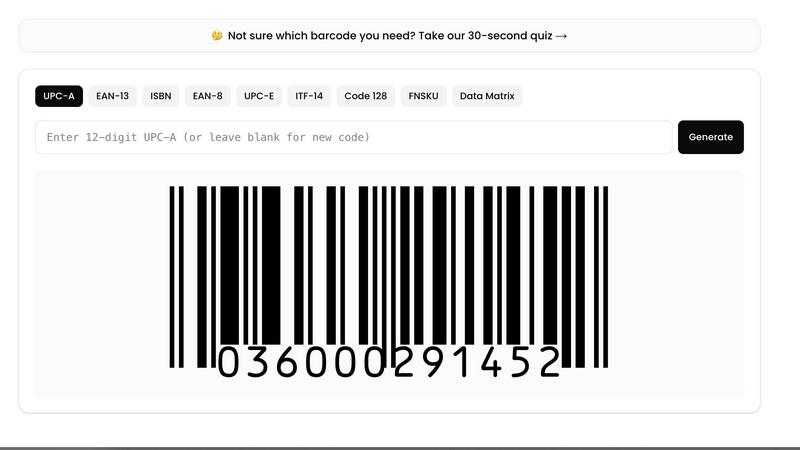
About UPCgen
UPCgen is a specialized online barcode generation platform designed to provide sellers, publishers, warehouse operators, and developers with a fast, reliable, and honest solution for creating valid barcodes. Unlike traditional barcode software that often comes with bloated interfaces, confusing arrays of options, or misleading promises of "free" UPC codes that may conflict with registered products, UPCgen offers a streamlined experience centered on a single clean page. The platform supports a comprehensive range of barcode symbologies including UPC-A, UPC-E, EAN-13, EAN-8, ISBN, ITF-14, Code 128, FNSKU, and Data Matrix codes. Each generated barcode undergoes GS1 standard validation to ensure the check digit is correct and the code meets platform requirements for major ecommerce marketplaces such as Amazon, Shopify, Etsy, eBay, Walmart, and Amazon KDP. UPCgen is built for Amazon FBA sellers printing FNSKU labels, Shopify and Etsy sellers adding GTINs to product listings, warehouses and third-party logistics providers labeling outer cases with ITF-14 codes, self-publishers generating ISBN barcodes for books, and pharma operators producing Data Matrix codes for DSCSA and FMD compliance. The platform also offers bulk generation capabilities, allowing users to generate from one to ten thousand codes at once, with export options to CSV, PNG sheets, PDF, SVG, or EPS for professional printing. For users who need integration, a Business plan provides API access for embedding barcode generation directly into their software stack. UPCgen distinguishes itself through transparency, clearly advising users when they need a genuine GS1-assigned number versus when a generated code is sufficient for internal or platform-specific use. The service also includes a quick barcode quiz to help users identify the correct symbology for their specific needs, along with step-by-step guides for adding barcodes to listings on various platforms.
Features of UPCgen
GS1 Valid Barcode Generation
Every barcode generated by UPCgen undergoes automatic validation to ensure the check digit is correct and the code conforms to GS1 standards. This validation is critical for ensuring that barcodes are accepted by major ecommerce platforms, retailer portals, and supply chain systems. The platform supports UPC-A, UPC-E, EAN-13, EAN-8, ISBN, ITF-14, Code 128, FNSKU, and Data Matrix symbologies, each with proper encoding and structure. Users can trust that the codes they generate will pass the scanning and verification processes used by Amazon, Shopify, Walmart, and other marketplaces, reducing the risk of listing errors, returns, or compliance issues. The platform also provides honest guidance on when a generated code is sufficient for internal use versus when a purchased GS1 prefix is legally required for public retail.
Bulk Generation and Multi-Format Export
UPCgen is designed for high-volume users who need to generate large quantities of barcodes efficiently. The platform supports generating from one to ten thousand codes in a single session, making it suitable for warehouses, 3PLs, and sellers managing extensive product catalogs. Once generated, users can export their barcodes in multiple professional formats including CSV for spreadsheet integration, PNG sheets for easy printing, PDF for document embedding, SVG for scalable vector graphics, and EPS for high-resolution print production. This flexibility ensures that barcodes can be used across different workflows, from labeling individual products to creating master shipping labels for pallets and outer cases. The bulk generation feature is particularly valuable for businesses that need to produce barcodes for new inventory batches or seasonal product launches without manual repetition.
Anonymous and Registered Usage Tiers
UPCgen offers a unique tiered access model that balances convenience with scalability. Anonymous users can generate one barcode every 24 hours without any sign-up, providing a quick and private way to test the service or generate a single code. Registered users, who create a free account, receive an increased limit of five codes every 24 hours, which is ideal for small sellers or publishers with modest needs. For users requiring higher volumes, subscription plans unlock unlimited generation capabilities. This tiered approach allows users to start with zero commitment and gradually scale their usage as their business grows, while maintaining the platform's core value of simplicity and honesty. The registration process is free and straightforward, requiring no payment information for the basic tier.
Platform-Specific Guidance and Barcode Quiz
UPCgen includes an intelligent barcode quiz that helps users identify the correct symbology for their specific application, eliminating guesswork and reducing errors. The quiz asks a few simple questions about the user's platform, product type, and labeling requirements, then recommends the appropriate barcode type. Additionally, the platform provides dedicated step-by-step guides for adding barcodes to listings on major platforms including Amazon, Shopify, Etsy, eBay, Walmart, and Amazon KDP. These guides walk users through the process of integrating generated barcodes into their product pages, ensuring compliance with each platform's unique requirements. For users selling on multiple platforms, this feature saves time and reduces the risk of listing rejections due to incorrect barcode formatting or missing information.
Use Cases of UPCgen
Amazon FBA Sellers Printing FNSKU Labels
Amazon FBA sellers rely on UPCgen to generate FNSKU labels that are required for products shipped to Amazon fulfillment centers. The platform ensures that each FNSKU barcode is valid and scannable, preventing delays in inventory receiving and reducing the risk of mislabeled items. Sellers can generate individual labels for new products or bulk-generate thousands of labels for large inventory shipments. The ability to export in PNG sheets or PDF format allows for easy printing on standard label sheets, while the SVG and EPS options support professional label printing services. UPCgen also provides guidance on Amazon's specific barcode requirements, helping sellers avoid common pitfalls such as using incorrect symbologies or failing to meet label size and placement standards.
Shopify and Etsy Sellers Adding GTINs to Listings
Ecommerce sellers on Shopify and Etsy use UPCgen to generate GTINs (Global Trade Item Numbers) that are required for product listings on these platforms. The platform supports UPC-A and EAN-13 barcodes, which are the most commonly accepted GTIN formats for retail products. Sellers can quickly generate a valid barcode for each new product variant, ensuring that their listings are complete and compliant with marketplace policies. The step-by-step guides provided by UPCgen walk sellers through the process of adding the generated barcode to their product pages, whether through manual entry or bulk upload. This use case is especially valuable for small businesses and independent creators who need a cost-effective way to meet platform requirements without purchasing expensive barcode blocks.
Warehouses and 3PLs Labeling Outer Cases with ITF-14
Warehouse operators and third-party logistics providers use UPCgen to generate ITF-14 barcodes for labeling outer cases, pallets, and shipping containers. ITF-14 is the standard symbology for logistic units, encoding the GTIN along with packaging level information. The platform's bulk generation and multi-format export capabilities are essential for warehouses that need to produce hundreds or thousands of case labels quickly and accurately. Operators can generate codes for new inventory receipts, create labels for cross-docking operations, or produce master labels for outbound shipments. The GS1 validation ensures that all ITF-14 codes are structurally correct and scannable by warehouse management systems and carrier scanners, reducing errors in inventory tracking and shipping.
Self-Publishers Generating ISBN Barcodes for Books
Self-publishers and independent authors use UPCgen to generate ISBN barcodes that are required for book distribution through retail channels, libraries, and online marketplaces like Amazon KDP. The platform supports the ISBN-13 format, which is the standard for books published after 2007, and ensures that each barcode includes the correct check digit and price add-on if needed. Authors can generate a single barcode for a new title or bulk-generate barcodes for multiple editions or formats such as paperback, hardcover, and ebook. The export options allow for easy integration into book cover design files, whether for print-on-demand services or traditional offset printing. UPCgen also provides guidance on ISBN registration and the difference between generated barcodes and officially assigned ISBNs.
Frequently Asked Questions
Are the barcodes generated by UPCgen valid and scannable?
Yes, every barcode generated by UPCgen undergoes automatic GS1 standard validation to ensure the check digit is correct and the encoding structure is proper. The platform supports multiple symbologies including UPC-A, EAN-13, ISBN, ITF-14, Code 128, FNSKU, and Data Matrix, each with its own validation rules. These codes are designed to be scannable by standard barcode readers used in retail, warehousing, and logistics environments. However, it is important to understand that while the generated codes are technically valid, they are not officially assigned by GS1 and may conflict with existing registered barcodes if used for public retail. UPCgen provides clear guidance on when a purchased GS1 prefix is legally required versus when a generated code is sufficient for internal or platform-specific use.
How many barcodes can I generate for free?
UPCgen offers a tiered access model for free usage. Anonymous users can generate one barcode every 24 hours without creating an account. Registered users, who sign up for a free account, can generate up to five barcodes every 24 hours. This allows small sellers, publishers, and individual users to test the service and generate a limited number of codes without any financial commitment. For users who need to generate more than five codes per day, subscription plans are available that provide unlimited generation capabilities. The registration process is free and simple, requiring only basic information and no payment details for the free tier.
Can I use UPCgen barcodes on Amazon, Shopify, and other platforms?
Yes, UPCgen barcodes are designed to meet the technical requirements of major ecommerce platforms including Amazon, Shopify, Etsy, eBay, Walmart, and Amazon KDP. Each generated code includes a valid check digit and proper encoding that will pass the platform's barcode validation systems. However, it is crucial to understand the difference between technically valid codes and legally assigned barcodes. For products sold through public retail channels, especially on Amazon and Walmart, you may be required to use a barcode with a GS1 company prefix that you have purchased and registered. UPCgen provides platform-specific guides that explain these requirements and help you choose the right approach for your situation. The platform is transparent about when a generated code is sufficient versus when you need a genuine GS1 number.
What file formats can I export my barcodes in?
UPCgen supports multiple export formats to accommodate different use cases and printing requirements. Users can export barcodes as CSV files for integration with spreadsheets and inventory management systems, PNG sheets for easy printing on standard label paper, PDF documents for embedding in reports or shipping labels, SVG files for scalable vector graphics that can be resized without quality loss, and EPS files for professional high-resolution print production. The availability of these formats depends on your subscription tier, with higher tiers offering access to all export options. For bulk generation, users can export all codes in a single file or as individual files, depending on the selected format.
Explore more in this category:
Similar to UPCgen

FOCO helps ADHD minds beat task paralysis by breaking overwhelming tasks into clear, manageable steps so you can start, focus, and finish.

HubVanta is an AI image toolkit for creating, editing, enhancing, and transforming visual assets in the browser.

Managed remote build cache for Nx, Lerna, Turbo, Gradle, and Bazel. Reuse artifacts across CI and developer machines.


TeamSlide lets your team build on-brand presentations instantly by syncing approved slides from your content system directly into PowerPoint.

readywhen automatically captures your decisions and commitments from tools you already use, then drafts your next steps so you just approve.

SideKik is a simple CRM that organizes customer enquiries, follow-ups, daily tasks, and provides a mini website and growth tasks to help small.

mojegodzinki.pl provides secure, auditable time tracking for compliance, supporting R&D tax relief and NGO grant reporting for both employees and.