
Dreamflow vs Miget
Side-by-side comparison to help you choose the right product.

Dreamflow
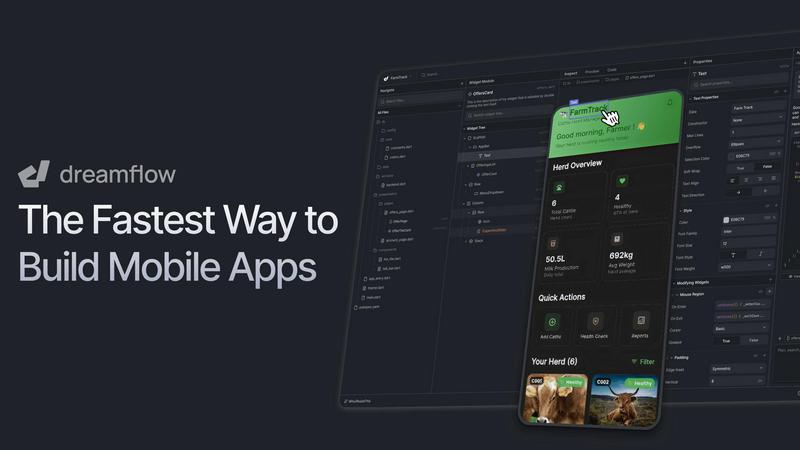
Dreamflow is an AI-powered platform that builds production-ready mobile apps from natural language descriptions.
Last updated: March 1, 2026

Miget
Deploy unlimited services on one flat-rate plan.
Visual Comparison
Dreamflow
Miget
Overview
About Dreamflow
Dreamflow is a revolutionary application development platform that fundamentally redefines the process of building mobile and web applications. It is engineered to bridge the gap between rapid AI-assisted prototyping, intuitive visual design, and full, unrestricted code-level control. The platform's core value proposition lies in its "Tri-Surface Editing" paradigm, which allows developers and entrepreneurs to fluidly switch between describing features to an AI agent, manipulating a visual canvas, and editing raw Flutter code, with all changes synchronized in real-time. This eliminates the traditional compromise between development speed and technical flexibility, ensuring users are never locked into a proprietary framework or a specific workflow.
Built by the team behind the widely adopted FlutterFlow, Dreamflow is trusted by over two million builders and is designed for a broad spectrum of users. Solo developers and indie hackers can leverage it to go from a concept to a market-ready MVP in record time. Startups can utilize its integrated backend and deployment features to scale their product efficiently. Even larger enterprises benefit from its production-grade capabilities, including version control, custom AI model integration, and private cloud deployment options. By combining AI-powered scaffolding with the power of the Flutter framework, Dreamflow enables the creation of robust, natively compiled applications for iOS, Android, and the web from a single codebase, positioning itself as the fastest and most versatile way to build production-ready apps.
About Miget
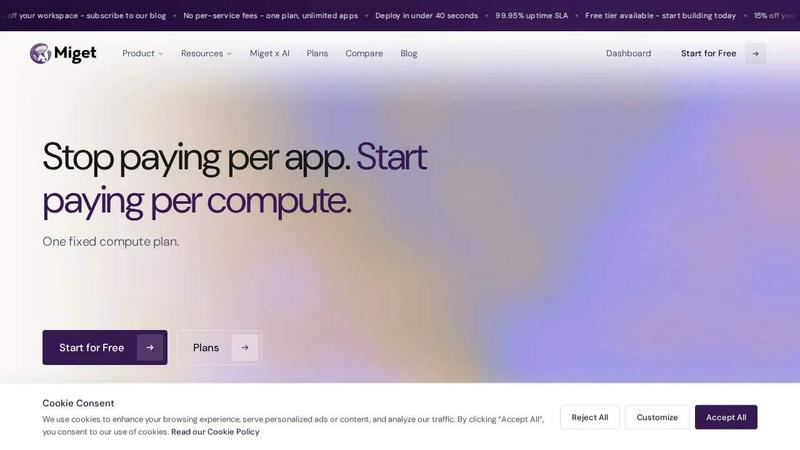
Miget – Stop paying per app. Start paying per compute.
Traditional PaaS platforms charge you for every app, database, and worker separately. Miget flips that model: pick a fixed compute plan, then deploy as many services as you want inside it.
- Unlimited apps, databases, and background workers per plan
- No per-service billing surprises
- Built on Kubernetes with full isolation between tenants
- Deploy from Git, GitHub, Registry with zero-config builds
- Managed PostgreSQL, Redis, and more
- Custom domains with automatic TLS
Whether you're running a single side project or a full production stack, you only pay for the compute you reserve—not the number of things you run on it.